

- Home ›
- Recipe Index ›
- Baking Substitutions
Baking Substitutions:
Easy Ingredient Swaps for Kids & Families
Out of eggs, butter, milk, or flour? Learn easy baking substitutions for the most common ingredients, plus discover how each ingredient affects your recipes. Perfect for home bakers, classrooms, and kids learning kitchen science.

Every baker eventually reaches for an ingredient only to discover the container is empty. Fortunately, many common baking ingredients can be replaced with pantry staples without starting over. Whether you're baking around food allergies, making healthier choices, or simply using what you have on hand, knowing a few reliable substitutions can save the day.
This guide covers practical substitutes for eggs, butter, oil, milk, flour, sugar, yeast, baking powder, and more. You'll also learn which substitutions work best in different recipes, helping kids understand how ingredients affect flavor, texture, and the finished bake.
Start Here: Find the Right Baking Substitute
- Need healthier baking ideas? Start with Healthy Baking Swaps.
- Out of eggs? Jump to Egg Substitutes.
- Need dairy-free options? Visit Milk, Buttermilk, and Sour Cream.
- Replacing butter or oil? See Butter and Oil.
- Looking for flour or sugar alternatives? Check Flour and Sugar.
- Need help with rising ingredients? Learn about Baking Powder and Yeast.
- Want to understand why substitutions work? Kitchen Science.
Why Learn Baking Substitutions?
Learning ingredient substitutions helps kids become more confident cooks and teaches valuable kitchen problem-solving skills. It also encourages creativity, reduces food waste, and makes it easier to bake for friends and family with dietary needs or allergies.
Kids Cooking Activities Teaching Materials
Teaching kids to cook? Save time with ready-made lesson plans used by parents and teachers. Browse teaching materials →


This page may contain affiliate links. We may earn a small commission at no extra cost to you. Learn more.
On This Page
- Getting Started
- Healthy Baking Swaps
- Before You Substitute
- Common Baking Substitutions
- Egg Substitutes
- Eggless Peanut Butter Cookies
- Oil Substitutes
- Buttermilk Substitutes
- Butter Substitutes
- Milk Substitutes
- Flour Substitutes
Healthy Baking Swaps
Making a recipe healthier doesn't always mean giving up great flavor. Many everyday baking ingredients can be replaced with nutritious alternatives that add fiber, vitamins, or reduce fat while still producing delicious results. Start by replacing only part of an ingredient until you discover what your family enjoys most.
Quick Healthy Baking Tips
- Replace up to half the oil in many recipes with unsweetened applesauce.
- Use plain Greek yogurt instead of sour cream for extra protein.
- Substitute half the white flour with whole wheat flour for added fiber.
- Choose mashed bananas or fruit purées to naturally add moisture.
- Reduce sugar slightly when using naturally sweet fruits like bananas or dates.
- Experiment with healthier swaps one ingredient at a time for the best results.
- Remember that healthier substitutions often change texture slightly. Start by replacing only part of an ingredient until you find the balance your family enjoys.
Kid Kitchen Tip
Turn healthy substitutions into a fun kitchen science experiment! Bake two small batches of muffins or pancakes- one using the original recipe and one with a healthy substitution such as applesauce instead of oil. Compare the taste, texture, color, and moisture together to see how each ingredient changes the finished recipe.

Before You Substitute
Baking substitutions can be very helpful, but they do not always create the exact same result as the original ingredient. Some ingredients add moisture, some help baked goods rise, some provide structure, and others affect flavor, color, or texture.
For best results, change only one ingredient at a time. This makes it easier for kids to notice how the substitution changes the recipe and helps you decide whether the swap is one you want to use again.
Best Recipes for Practicing Substitutions
Substitutions usually work best in forgiving recipes such as muffins, pancakes, waffles, quick breads, brownies, dessert bars, and cookies. More delicate recipes, such as angel food cake, meringues, soufflés, and some yeast breads, often need the original ingredients for the best texture.
Egg Substitutes
Eggs play several important roles in baking. They help bind ingredients together, add moisture, create structure, and help many baked goods rise. The best substitute depends on the type of recipe you're making and the flavor you want to achieve.
The following substitutions replace one large egg. Most work well in muffins, pancakes, quick breads, brownies, and cookies, but they may not be suitable for recipes that rely heavily on eggs, such as angel food cake, meringues, or soufflés.

Kid Kitchen Tip
Try making two batches of muffins-one using eggs and one using applesauce or a flax egg. Compare the texture, height, and flavor to see how eggs help hold baked goods together.
Recipes That Work Well with Egg Substitutes
Egg replacements are usually successful in pancakes, waffles, muffins, brownies, quick breads, cookies, and snack cakes. For recipes where eggs provide most of the structure, such as sponge cakes or meringues, it's best to use the original ingredient.
Eggless Peanut Butter Cookies
Need an egg-free cookie recipe? These classic peanut butter cookies are soft, chewy, and full of peanut butter flavor- without using eggs. They're a great option for families with egg allergies or for those times when you've simply run out of eggs.



Ingredients
- 1 cup shortening
- 1 cup creamy peanut butter
- 1 cup granulated sugar
- 1 cup packed brown sugar
- ½ cup buttermilk
- 2½ cups all-purpose flour
- 1 teaspoon baking powder
- 1½ teaspoons baking soda
- ½ teaspoon salt
Directions
- Preheat the oven to 375F (190C). Lightly grease or line baking sheets with parchment paper.
- In a large mixing bowl, beat together the shortening, peanut butter, granulated sugar, brown sugar, and buttermilk until smooth and creamy.
- Stir in the flour, baking powder, baking soda, and salt until a soft dough forms.
- Drop rounded tablespoonfuls of dough about 2 inches apart onto the prepared baking sheets.
- Dip a fork in a little flour and gently flatten each cookie with a crisscross pattern.
- Bake for 10-12 minutes, or until the edges are lightly golden.
- Let the cookies cool on the baking sheet for 2- 3 minutes before transferring them to a wire rack to cool completely.
Kid Kitchen Tip
Compare these cookies with your favorite peanut butter cookie recipe that uses eggs. Notice how the buttermilk helps add moisture while the peanut butter and shortening keep the cookies tender and rich.
Oil Substitutes
Oil adds moisture and tenderness to baked goods, helping cakes, muffins, brownies, and quick breads stay soft. Depending on your recipe, you can often replace some or all of the oil with healthier ingredients or other pantry staples.
The following substitutions replace 1 cup of vegetable oil. Some substitutions create a lighter texture, while others add extra flavor or richness.

Best Baking Tip
For cakes, muffins, pancakes, and quick breads, replacing half of the oil with unsweetened applesauce is often the easiest way to reduce fat while keeping the finished recipe moist. You can experiment with replacing all of the oil, but the texture may become slightly denser.
What Oil Does in Baking
Oil helps create a soft, tender crumb and keeps baked goods from drying out. Fruit purées and yogurt also add moisture, but they may produce a slightly heavier texture than oil. Experimenting with different substitutes is a fun way for kids to learn how ingredients affect the final recipe.
Buttermilk Substitutes
Buttermilk gives baked goods a rich flavor, tender crumb, and helps activate baking soda for a better rise. If you don't have buttermilk on hand, you can easily make a substitute using common refrigerator and pantry ingredients.
The following substitutions replace 1 cup of buttermilk. For best results, let homemade buttermilk mixtures stand for about 5 to 10 minutes before adding them to your recipe.

Kitchen Tip
The easiest homemade buttermilk is simply 1 tablespoon of lemon juice or white vinegar plus enough milk to make 1 cup. After resting for a few minutes, it works well in pancakes, biscuits, muffins, cakes, and quick breads.
What Does Buttermilk Do?
Buttermilk adds a slight tangy flavor while making baked goods soft and tender. Its acidity reacts with baking soda to create tiny air bubbles that help cakes, biscuits, and pancakes rise beautifully.
Butter Substitutes
Butter adds flavor, richness, and tenderness to baked goods. While it's difficult to duplicate butter's exact taste, there are several excellent substitutes that work well in cakes, muffins, cookies, brownies, and quick breads.
The following substitutions replace 1 cup of butter. The best choice depends on whether you want a healthier option, need a dairy-free alternative, or simply ran out of butter.

Best Baking Tip
If you're baking cookies, butter provides much of the flavor and helps create crisp edges. For cakes and muffins, fruit purees or yogurt can often replace part of the butter while still producing moist, delicious results.
What Does Butter Do?
Butter contributes more than flavor. It helps create a tender crumb, traps air during mixing for lighter baked goods, and adds richness. Recipes made with oil or fruit purees are often softer and moister, while recipes made with butter usually have a richer flavor and slightly firmer texture.
Milk Substitutes
Milk adds moisture, richness, and helps create a soft texture in baked goods. Whether you've run out of milk or need a dairy-free alternative, there are many easy substitutes that work well in cakes, muffins, pancakes, cookies, and quick breads.
The following substitutions replace 1 cup of milk. Most can be used as a one-to-one replacement in baking recipes.

Best Baking Tip
Unsweetened oat milk and soy milk are two of the easiest dairy-free substitutes because they have a mild flavor and similar consistency to regular milk. Always choose unsweetened varieties unless your recipe specifically calls for added sweetness.
What Does Milk Do?
Milk provides moisture, helps dissolve sugar, activates baking ingredients, and contributes protein for structure. It also helps baked goods brown nicely and creates a tender crumb. Most milk substitutes perform very similarly in everyday baking, making them an easy swap when needed.
Flour Substitutes
All-purpose flour provides the structure for most baked goods, but it isn't the only option. Whether you're looking for more whole grains, baking gluten-free, or simply trying something new, many flours can replace part—or sometimes all—of the white flour in a recipe.
Because every flour absorbs liquid differently, it's often best to begin by replacing only 25% to 50% of the all-purpose flour until you're familiar with how the substitute bakes.

Best Baking Tip
If you're just starting to experiment, replace half of the all-purpose flour with whole wheat flour. This simple swap adds fiber and nutrients while keeping the texture familiar for most cakes, muffins, pancakes, and cookies.
What Does Flour Do?
Flour forms the structure of baked goods by creating gluten when mixed with liquid. Different flours contain different amounts of protein and absorb moisture differently, which is why some produce light, fluffy cakes while others create denser breads or hearty muffins.
Want More Gluten-Free Recipes?
If your family bakes gluten free regularly, this printable recipe guide includes kid-friendly recipes, substitutions, and baking tips.Sugar Substitutes
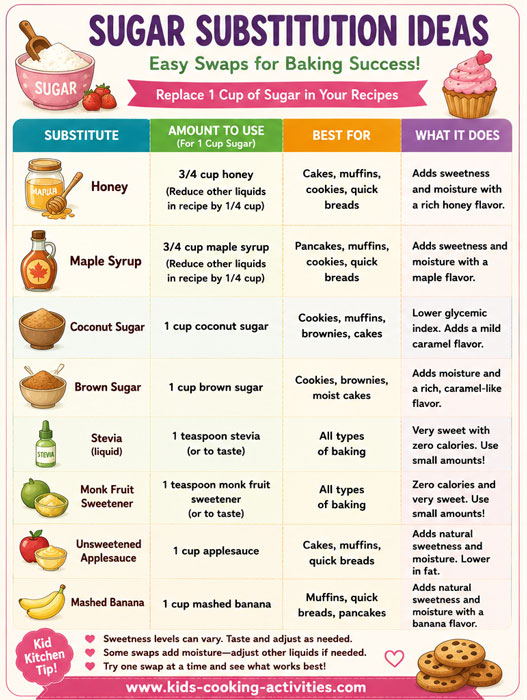
Sugar does much more than sweeten baked goods. It helps keep cakes and cookies moist, creates a tender texture, adds color through browning, and contributes to the overall structure of many recipes. Some substitutes work well in baking, while others may require small adjustments to the liquid ingredients.
The following substitutions replace 1 cup of granulated sugar. Keep in mind that liquid sweeteners may make baked goods softer and may require reducing other liquids slightly.
Best Baking Tip
For many cookies, cakes, and muffins, you can simply reduce the sugar by about 25% without greatly affecting the finished recipe. This is often easier than replacing all of the sugar with another sweetener.
What Does Sugar Do?
Sugar helps baked goods brown, keeps them moist, adds tenderness, and balances flavors. Different sweeteners produce different results, so recipes made with honey or maple syrup may bake faster and have a softer texture than those made with granulated sugar.
Baking Powder Substitutes
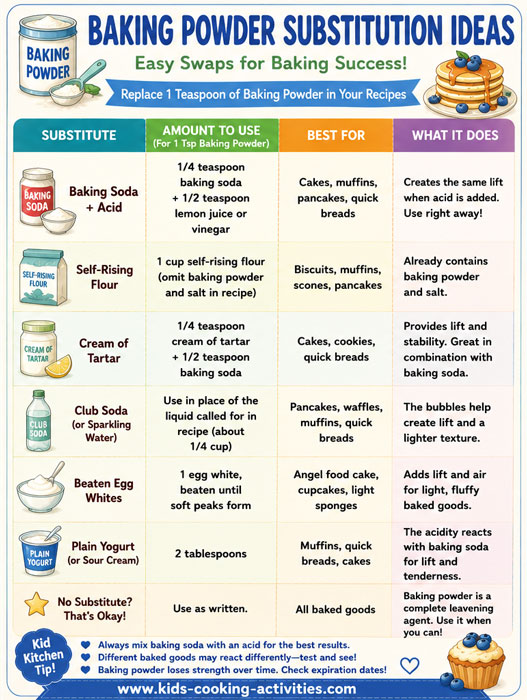
Baking powder is a leavening agent that helps cakes, muffins, biscuits, pancakes, and quick breads rise. If you've run out, you can often make your own substitute using baking soda combined with an acidic ingredient.
The following substitutions replace 1 teaspoon of baking powder.
Kitchen Tip
Baking powder already contains both an acid and a base. Baking soda does not, so it must be paired with an acidic ingredient like cream of tartar, lemon juice, vinegar, yogurt, or buttermilk to help baked goods rise properly.
What Does Baking Powder Do?
When baking powder is mixed with liquid and heated in the oven, it releases tiny bubbles of carbon dioxide. These bubbles become trapped in the batter, making cakes, muffins, pancakes, and biscuits light and fluffy.
Yeast Substitutes
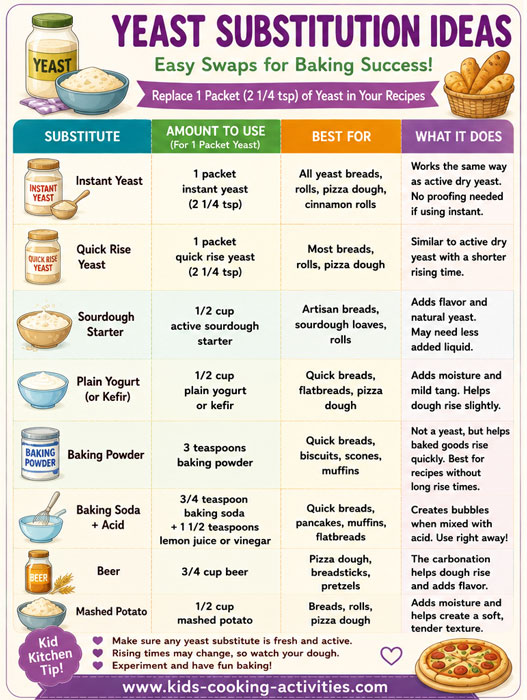
Yeast is a living organism that helps bread dough rise while adding its familiar flavor and chewy texture. Although there isn't a perfect substitute for yeast, there are several options that work well for quick breads, biscuits, pancakes, and other recipes that don't require a long rise.
The following substitutions replace the leavening power of 1 packet (2¼ teaspoons) of active dry yeast. Results will vary depending on the recipe.
Important Baking Tip
Yeast substitutes can help baked goods rise, but they do not replace the flavor, texture, or chewy crumb of traditional yeast bread. If you're making sandwich bread, dinner rolls, pizza dough, or cinnamon rolls, it's usually best to use real yeast.
What Does Yeast Do?
As yeast feeds on sugars in the dough, it releases carbon dioxide gas. These tiny bubbles become trapped in the dough, causing it to rise while creating the airy texture and delicious flavor found in homemade breads and rolls.
Salt Substitutes
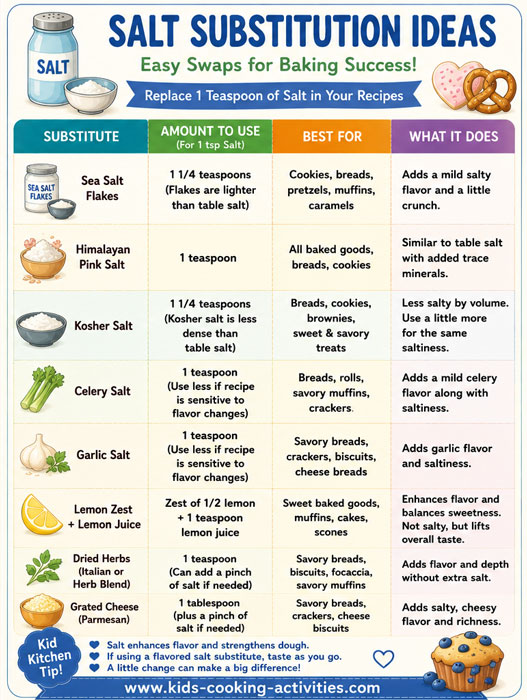
Salt enhances flavor, strengthens gluten in bread dough, and helps control yeast during rising. While many recipes can be made with less salt, there is no perfect substitute because salt performs several important jobs in baking.
If you need to reduce sodium, try using herbs, spices, or citrus to boost flavor instead of replacing salt completely.
Kitchen Tip
For cookies, cakes, muffins, and pancakes, you can often reduce the salt slightly without noticing a big difference. For yeast breads, however, salt helps develop flavor, strengthens the dough, and controls how quickly the yeast rises.
What Does Salt Do?
Salt balances sweetness, enhances flavor, strengthens gluten, and helps regulate yeast activity. Although it is usually added in small amounts, it has a big impact on the taste and texture of many baked goods.
Sour Cream Substitutes
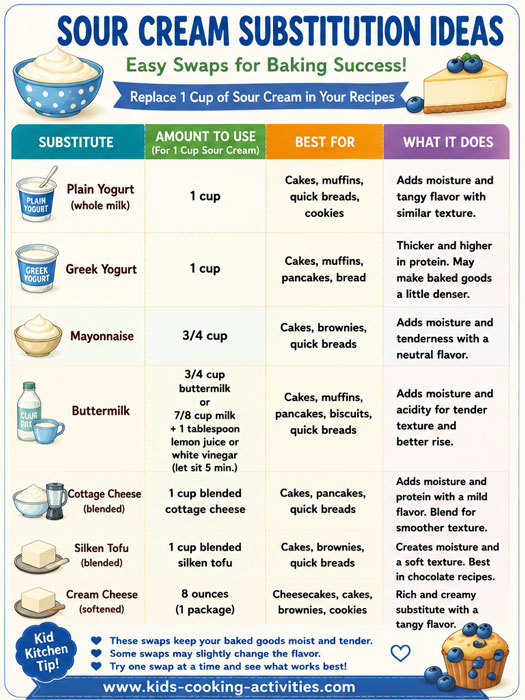
Sour cream adds moisture, richness, and a slight tangy flavor to baked goods. It also helps create a soft, tender crumb in cakes, muffins, quick breads, and coffee cakes. If you don't have sour cream, several common ingredients make excellent substitutes.
The following substitutions replace 1 cup of sour cream. Most work as a one-to-one replacement in baking recipes.
Best Baking Tip
Plain Greek yogurt is one of the easiest and most reliable substitutes for sour cream. It has a similar thickness and tangy flavor, making it an excellent choice for cakes, muffins, pancakes, and quick breads.
What Does Sour Cream Do?
Sour cream adds fat and moisture while its acidity helps create tender baked goods. It also works with baking soda to produce a lighter texture, making cakes and muffins soft and fluffy.
Cocoa Powder Substitutes
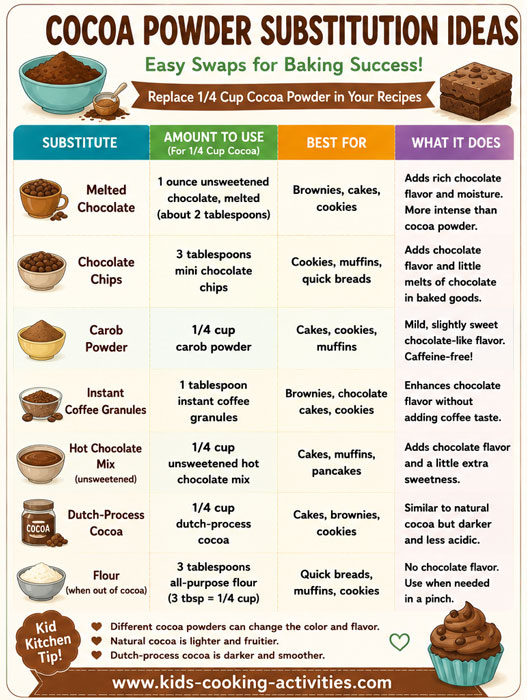
Cocoa powder gives baked goods their rich chocolate flavor and deep color. If you've run out, there are several substitutes that work well depending on the recipe you're making. Some provide a similar chocolate taste, while others offer a naturally sweet alternative. Learn more about using different types of chocolate.
The following substitutions replace ¼ cup of unsweetened cocoa powder.
Best Baking Tip
Natural cocoa powder and Dutch-process cocoa powder are not always interchangeable. Natural cocoa powder is acidic and is commonly paired with baking soda, while Dutch-process cocoa has been neutralized and is often used with baking powder. Check your recipe before switching between the two.
What Does Cocoa Powder Do?
Cocoa powder adds chocolate flavor without extra fat. It also contributes color and helps balance sweetness in many desserts. Because cocoa powder is dry, replacing it with melted chocolate usually requires reducing some of the fat already in the recipe.
Kitchen Science: Test Baking Substitutions
One of the best ways for kids to learn about baking is by experimenting with ingredient substitutions. By changing just one ingredient at a time, children can discover how each ingredient affects the taste, texture, color, and appearance of the finished recipe.
Try This Baking Experiment
- Choose a simple recipe such as muffins, pancakes, or cookies.
- Prepare the recipe exactly as written.
- Make a second batch, changing only one ingredient-for example, replace the oil with applesauce or the milk with oat milk.
- Bake both recipes and compare the results.
- Talk about what changed and why.
Learning Extension
Keep a baking journal! Have kids record the ingredient they substituted, what happened during baking, and whether they would use that substitution again. Over time they'll build their own personalized baking substitution guide.
Baking Substitutions in the Classroom
Classroom cooking activities often need ingredient substitutions to accommodate food allergies, dietary preferences, or missing ingredients. Planning ahead helps every child participate while keeping recipes safe and enjoyable.
When Might You Need a Substitute?
- Students have egg, dairy, or other food allergies.
- A family requests vegetarian or vegan recipe options.
- An ingredient is unavailable or has been forgotten.
- You want to demonstrate how different ingredients affect baking.
- Your class is comparing traditional and alternative recipes as part of a food science lesson.
Plan Before You Bake
Before class, review your recipe and identify any ingredients that may need to be replaced. Test unfamiliar substitutions ahead of time whenever possible so you'll know how they affect the finished product. Some substitutions work perfectly in muffins and quick breads but may not produce the same results in delicate cakes or cookies.
Keep Safety First
If you are baking with children who have food allergies, always follow your school's policies and any instructions provided by parents or guardians. Read ingredient labels carefully, avoid cross-contact between foods, and remember that not every substitution is appropriate for every allergy.
Classroom Tip
Keep a laminated copy of your Kitchen Substitution Reference Sheets near your cooking station. Students can quickly look up common ingredient swaps while learning how different ingredients contribute to baking success.
Turn Substitutions into a Science Lesson
Instead of simply replacing an ingredient, encourage students to predict what might happen before baking. Will the cookies spread more? Will the muffins rise as high? Will the bread taste different? Comparing recipes helps children understand the science behind baking while building observation and critical-thinking skills.
Related Baking Resources & Activities
Now that you know how to substitute common baking ingredients, continue building your baking skills with these helpful guides, recipes, and kitchen activities. Whether you're learning the basics, practicing measuring, or trying new recipes, these resources will help kids become more confident bakers.




Frequently Asked Questions About Baking Substitutions
Can I substitute ingredients in any baking recipe?
Many everyday recipes, such as muffins, pancakes, cookies, brownies, and quick breads, are very forgiving and work well with substitutions. Delicate recipes like angel food cake, meringues, and soufflés usually require the original ingredients for the best results.
What is the easiest egg substitute for baking?
Unsweetened applesauce and ground flaxseed mixed with water are two of the most popular egg substitutes. Applesauce works especially well in cakes, muffins, and quick breads, while a flax egg is often used in cookies and brownies.
Can I replace butter with oil?
Yes. Many cakes, muffins, and quick breads can be made with oil instead of butter. Oil produces a moist, tender texture, while butter adds a richer flavor and helps create crisp edges in cookies.
Which milk substitute works best for baking?
Unsweetened oat milk and soy milk are excellent one-to-one substitutes for regular milk in most baking recipes. Almond milk also works well, although it has a slightly thinner consistency.
Can I use whole wheat flour instead of white flour?
Yes. For many recipes, replacing up to half of the all-purpose flour with whole wheat flour adds fiber while keeping the texture light. You can gradually increase the amount as you become familiar with the results.
Why do baking substitutions sometimes change the texture?
Every ingredient has a specific job. Some provide moisture, others create structure, and some help baked goods rise. Changing one ingredient can affect how the finished recipe looks, tastes, and feels.
Can I make recipes dairy-free?
Often, yes. Plant-based milks, dairy-free butter, dairy-free yogurt, and vegan sour cream can successfully replace many dairy ingredients in cakes, muffins, pancakes, cookies, and quick breads.
What's the best way to learn baking substitutions?
Start with one substitution at a time and compare the results with the original recipe. Baking simple recipes like pancakes, muffins, or cookies helps kids understand how each ingredient affects the finished product while building confidence in the kitchen.
Keep Exploring
Continue building your baking confidence with more recipes, kitchen skills, and beginner-friendly cooking activities.
Get Free Kids Recipe Cards + Cooking Printables
Join Kids Cooking Activities for fun recipes, cooking ideas, and printable resources for kids, families, and classrooms.
Follow Kids Cooking Activities too:





© Debbie Madson, Madson Web Publishing, LLC — All rights reserved.
The material on this site is for educational purposes only.