
Egg Floating Experiment
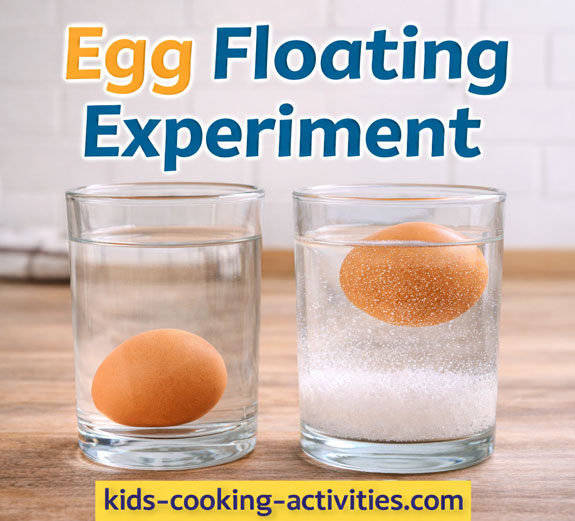
This simple egg floating experiment is a great food science activity for kids. By comparing an egg in regular water and an egg in salt water, children can see how density changes whether an object sinks or floats.
This activity is part of our Food Science Experiments collection where you can explore kitchen chemistry, density, buoyancy, and other hands-on science activities connected to food.
Kids Cooking Activities Teaching Materials
Teaching kids to cook? Save time with ready-made lesson plans used by parents and teachers. Browse teaching materials →


This page may contain affiliate links. We may earn a small commission at no extra cost to you. Learn more.
Experiment Summary
- Time: 10 minutes
- Difficulty: Easy
- Supplies: Eggs, plain water, salt water
- Science Concept: Density and buoyancy
Make a Prediction
Before putting the second egg into the salt water, ask kids what they think will happen.
- Will both eggs sink?
- Will one float?
- Why might salt change the result?
What You Need
by Disha Khullar, India
- 2 eggs
- 1 glass of plain water
- 1 glass of water mixed with 3–4 tablespoons of salt
How to Do the Experiment
- Fill two glasses with water.
- Leave one glass with plain water.
- Add 3–4 tablespoons of salt to the second glass and stir until it dissolves.
- Place one egg into the plain water and observe what happens.
- Place the second egg into the salt water and compare the result.
Another way to try the experiment is by using two larger containers. Fill both with water, then slowly add about 1 cup of salt to one container. Place an egg in each container and observe the difference.
What Happens?
The egg sinks in plain water because the egg is denser than the water around it. In the salt water, the egg floats because the salt makes the water denser. A denser liquid can support the egg more easily.
The Science Behind the Experiment
Density refers to how much matter is packed into a space. When salt dissolves in water, it increases the water’s density. When an object is placed in a liquid that is denser than the object itself, it floats. When the liquid is less dense, the object sinks.
This is the same reason people can float more easily in very salty bodies of water such as the Great Salt Lake in Utah or the Dead Sea.
Why It Matters in Cooking
This experiment helps kids understand that adding ingredients can change the properties of a mixture. In cooking, salt does more than add flavor. It can affect texture, moisture, and how ingredients behave in liquids.
- Kids see that dissolved ingredients can change water
- They learn how density affects floating and sinking
- It connects science to kitchen ingredients they already know
- It builds comparison and observation skills
What Kids Learn
- How density changes when salt is added to water
- Why some objects sink and others float
- How buoyancy works
- How to compare results in two different liquids
Questions to Ask Kids
- Why did the egg sink in plain water?
- Why did the egg float in salt water?
- What changed when you added salt?
- Do you think more salt would make a difference?
- What other objects might float differently in salt water?
Ways to Extend the Experiment
- Compare different amounts of salt to see when the egg begins to float.
- Test other small objects in plain and salt water.
- Try warmer and colder water to compare results.
- Keep a simple science journal with predictions and results.
Egg Floating Experiment FAQ
Why does the egg float in salt water?
The egg floats in salt water because salt water is denser than plain water. The denser liquid can support the egg more easily.
Why does the egg sink in plain water?
The egg sinks in plain water because the egg is denser than the plain water around it.
What science concept does this experiment teach?
This experiment teaches density and buoyancy by showing how the amount of dissolved salt changes whether an egg sinks or floats.
Can kids compare different amounts of salt?
Yes. Kids can test different amounts of salt to see how the density of the water changes and when the egg begins to float.
Try More Food Science Experiments
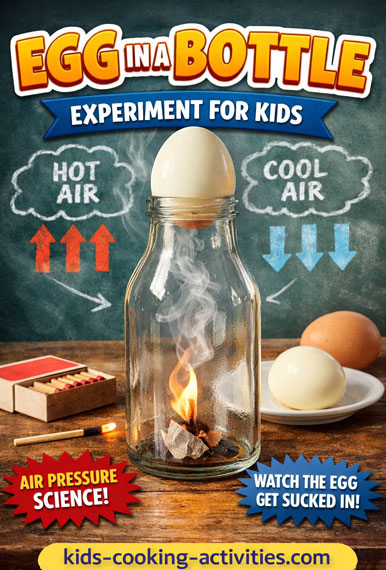
Egg in a Bottle Experiment
See how air pressure can push a peeled egg into a bottle.
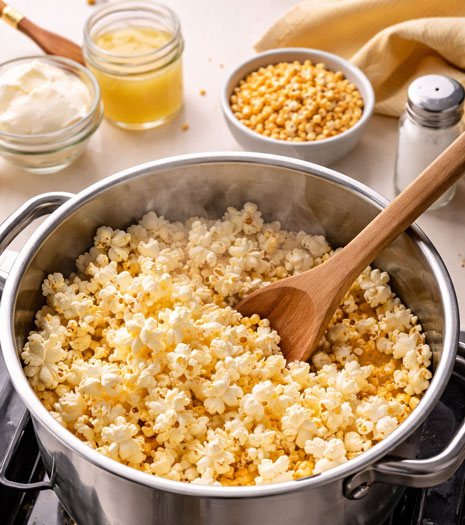
Popcorn Science
Discover why popcorn kernels pop and how heat changes the moisture inside each kernel.
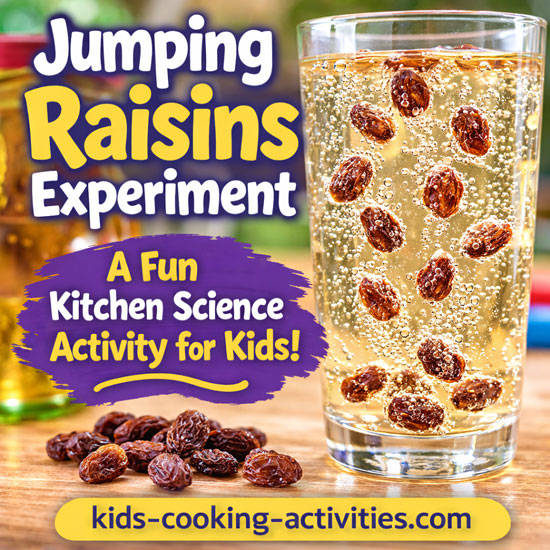
Jumping Raisins Experiment
Watch raisins bounce in soda while learning about gas bubbles.
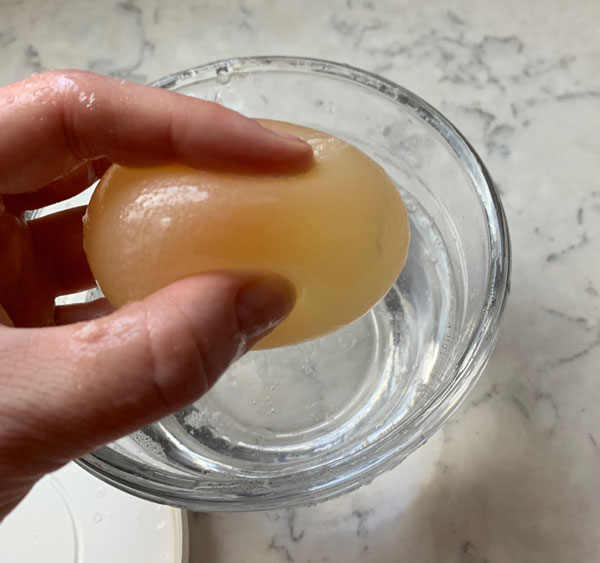
Rubber Egg Experiment
Soak an egg in vinegar and watch the shell dissolve to reveal a flexible, bouncy egg.
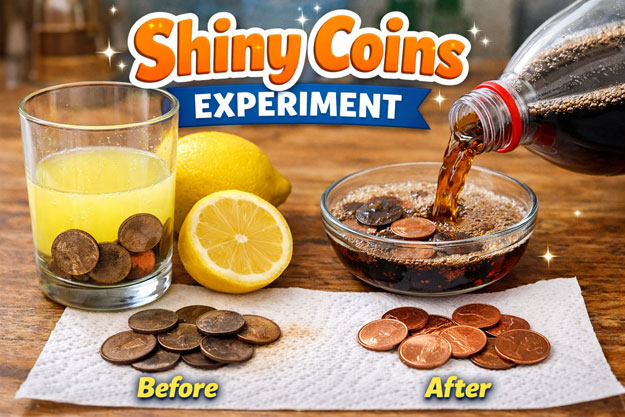
Shiny Coins Experiment
Use simple kitchen ingredients to help kids see how tarnish can be cleaned away.
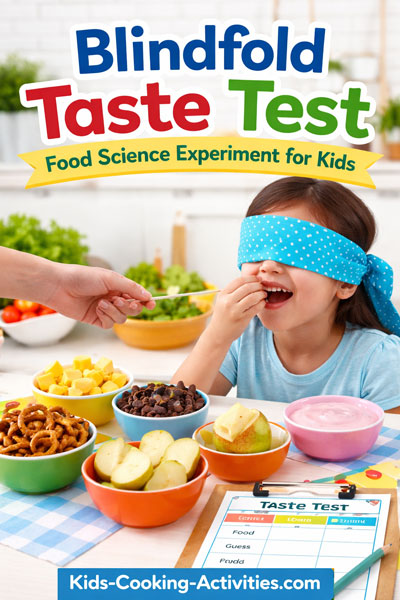
Blindfold Taste Test
Explore how smell and taste work together by trying foods while blindfolded.
Get Free Kids Recipe Cards + Cooking Printables
Join Kids Cooking Activities for fun recipes, cooking ideas, and printable resources for kids, families, and classrooms.
Follow Kids Cooking Activities too:





© Debbie Madson, Madson Web Publishing, LLC — All rights reserved.
The material on this site is for educational purposes only.