Importance of Washing Hands for Kids
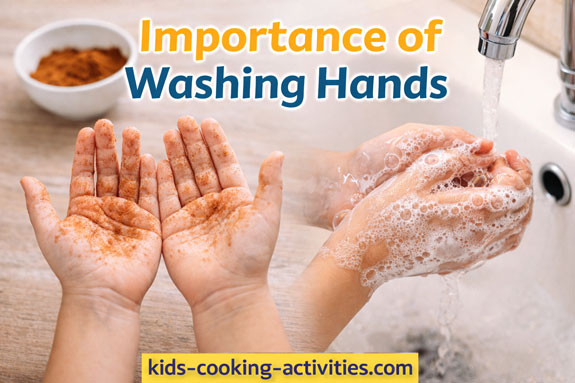
Washing hands is one of the most important food safety habits kids can learn. Before preparing food, after touching ingredients, and after using shared kitchen tools or surfaces, clean hands help prevent germs from spreading.
This simple hands-on activity helps children understand that germs are often invisible, but they can still move quickly from one person, surface, or food item to another.
This page fits into your Food Science Experiments hub because it teaches observation, contamination spread, and practical kitchen science in a way kids can see and understand.
Kids Cooking Activities Teaching Materials
Teaching kids to cook? Save time with ready-made lesson plans used by parents and teachers. Browse teaching materials →


This page may contain affiliate links. We may earn a small commission at no extra cost to you. Learn more.
Experiment Summary
- Time: 15 to 20 minutes
- Difficulty: Easy
- Supplies: Cinnamon, bowls, warm soapy water, paper towels
- Science Concept: Germ spread, hand washing, and food safety
What Happens?
At first, the cinnamon seems harmless. But once children touch it, the cinnamon spreads quickly to their hands, tables, towels, and other surfaces.
This helps kids understand how real germs can spread the same way, even though actual germs are too small to see.
Why Washing Hands Matters
Washing hands is a simple habit, but it plays a big role in food safety. Clean hands help protect food from contamination and keep the kitchen safer for everyone.
Kids often cannot see the germs that may be on their skin, but this activity makes the idea of spreading germs much easier to understand.
Hand Washing Germ Activity
by Sheila Hubbard (Jackson, MO)
As our class was discussing how to safely prep food and cook together, we talked about why we should wash our hands before and after handling food. We discussed germs and how they can spread quickly, even when we do not know they are there.
After predicting how germs might spread and possibly make us sick, we went to the sink and washed our hands with soap. I asked if anyone could actually see germs on their hands. After deciding we could not see anything, I said, “Let’s see what happens when we touch the dirt.” For our pretend dirt, we used cinnamon because it is easy to see and smells good too.
Each child took turns placing fingers into individual bowls of cinnamon. At first it seemed harmless and everyone liked the smell, but by the time each friend had taken a turn, the cinnamon “dirt” was spread all over their hands.
We then looked around the room and noticed where the cinnamon had been left behind. It was on hands, tables, paper towels, and other surfaces. This helped us talk about how germs can spread in the same way. Even though real germs are much too small to see, they can be passed from place to place just like the cinnamon.
Next, we talked about how to clean up those germs so we do not get sick. We made several bigger bowls of warm, soapy water that had been temperature checked first. Then we took turns washing our hands and cleaning the surfaces with the soapy water before rinsing everything clean.
Science Results
This activity shows kids how easily germs can spread through touch. The cinnamon acts as a visual model for germs. Once it gets on one person’s hands, it can move to tables, towels, bowls, and other children. Even though germs are invisible in real life, they often spread in the same way.
Washing with soap and water helps remove dirt, oils, and many germs from the skin. Soap breaks up the oils on our hands where germs can stick, and rinsing with water helps wash them away. This is why hand washing is so important before cooking, eating, and cleaning up in the kitchen.
Why It Matters in Cooking
This page is important in your cooking hub because food science is not only about chemical reactions. It is also about safe habits in the kitchen.
- Clean hands help keep food safer
- Soap and water reduce contamination
- Kids learn that invisible germs can still spread
- It connects science observation to real cooking routines
See more kitchen skills for kids.
Questions to Ask Kids
- Could you see real germs on your hands?
- How did the cinnamon spread from one place to another?
- Why do you think soap and water work better than water alone?
- What kitchen surfaces should be cleaned before and after cooking?
Ways to Extend the Activity
- Compare how fast cinnamon spreads when one child touches many surfaces.
- Try washing with water first, then compare with soap and water.
- Talk about when kids should wash hands during cooking lessons.
- Make a simple food safety checklist for the kitchen.
Importance of Washing Hands FAQ
Why is washing hands important before cooking?
Washing hands helps remove dirt, oils, and germs that can spread to food, utensils, and kitchen surfaces.
Why use cinnamon in this activity?
Cinnamon is easy to see, so it works as a visual model for how invisible germs can spread from one place to another.
Why does soap work better than water alone?
Soap helps break up oils and lift dirt and many germs from the skin so they can be rinsed away with water.
What does this activity teach kids?
It teaches kids that germs spread easily through touch and that washing hands and cleaning surfaces are important food safety habits.
Try More Food Science Experiments
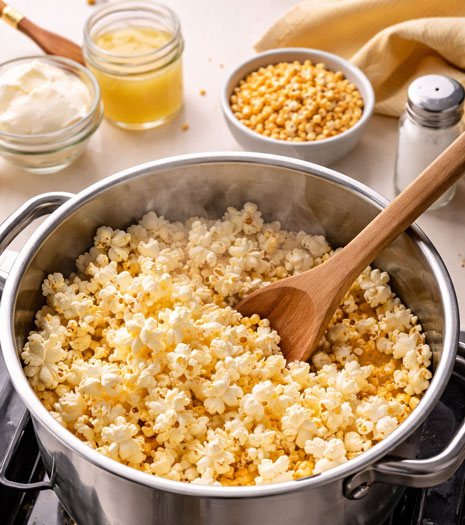
Popcorn Science
Discover why popcorn kernels pop and how heat changes the moisture inside each kernel.
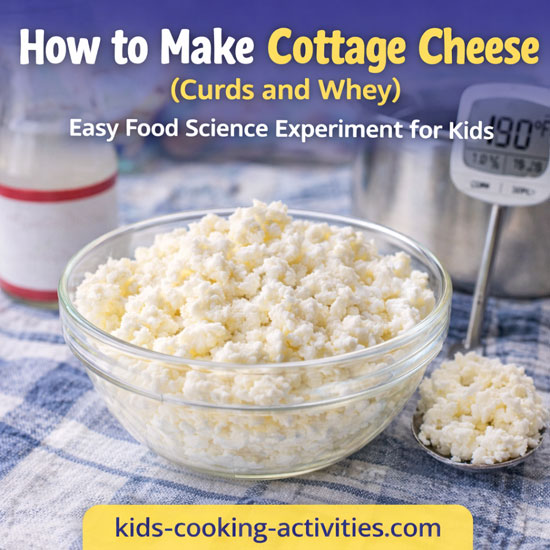
Homemade Cottage Cheese
See how acids change milk proteins and create curds in this simple kitchen experiment.
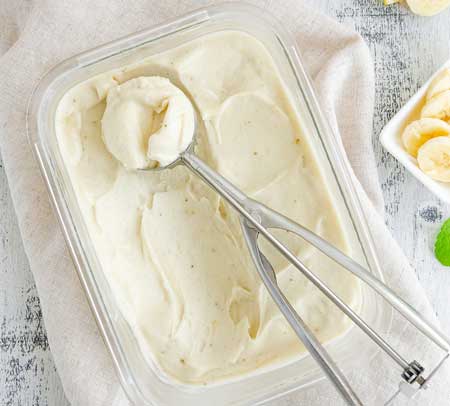
Homemade Ice Cream Science
Learn how salt lowers freezing temperature while making a fun frozen treat.
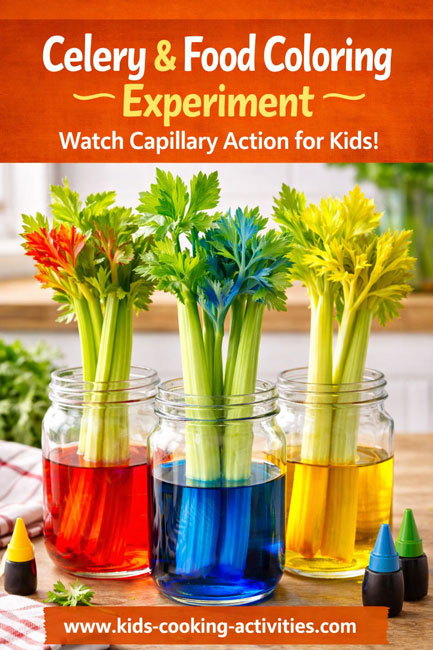
Celery Food Coloring Experiment
Watch colored water travel through celery stalks and see how water moves through their stems.
Apple Experiment
Use apples to explore freshness, browning, and how ingredients affect food over time.
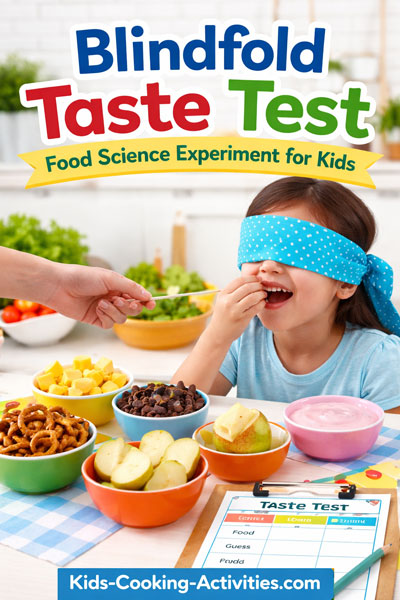
Blindfold Taste Test
Explore how smell and taste work together by trying foods while blindfolded.
Get Free Kids Recipe Cards + Cooking Printables
Join Kids Cooking Activities for fun recipes, cooking ideas, and printable resources for kids, families, and classrooms.
Follow Kids Cooking Activities too:





© Debbie Madson, Madson Web Publishing, LLC — All rights reserved.
The material on this site is for educational purposes only.