
Junior Chef Lesson 2: Knife Safety and Stir Fry
For today’s Junior Chef lesson, go over kitchen knife safety and demonstrate how to use a knife properly. This lesson helps learners begin using one of the most important kitchen tools with more confidence, care, and responsibility.
This lesson follows Junior Chef Lesson 1: Kitchen Safety, Microwave Use, and Stove Cooking and continues building the independence needed for more advanced cooking.
Knife skills take practice, maturity, and supervision. Go slowly, review the rules often, and make safety the focus before moving on to the recipe.
Kids Cooking Activities Teaching Materials
Teaching kids to cook? Save time with ready-made lesson plans used by parents and teachers. Browse teaching materials →


This page may contain affiliate links. We may earn a small commission at no extra cost to you. Learn more.
Lesson Focus
- Learn basic knife safety rules
- Practice proper cutting technique
- Build confidence with vegetables and prep work
- Use cut ingredients in a simple stir fry
Part 1: Learning About Knife Safety
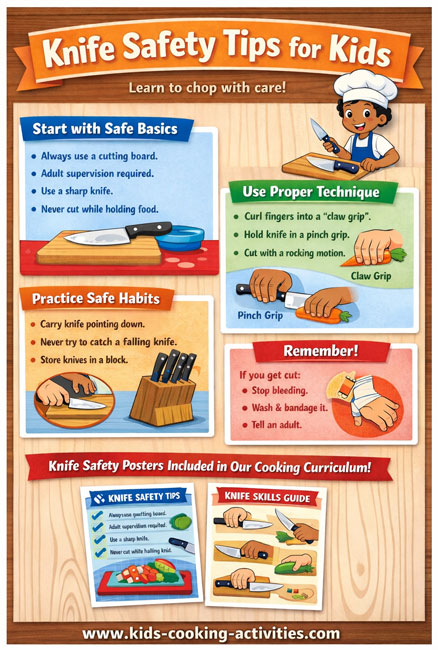
Knife Safety Tips for Kids
Teaching knife skills is an important step in helping kids become confident and independent in the kitchen. Start by modeling each step slowly, then guide children as they practice safely.
- Always use a cutting board. It is safer and protects countertops.
- Use a large board to give kids enough space to work.
- Always have adult supervision when using knives.
- Use a sharp knife — dull knives are more likely to slip and cause injury.
- Never cut food while holding it in your hand.
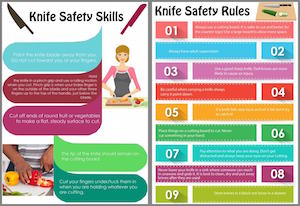
- Curl fingers under and tuck them in (the “claw grip”).
- Hold the knife using a pinch grip for better control.
- Keep the blade pointed away from your body and fingers.
- Use a rocking motion when cutting.
- The tip of the knife should stay in contact with the cutting board.
- You can place a small piece of tape on the handle to show finger placement.
- Carry knives with the point facing down.
- If a knife falls, step back — never try to catch it.
- Stay focused and avoid distractions while cutting.
- Never leave a knife in the sink where it can’t be seen.
- Clean, dry, and put knives away after use.
- Store knives in a block or safe holder, not loose in a drawer.
Visual reminders help kids remember safety rules. Our Knife Safety Posters are included in the cooking curriculum and poster set, making it easy to reinforce safe habits during every lesson.
If you cut yourself, run the cut under cold water. Once bleeding stops, dry it and apply an adhesive bandage. If the cut is deep or does not stop bleeding, apply pressure, hold it above your heart, and seek medical attention.
Quick Knife Safety Reminders
- Go slowly
- Watch your fingers
- Cut on a board only
- Keep your eyes on your work
- Stop if you feel rushed or distracted
Why This Lesson Matters
Knife skills are a major step toward real cooking independence. Learning to cut safely and carefully helps build confidence, better kitchen control, and the ability to prepare fuller meals.
Knife Skills Video
For help with proper knife technique, watch this kids cooking video as part of your lesson.
Part 2: Practice Cutting and Prepare a Stir Fry
Most kids cannot wait to use a kitchen knife, but these lessons hold off until the teen years so children have more experience, maturity, and control before taking on this skill.
Now that your Junior Chef has learned some kitchen knife safety, let them prepare a stir fry. Remind your child to go slowly while you supervise for correct cutting and cooking procedure.
Stir-Fry Recipe
Stir-Fry Recipe
By Kids Cooking Activities


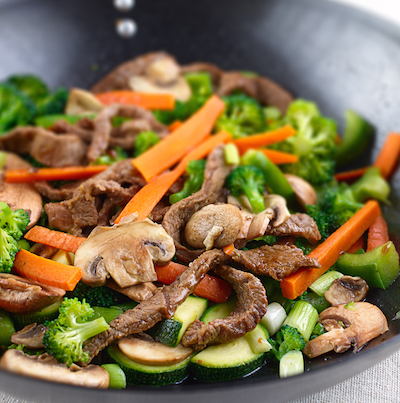
Ingredients
- Beef, cut in strips or chicken, cut in strips
- 1 cup water
- 3 tablespoons soy sauce
- 1 1/2 tablespoons cornstarch
- 1 teaspoon sugar
- Broccoli florets
- 1 green pepper
- Green onions
- 2 carrots
Directions
- In a bowl or measuring cup, stir together soy sauce, sugar, cornstarch, and water. Set aside.
- Chop green pepper, green onions, and carrots. Break or cut broccoli into bite-size pieces.
- In a saucepan, heat 1 tablespoon oil.
- Add vegetables and meat. Stir-fry.
- Add the sauce and continue to stir-fry several minutes until the vegetables are tender and the meat is done.
- Serve with cooked rice.
Teaching Tip: Have your child group vegetables by cooking time and size as they cut to help build planning skills too.
Another Stir-Fry Option
Or try this recipe variation below:
Skills Practiced in This Lesson
- Knife safety
- Proper cutting technique
- Vegetable prep
- Making a sauce
- Stovetop cooking
Use this lesson as part of a complete teaching plan. See how to teach cooking for lesson structure, and use kids cooking tips to make lessons run smoothly.
FAQ: Junior Chef Lesson 2
Start here → Assistant Chef → Build skills → Chef in Training → Advance → Junior Chef → Intermediate → Senior Chef → Master → Basic Cooking Lessons
Kids Cooking Lesson Plans
Want a done-for-you plan?If you're looking for a complete, ready-to-use system, these structured lesson plans and teaching materials can help you save time and confidently teach cooking step-by-step.
Explore Cooking Curriculum →
Get Free Kids Recipe Cards + Cooking Printables
Join Kids Cooking Activities for fun recipes, cooking ideas, and printable resources for kids, families, and classrooms.
Follow Kids Cooking Activities too:





© Debbie Madson, Madson Web Publishing, LLC — All rights reserved.
The material on this site is for educational purposes only.