
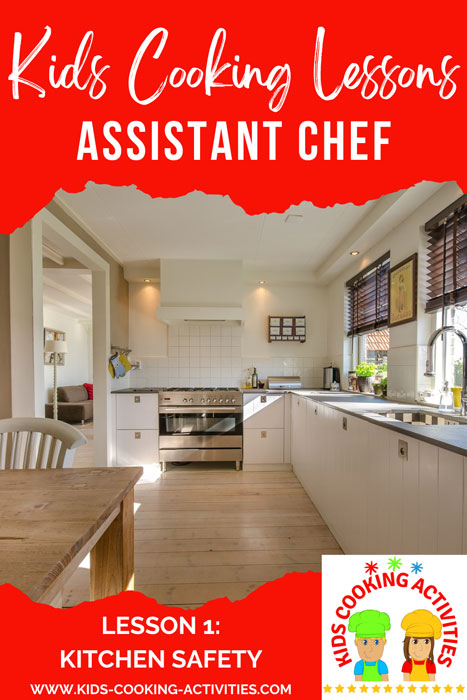
Assistant Chef Lesson 1: Kitchen Safety
This first Assistant Chef lesson introduces beginner cooks to basic kitchen safety. Before starting any cooking activity, take time to read and discuss simple kitchen rules together. Learning how to stay safe in the kitchen is one of the most important first steps in becoming a confident cook.
This lesson is part of the Assistant Chef level, designed for beginners who are learning how to participate in cooking with guidance and supervision.
In each lesson group, a few topics repeat because they are important life skills to practice alongside cooking. These core lessons include kitchen safety, etiquette, and nutrition.
Kids Cooking Activities Teaching Materials
Teaching kids to cook? Save time with ready-made lesson plans used by parents and teachers. Browse teaching materials →


This page may contain affiliate links. We may earn a small commission at no extra cost to you. Learn more.
Core Life Skills in These Cooking Lessons
In addition to cooking skills, this lesson also introduces important life skills that are practiced throughout the cooking lessons program:
- Kitchen safety
- Etiquette and manners
- Nutrition and healthy habits
Kitchen Safety Rules and Printables
Use the kitchen safety rules and food sanitation page as a companion to this lesson. It includes printable charts and checklists that help reinforce safety habits and make lessons easier to follow at home or in a classroom setting.
Child-Size Equipment
Teach children which equipment they can touch and use safely, and which tools and appliances always require adult help. Using child-size utensils and tools can help young children feel more confident and successful in the kitchen.
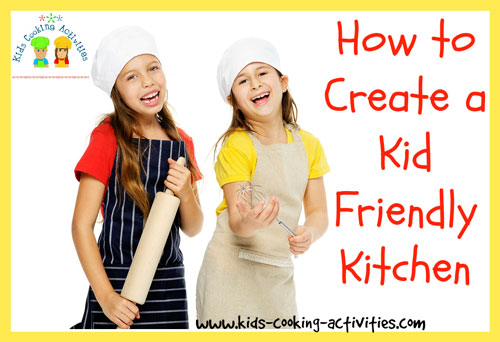
Create a Child-Friendly Kitchen
Set up a cupboard or shelf at the right height for your child so they can store their own safe kitchen equipment. This helps children learn where tools belong and encourages them to put everything away after cooking.
When children have their own utensils and cooking items, they often take more interest in learning how to use and care for them. Let your child help as much as possible with simple tasks such as stirring, mixing, pouring, and measuring. These activities also build early math skills while they learn to cook.
Child Safety in the Kitchen
Children need to learn that ovens, stovetops, and grills get very hot and can cause serious burns. When children understand this from an early age, they are more likely to stay safe in the kitchen.
Keep all sharp knives and dangerous equipment out of your child’s reach. Even if your child is usually careful, they may not always understand the difference between a child-safe utensil and a sharp kitchen tool. It is best to be cautious and make sure unsafe tools are only handled by an adult.
Why Kitchen Safety Comes First
Before children begin learning how to cook, they need to understand how to stay safe. Teaching kitchen safety early helps prevent accidents, builds confidence, and creates positive habits that carry into future cooking lessons.
This foundation prepares learners for the next skills they will practice, such as spreading, pouring, and measuring, in later Assistant Chef lessons.
Simple Kitchen Safety Reminders for Beginner Cooks
- Always cook with an adult nearby
- Ask before touching appliances
- Use child-safe tools when possible
- Wash hands before and after cooking
- Keep sharp tools out of reach
Kitchen Safety for Kids Video
Use this lesson as part of a complete teaching plan. See how to teach cooking for lesson structure, and use kids cooking tips to make lessons run smoothly.
FAQ: Kitchen Safety for Beginner Cooks
Start here → Assistant Chef → Build skills → Chef in Training → Advance → Junior Chef → Intermediate → Senior Chef → Master → Basic Cooking Lessons
Kids Cooking Lesson Plans
Want a done-for-you plan?If you're looking for a complete, ready-to-use system, these structured lesson plans and teaching materials can help you save time and confidently teach cooking step-by-step.
Explore Cooking Curriculum →
Next Step: After learning kitchen safety, move on to Lesson 2: Spreading, where beginners start practicing hands-on food preparation skills.
Back to Kids Cooking Lessons page
Get Free Kids Recipe Cards + Cooking Printables
Join Kids Cooking Activities for fun recipes, cooking ideas, and printable resources for kids, families, and classrooms.
Follow Kids Cooking Activities too:





© Debbie Madson, Madson Web Publishing, LLC — All rights reserved.
The material on this site is for educational purposes only.