

- Home ›
- Teaching Help ›
- Kitchen Safety Rules
Kitchen Safety Rules for Kids
Teaching kids to cook begins with teaching them how to stay safe in the kitchen. These kitchen safety rules for kids include simple safety habits, knife safety, stove and oven safety, hand washing, food sanitation tips, printable kitchen charts, and lesson ideas to help children learn safe cooking skills step by step.
Whether you are cooking at home, teaching a class, or helping beginners build kitchen confidence, these child-friendly kitchen safety tips can make cooking safer, easier, and more enjoyable.
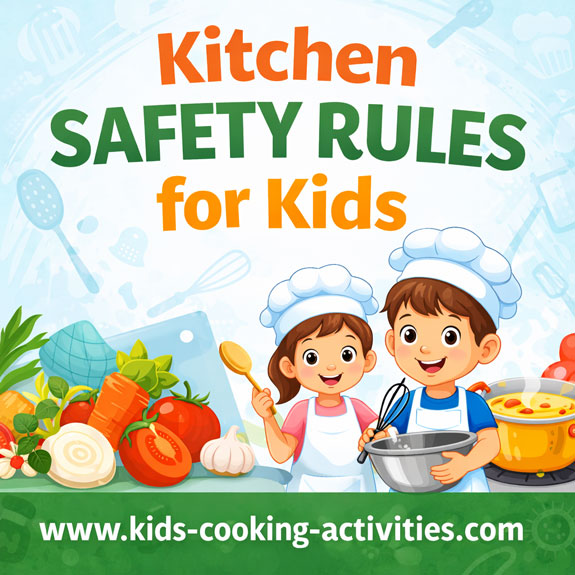
Kids Cooking Activities Teaching Materials
Teaching kids to cook? Save time with ready-made lesson plans used by parents and teachers. Browse teaching materials →


This page may contain affiliate links. We may earn a small commission at no extra cost to you. Learn more.
Building Safe Cooking Skills
This kitchen safety page is a starting point for teaching children safe cooking habits. You can also explore our Kitchen Skills for Kids, kids cooking lessons, knife safety lesson, appliance safety page, and hand washing page for more detailed help.
Printable Kitchen Safety Charts
Looking for printable kitchen safety reminders for kids? These free kitchen safety printables are helpful for family cooking time, homeschool lessons, cooking clubs, and classroom kitchen units. Print them and post them where children can see them before and during cooking.
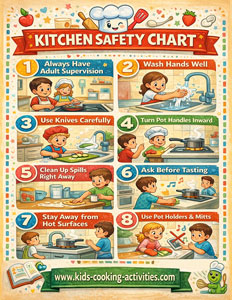
Kitchen Safety Rules Chart
A quick visual reminder of basic kitchen safety rules for kids before they begin cooking.
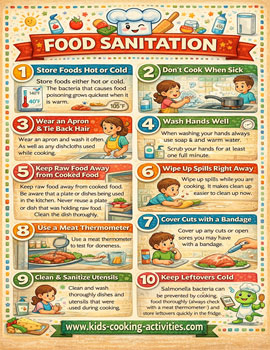
Food Sanitation Chart
Help children learn safe food handling, hand washing, and cleaning habits in the kitchen.
Kitchen Safety Posters and More
Buy these and more kitchen safety posters in our Kitchen Poster Set.
Basic Kitchen Rules for Kids
Review these basic kitchen safety rules before each cooking activity. Repeating the same rules often helps kids remember them and practice safer habits every time they cook.
- Always cook with adult supervision.
- Walk in the kitchen instead of running.
- Read the recipe through before you begin and gather ingredients first.
- Show children what is safe to touch and what is not safe to touch in your kitchen.
- Keep appliance cords away from water and from the edge of the counter.
- Put ingredients away after using them to keep the kitchen neat and safe.
- Wipe up spills right away.
- Ask for help if something is too hot, too sharp, or too hard to lift.
Need more help teaching routines and safe habits? Visit How to Teach Cooking for more guidance on setting expectations and building confidence step by step.
Knife Safety for Kids
Knife safety is a very important part of teaching kids to cook. Start with child-safe tools when possible, teach cutting skills slowly, and supervise closely.
- Keep sharp knives out of reach of small children.
- Use knives only with supervision and instruction.
- Cut on a sturdy cutting board.
- Keep fingers tucked away from the blade.
- Stay focused while cutting and do not look away.
- Never try to catch a falling knife.
- Set knives flat on the counter when not using them.
When your child is ready for more practice, review our knife safety lesson for older kids.
Stove and Oven Safety for Kids
Children also need clear guidance about heat safety. Burners, pans, baking dishes, oven doors, and even steam can cause burns.
- Teach children that the stove, oven, pans, and baking dishes may stay hot even after cooking.
- Turn pot and pan handles inward so they cannot be bumped or grabbed.
- Use back burners when possible for hot foods.
- Keep children a safe distance away when opening the oven or draining hot water.
- Use aprons, oven mitts, and pot holders.
- Adults should handle the oven and stovetop until children are ready.
- Never reach across a hot burner or pan.
For more help with heat and appliance safety, see teaching kids how to use kitchen appliances safely.
Hand Washing and Hygiene
Kitchen safety also includes food safety. Teaching kids sanitation rules helps prevent the spread of germs and helps keep food safe to eat.
- Wash hands before cooking, after touching raw foods, and after using the restroom.
- Wash hands with soap and warm water for at least 20 seconds.
- Keep raw foods separate from cooked and ready-to-eat foods.
- Clean counters, dishes, and utensils after working with raw meat, eggs, or other messy ingredients.
- Do not lick fingers, spoons, or beaters while cooking.
- Wear a clean apron and use clean dish towels.
- Tie back long hair before cooking.
- Cover cuts or scrapes with a bandage before handling food.
- Store leftovers in the refrigerator promptly.
For more hygiene help, visit our page about the importance of washing hands.
Food Sanitation and Food Safety Video
Kitchen Safety Checklist
Use this quick kitchen safety checklist before and during cooking with children.
 Always supervise young children and beginners.
Keep knives, breakables, and hot tools away from little hands.
Adults should handle the oven and stovetop until children are ready.
Keep children a safe distance away when opening the oven or draining hot water.
Use aprons, oven mitts, and pot holders.
Clean as you go to prevent slips and clutter.
Review food sanitation rules along with cooking skills.
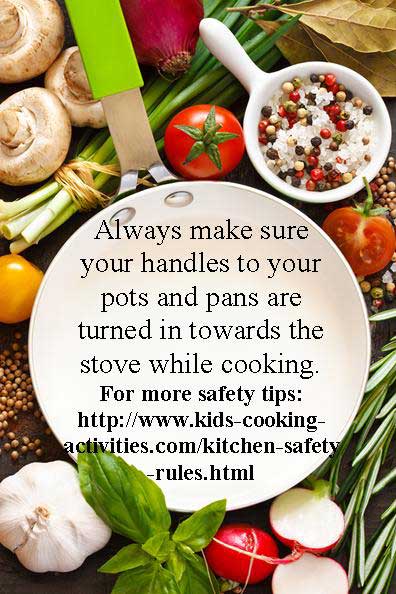
Kitchen Safety Lesson Plans
These lessons build kitchen safety into age-appropriate cooking instruction:
- Assistant Chef safety lesson for ages 3-6
- Chef in Training safety lesson for ages 7-12
- Junior Chef safety lesson for ages 12-15
- See all kids cooking lessons here
Go Deeper with Kitchen Safety Teaching Materials
Want a more complete way to teach kitchen safety, sanitation, and safe cooking habits? Our Teacher Curriculum Set goes more in-depth with structured lessons and teaching support.
Kitchen Safety for Kids Video
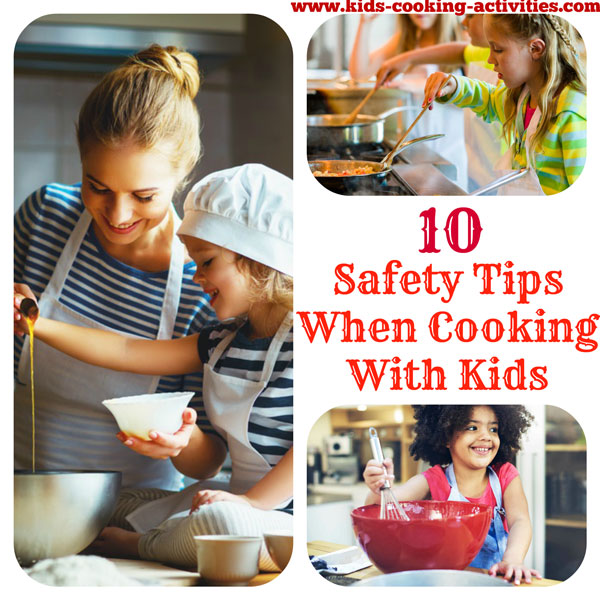
10 Kitchen Safety Tips
These simple kitchen safety tips can help kids stay safe while cooking and baking. Review them before each cooking session and repeat them often so they become natural kitchen habits.
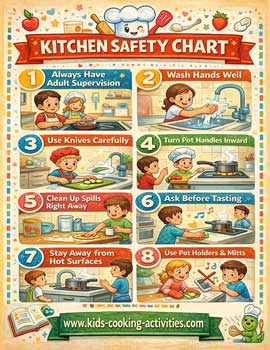
1. Always Have Adult Supervision
A supervising adult should be nearby and paying attention the whole time.
2. Wash Hands Well
Kids should wash before cooking, after handling raw foods, and after touching their face, hair, or pets.
3. Use Knives Only When Ready
Start with child-safe knives and soft foods, then build skills slowly. See our knife safety lesson here.
4. Turn Handles Inward
This helps prevent spills, hot splashes, and accidental burns.
5. Clean as You Go
Wipe spills right away and keep work areas organized so the kitchen stays safer.
6. Ask Before Tasting
Kids should not taste batters or doughs without checking with an adult first.
7. Stay Away from Hot Surfaces
Ovens, burners, pans, and steam can all cause burns.
8. Use Pot Holders and Mitts
Heated pans, trays, and baking dishes should always be handled carefully.
9. Teach Appliance Safety
Keep hands dry and learn how to use kitchen appliances correctly. See appliance safety tips here.
10. Remove Distractions
Keep the kitchen calm and focused while cooking so children can pay attention to each step.
Set a Good Example
Children watch what adults do. When you model safe habits like handwashing, careful cleanup, and proper tool use, kids learn to do the same.
In our Teacher's Curriculum Set we dive deeper into food contamination, germ spread, and safe kitchen teaching.
Kitchen Safety FAQ
Explore More Kitchen Safety Resources
Continue building safe kitchen habits with these lessons on cooking skills, knife safety, appliance use, hygiene, teaching techniques, and printable resources.
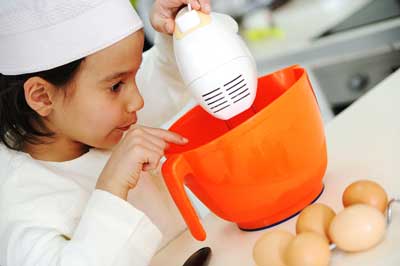
Explore cooking lessons organized by age and skill level to help children build confidence in the kitchen.
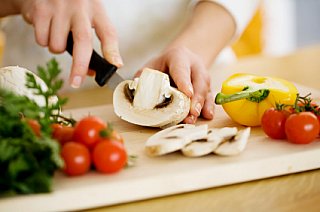
Teach older kids how to safely hold, cut, and practice with kitchen knives using age-appropriate techniques.
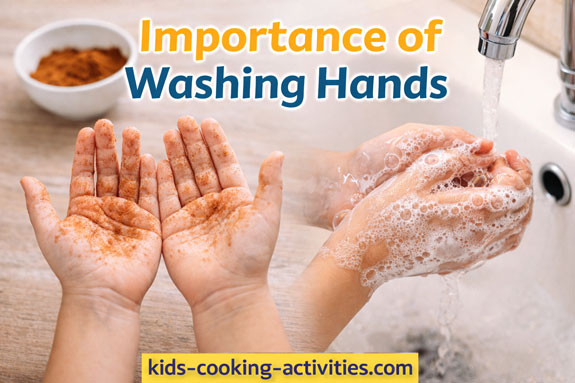
Teach children why proper hand washing is one of the most important food safety habits before cooking.
Discover simple strategies for teaching cooking skills, kitchen routines, and safe food preparation step by step.

What would you like to do next?
Get Free Kids Recipe Cards + Cooking Printables
Join Kids Cooking Activities for fun recipes, cooking ideas, and printable resources for kids, families, and classrooms.
Follow Kids Cooking Activities too:





© Debbie Madson, Madson Web Publishing, LLC — All rights reserved.
The material on this site is for educational purposes only.