

How to Fill Cake Layers
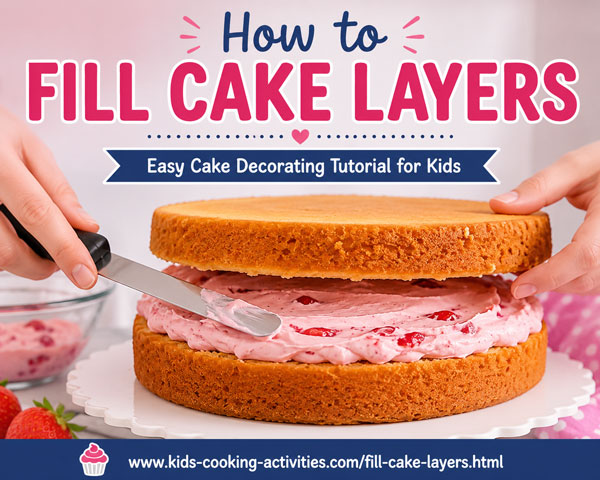
Learning how to fill cake layers is a useful beginner cake decorating skill. A layer of frosting or filling between two cakes helps hold the layers together, adds flavor, and makes a birthday cake, party cake, or dessert feel more special.
This tutorial is part of the Kids Cake Decorating Ideas section and connects with cake decorating techniques, buttercream frosting techniques, and creative kitchen activities. Kids can help spread frosting and choose fillings with adult supervision.
Kids Cooking Activities Teaching Materials
Teaching kids to cook? Save time with ready-made lesson plans used by parents and teachers. Browse teaching materials →


This page may contain affiliate links. We may earn a small commission at no extra cost to you. Learn more.
On This Page
Supplies Needed
- Two baked and cooled cake layers
- Frosting or filling
- Metal spatula or offset spatula
- Pastry bag, 10 inches or larger
- Coupler or large round tip
- Cake board or serving plate
How to Fill Cake Layers with Frosting
The most common way to fill cake layers is with frosting or icing. This method works well when stacking two or more layers of the same size. The frosting between the layers helps secure the cake and adds more flavor.
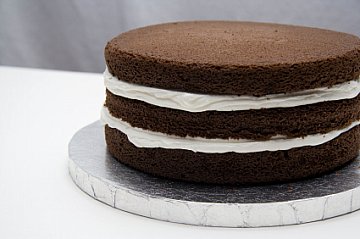
Steps for Filling with Frosting
- Place the first cake layer on a cake board or serving plate.
- Add a good-sized scoop of frosting to the top of the first layer.
- Spread the frosting with a metal spatula.
- Use a gentle back-and-forth motion and try not to lift the spatula too much. This helps prevent crumbs.
- Spread the frosting evenly until the top is covered.
- Keep the frosting layer about 1/4 inch thick.
- Place the second cake layer on top and press gently.
If a little frosting goes over the sides, that is fine. It can be smoothed out later when you frost the outside of the cake.
Flavored Fillings Between Layers
Flavored fillings are a fun way to add a new taste to a cake. Fruit fillings are common, but cream, chocolate, peanut butter, maple, lemon, and coconut fillings can also be used.
Some filling ideas include:
- Raspberry filling
- Strawberry filling
- Vanilla cream filling
- Peanut butter filling
- Chocolate filling
- Coconut filling
- Maple filling
- Mint filling
- Fresh chopped strawberries or other fruit
- Fruit preserves or jam
- Lemon filling
Fillings can be made from scratch or purchased pre-made. Polaner All Fruit is one example of a fruit filling that can be used between cake layers.
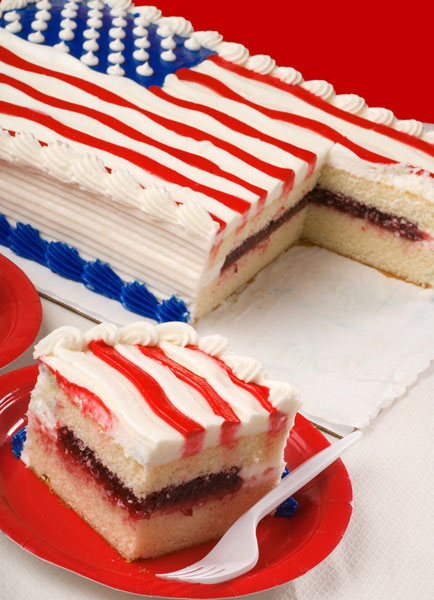
How to Pipe a Frosting Dam
When you use jam, fruit preserves, cream filling, or another soft filling, it is helpful to pipe a frosting dam around the edge of the cake layer. A frosting dam is a ring of frosting that keeps the filling from oozing out the sides.
Steps for Piping a Frosting Dam
- Place the first cake layer on a cake board or serving plate.
- Place a coupler or large round tip in a pastry bag.
- Fill the pastry bag with frosting.
- Pipe one ring of frosting around the outer edge of the cake layer.
- Add the filling inside the ring.
- Spread the filling gently toward the frosting dam.
- Place the second cake layer on top.
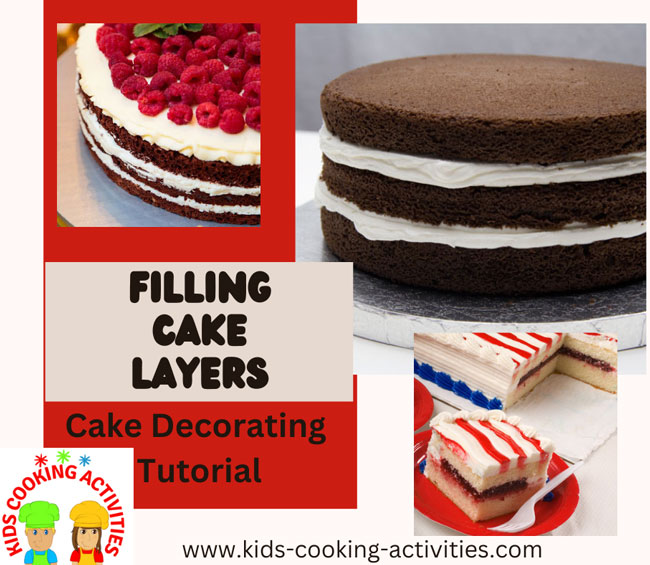
Do not skip the frosting dam when using soft fillings. It helps keep the filling inside the cake while you frost and decorate the outside.
How Thick Should Cake Filling Be?
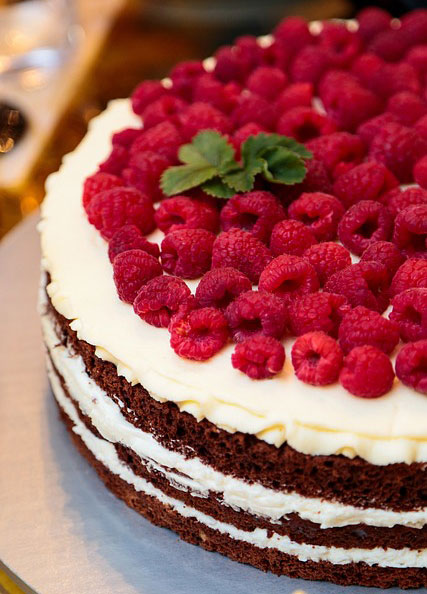
Cake filling should usually be no more than 1/4 inch thick. If the filling is too thick, it may squeeze out the sides when you add the next cake layer.
Kid-Friendly Cake Filling Tip
Let kids help spread the filling with a small spatula, but have an adult help stack the cake layers so they stay even and do not slide.
Fill Cake Layers Video Tutorial
Use This Cake Decorating Skill For
Once kids learn how to fill cake layers, they can use this skill for many birthday, holiday, party, and creative kitchen projects.
Good Practice Projects
- Birthday cakes
- Kids cooking party cakes
- Holiday cakes
- Cookie cakes
- Cupcake ideas
- Creative kitchen activity projects
- Simple cooking lesson projects
More Cake Decorating Ideas
Try these related cake decorating pages next to frost, fill, decorate, and finish cakes.
Ready to Decorate?
After filling your cake layers, use buttercream frosting techniques, cake borders, or cake decorating patterns to finish the outside.
Fill Cake Layers FAQ
How thick should cake filling be?
Cake filling should usually be about one-quarter inch thick. A thicker layer may squeeze out the sides when the next cake layer is added.
What is a frosting dam?
A frosting dam is a ring of frosting piped around the edge of a cake layer to hold soft fillings such as jam, fruit preserves, cream, or mousse in place.
Can kids help fill cake layers?
Yes. Kids can help spread frosting, add filling, and stack cake layers with adult supervision, especially when using spatulas, pastry bags, or tall layer cakes.
What fillings can be used between cake layers?
Cake layers can be filled with frosting, fruit preserves, jam, cream filling, peanut butter filling, chocolate filling, lemon filling, fresh fruit, or other soft dessert fillings.
More Cake & Cupcake Decorating Ideas
Cake Decorating
Cake & Cupcake Recipes
10 Decorating Ideas
Piping Techniques
Buttercream Techniques
Cake Borders
Color Cake Batter
Filling Layers
Buttercream Transfer
Decorating Patterns
Chocolate Transfers
Fondant Decorating
Fondant Recipes
Cake Projects & Parties
Jar Cakes
Cake Decorating Party
Cookie Cake
Cake Pops
Cone Cakes
Cupcake Ideas
How to Make Cupcakes
Frost Cupcakes
Fun Cupcake Ideas
Cupcake Cakes
Giant Cupcake Cake
Cupcake Push Pops
Cupcake Bouquet
Cupcake Recipes
Heart Cupcakes
Cream Filled Cupcakes
Cupcake Printables & Supplies
Cupcake Wrappers
Cupcake Tree Stand
Cupcake Supplies
Cookie Decorating
Cookie Decorating
Color Flow Decorating
Get Free Kids Recipe Cards + Cooking Printables
Join Kids Cooking Activities for fun recipes, cooking ideas, and printable resources for kids, families, and classrooms.
Follow Kids Cooking Activities too:





© Debbie Madson, Madson Web Publishing, LLC — All rights reserved.
The material on this site is for educational purposes only.