
Cooking with Appliances for Kids
Help children build confidence in the kitchen by learning to safely use common appliances such as the microwave, toaster oven, air fryer, waffle iron, bread maker, blender, slow cooker, and Instant Pot.

Learning to cook with kitchen appliances gives children new opportunities to prepare breakfasts, lunches, dinners, snacks, and desserts while developing independence and responsibility. Each appliance teaches different skills—from measuring and mixing to timing, baking, pressure cooking, and food safety.
Rather than introducing every appliance at once, begin with one that matches your child's age and experience. As confidence grows, children can safely explore additional appliances while practicing proper kitchen habits under adult supervision.
This guide introduces the most common kitchen appliances for kids, explains what each appliance teaches, shares important safety reminders, and links to detailed tutorials and recipes for every appliance.
Start Here: Best Appliances for Beginner Cooks
- First appliance? Start with the Microwave or Blender.
- Ready to bake? Try the Toaster Oven or Waffle Iron.
- Making family dinners? Explore the Slow Cooker and Instant Pot.
- Healthy cooking? Learn to cook with an Air Fryer.
- Learning kitchen basics? Visit our upcoming Kitchen Skills for Kids guide for measuring, food safety, knife skills, and more.
Important Safety Reminder
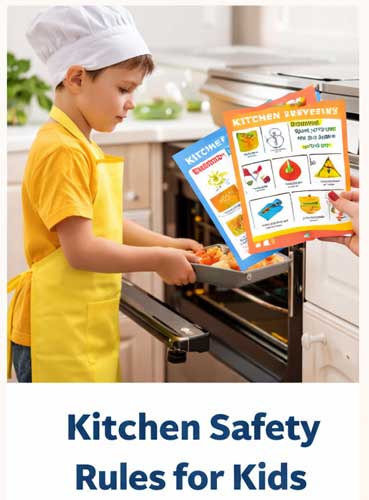
Every appliance should be introduced one at a time with close adult supervision. Before cooking, children should learn where heat, steam, blades, and electrical cords can create hazards and how to safely clean and store each appliance after use.
Kids Cooking Activities Teaching Materials
Teaching kids to cook? Save time with ready-made lesson plans used by parents and teachers. Browse teaching materials →


This page may contain affiliate links. We may earn a small commission at no extra cost to you. Learn more.
On This Page
Why Teach Kids to Cook with Kitchen Appliances?
Kitchen appliances make cooking faster, easier, and more enjoyable while helping children develop valuable life skills. As kids learn to use different appliances safely, they gain confidence preparing their own breakfasts, lunches, snacks, side dishes, and family meals.
Each appliance introduces new techniques. A microwave teaches reheating and timing, a blender demonstrates mixing and pureeing, a toaster oven introduces baking, while appliances like slow cookers and Instant Pots teach meal planning and how ingredients transform during longer cooking times.
The goal isn't simply learning to press buttons—it's helping children become independent cooks who understand food safety, follow recipes, solve problems, and enjoy creating meals for themselves and others.
Appliances Grow with Your Child
Children don't need to master every appliance at once. Begin with simple, beginner-friendly machines like the microwave or blender, then gradually introduce toaster ovens, waffle irons, air fryers, slow cookers, bread makers, and pressure cookers as their confidence and cooking skills increase.
Appliance Skill Levels
Some kitchen appliances are easier for beginners than others. This guide groups appliances into three general skill levels so families can introduce new equipment gradually while building confidence and safe cooking habits.
Remember
Every child develops at a different pace. Age is only one factor—confidence, maturity, reading ability, and following directions are equally important when deciding which appliance to introduce next.
Kitchen Appliance Comparison Chart
Use this chart to decide which appliance lesson best fits your child's age, experience, and cooking goals. Some appliances are best for quick snacks, while others are better for family meals, baking projects, or supervised cooking lessons.
| Appliance | Best For | Skills Kids Practice | Supervision Needed |
|---|---|---|---|
| Microwave | Reheating leftovers, oatmeal, mug meals, simple snacks | Timing, stirring, standing time, steam safety | Close supervision for younger children |
| Blender | Smoothies, sauces, dips, batters, frozen drinks | Measuring, layering ingredients, lid safety, textures | Adult help with blades and assembly |
| Bread Maker | Bread dough, rolls, pizza dough, cinnamon rolls | Measuring, yeast, sequencing ingredients, patience | Adult help with hot pan removal |
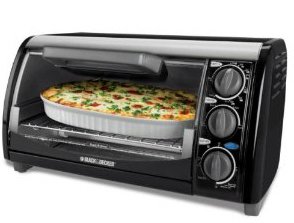
| Toaster Oven | Grilled cheese, pizza, nachos, baked potatoes, small desserts | Baking, broiling, using trays, oven mitt safety | Adult supervision around heat |
| Waffle Iron | Omelets, pizza waffles, quesadillas, hash browns, brownies | Preheating, timing, crisping, safe hot-surface habits | Adult help opening and closing hot plates |
| Air Fryer | Crispy vegetables, snacks, chicken, fries, reheating leftovers | Temperature, shaking baskets, food spacing, doneness checks | Adult supervision with hot basket and steam |
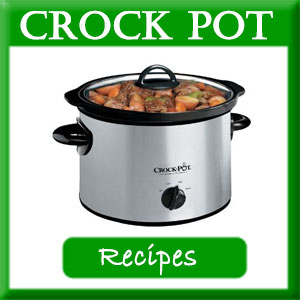
| Slow Cooker | Soups, roasts, chili, shredded meat, family dinners | Meal planning, layering ingredients, food safety, patience | Adult help with raw meat and hot insert |
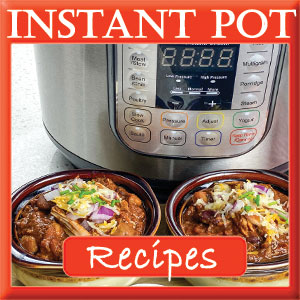
| Instant Pot | Beans, soups, chili, rice pudding, applesauce, shredded meat | Measuring, meal prep, pressure cooking awareness, safety observation | Adult-only pressure release and lid opening |
Choosing the Right Appliance
For beginners, choose appliances with simple steps and low-risk tasks. As children become more comfortable following directions, measuring ingredients, and understanding heat safety, gradually introduce appliances that require more supervision.
Kitchen Appliance Lessons for Kids
Each appliance below has its own lesson or recipe page with safety tips, cooking ideas, and beginner-friendly ways for kids to help. Use these pages as mini lessons when introducing a new appliance in your kitchen.
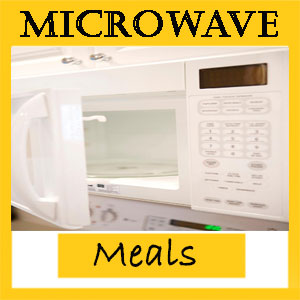
Learn microwave safety, reheating, defrosting, melting ingredients, cleaning, and beginner microwave meals.
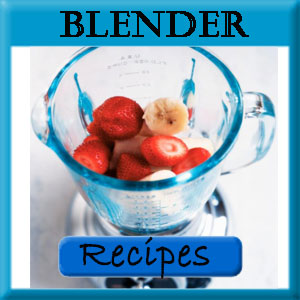
Practice measuring, layering ingredients, lid safety, and making smoothies, sauces, dips, and frozen drinks.
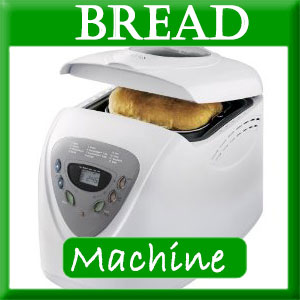
Explore measuring, yeast, dough cycles, bread baking, pizza dough, rolls, and cinnamon roll projects.
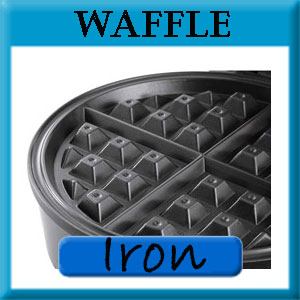
Try waffle omelets, pizza waffles, quesadillas, hash browns, brownies, cinnamon rolls, and other fun ideas.
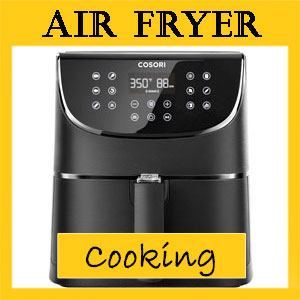
Cook crispy vegetables, snacks, apple chips, mozzarella sticks, green beans, fries, and family meals.
Universal Kitchen Appliance Safety Rules
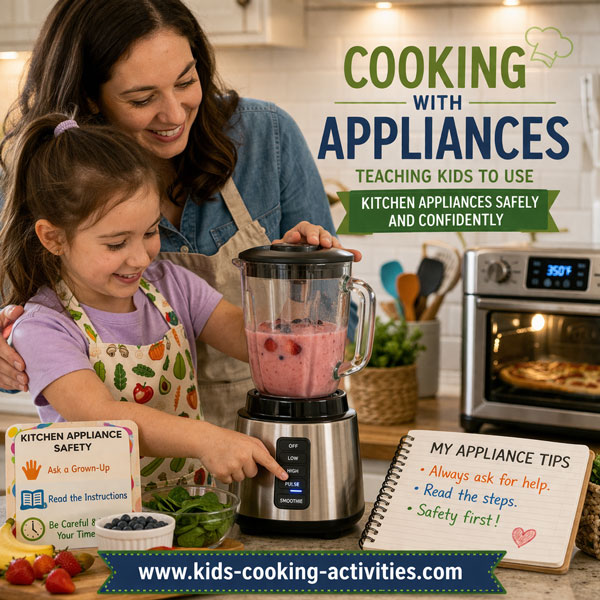
No matter which appliance children are learning to use, the same basic safety habits apply. Practicing these rules from the very beginning helps kids become confident, responsible cooks while reducing the risk of accidents.
Before Cooking
- ✔ Wash your hands before handling food.
- ✔ Read the entire recipe before starting.
- ✔ Tie back long hair and avoid loose clothing.
- ✔ Make sure the work area is clean and dry.
- ✔ Gather all ingredients and equipment before turning on the appliance.
- ✔ Ask an adult if you are unsure about any step.
| Safety Habit | Why It Matters |
|---|---|
| Read the recipe first. | Knowing every step ahead of time helps prevent mistakes. |
| Use the right tools. | Heat-resistant utensils and oven mitts help prevent burns and protect cookware. |
| Stay focused. | Distractions can lead to spills, overcooked food, or accidents. |
| Keep cords out of the way. | Prevents appliances from being accidentally pulled off the counter. |
| Clean as you go. | A tidy workspace is safer and makes cooking more enjoyable. |
| Ask for help. | Adults can assist with hot appliances, sharp tools, or unfamiliar recipes. |
Good Cooks Practice Good Habits
The safest cooks aren't necessarily the oldest—they're the ones who pay attention, follow directions, and respect their kitchen equipment. Building these habits early helps children become confident cooks for years to come.
Kitchen Skills Kids Learn While Using Appliances
Every appliance teaches more than just cooking. As children prepare recipes, they practice important life skills that carry over into every area of the kitchen. These lessons build confidence, independence, and a better understanding of how food is prepared.
Every Appliance Builds Confidence
Whether a child is making a smoothie in the blender, baking a grilled cheese in the toaster oven, preparing chili in a slow cooker, or cooking breakfast in a waffle iron, each successful recipe builds confidence and encourages greater independence in the kitchen.
Where Should Kids Start?
If you're introducing kitchen appliances for the first time, begin with one simple appliance and allow your child to become comfortable before adding another. Each new appliance builds on skills they've already learned.
Continue Learning Kitchen Skills
Once children become comfortable using one appliance, they're ready to explore new cooking techniques, recipes, and kitchen skills. These related guides help young cooks continue building confidence while learning to prepare everything from quick snacks to complete family meals.
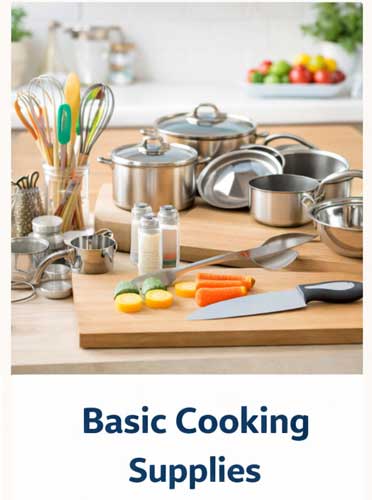
Master measuring, mixing, food safety, knife skills, reading recipes, and other essential cooking techniques.
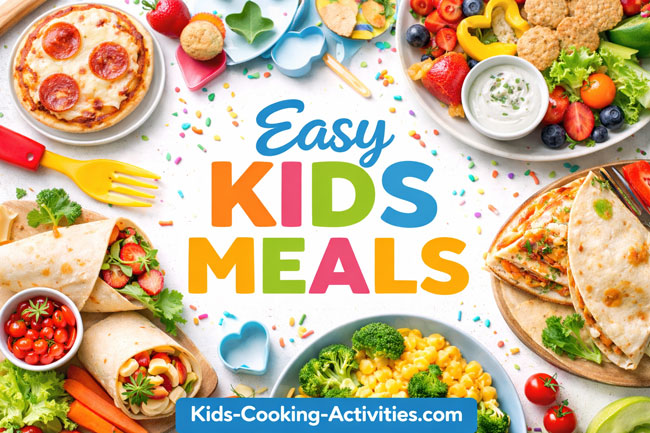

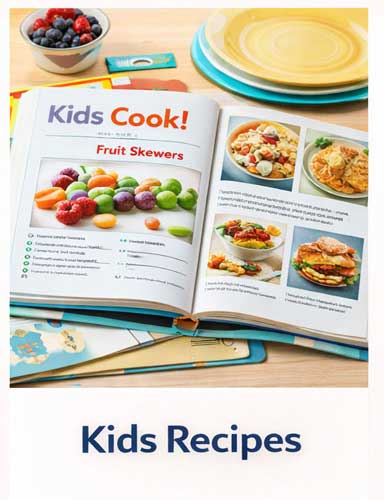
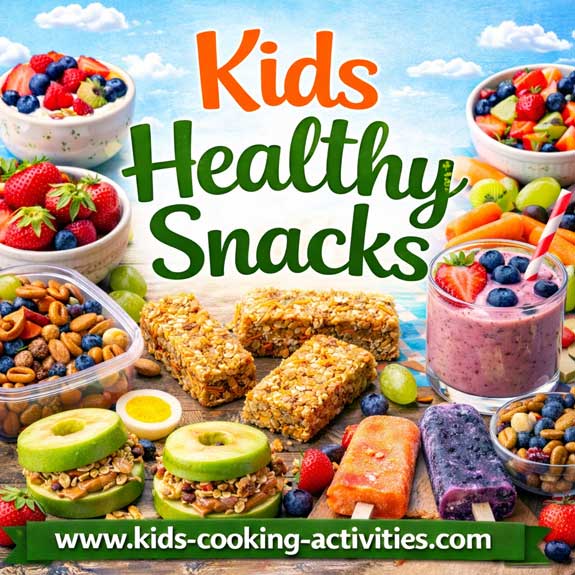
Discover nutritious snacks children can make using fresh fruits, vegetables, yogurt, and whole grains.

Perfect for young cooks learning measuring, mixing, and assembling recipes before using hot appliances.
Compare kitchen appliances and choose the next lesson as children continue developing new cooking skills.

Learn baking, roasting, sautéing, steaming, boiling, grilling, and other methods every young chef should know.
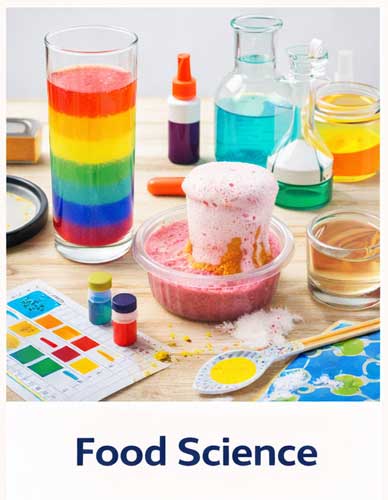
Explore fun kitchen experiments that explain why recipes work and how ingredients change while cooking.

Frequently Asked Questions
What is the best kitchen appliance for beginners?
For many children, the microwave or blender is a great place to start because they introduce measuring, following recipes, and basic kitchen safety with relatively simple cooking tasks.
At what age can children begin using kitchen appliances?
Every child develops differently. Younger children can help measure ingredients and press buttons with adult supervision, while older children may safely use additional appliances as their skills and confidence grow.
Should children learn one appliance at a time?
Yes. Mastering one appliance before introducing another helps children build confidence and understand safety rules without becoming overwhelmed.
Which appliance teaches the most kitchen skills?
Each appliance teaches different skills. Blenders focus on measuring and mixing, toaster ovens introduce baking, while slow cookers and Instant Pots teach meal planning, timing, and recipe sequencing.
How can children stay safe around kitchen appliances?
Always supervise children, teach them to respect hot surfaces and sharp parts, read recipes before starting, unplug appliances after use, and clean equipment only after it has cooled.
Can kids prepare complete meals using kitchen appliances?
Absolutely. As children gain experience, they can prepare breakfasts, lunches, dinners, side dishes, desserts, and snacks using a variety of kitchen appliances with appropriate adult supervision.
What kitchen skills should children learn before using appliances?
Children should understand hand washing, measuring ingredients, reading recipes, basic food safety, cleaning up, and how to ask for help whenever they're unsure.
Is it okay for kids to experiment with recipes?
Yes. Once children understand appliance safety and basic cooking techniques, experimenting with different ingredients and flavors is a great way to encourage creativity and problem-solving in the kitchen.
Do all kitchen appliances require adult supervision?
Yes. Even appliances designed for convenience can involve heat, steam, electricity, or moving parts. Adult supervision helps children learn safe habits and enjoy cooking with confidence.
What's the next step after learning to use kitchen appliances?
Continue building skills by practicing cooking techniques, trying new recipes, learning food science, and preparing complete meals independently as experience grows.
Keep Exploring Kids Cooking Activities
Every new recipe and appliance helps children become more confident in the kitchen. Continue exploring our cooking lessons, beginner recipes, and hands-on kitchen activities to build skills one step at a time.
Teaching Kids to Cook | Kitchen Skills | Recipe Index | Home
Get Free Kids Recipe Cards + Cooking Printables
Join Kids Cooking Activities for fun recipes, cooking ideas, and printable resources for kids, families, and classrooms.
Follow Kids Cooking Activities too:





© Debbie Madson, Madson Web Publishing, LLC — All rights reserved.
The material on this site is for educational purposes only.