

Grow Food from Scraps
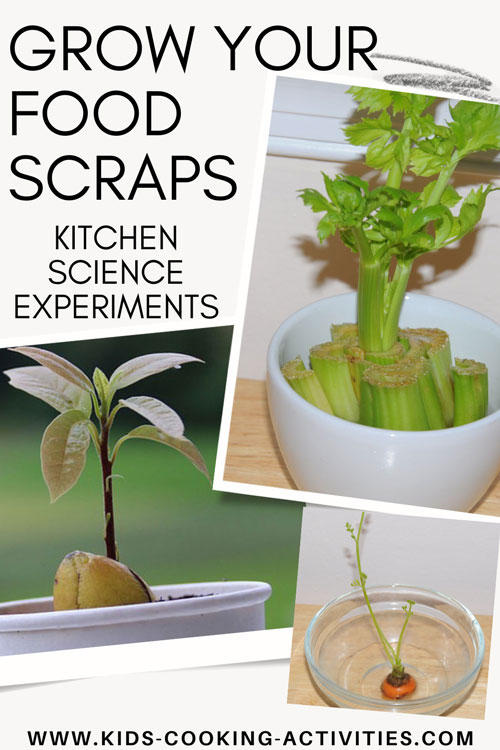
Did you know you can regrow some vegetables and plants from kitchen scraps? This is a fun way to turn food leftovers into simple gardening projects for kids.
Growing food from scraps makes a great food science experiment because children can watch roots, leaves, and stems begin to grow again right before their eyes. It is also a good way to teach kids about plant life cycles, reducing food waste, and where food comes from.
Step-by-Step Experiment Box
- Save the base, top, seed, or root end of a fruit or vegetable.
- Place it in a shallow bowl or jar with enough water to keep the bottom moist.
- Set it near a sunny window.
- Refresh the water as needed.
- Watch for roots, shoots, or leaves to begin growing.
- Record what changes each day.
Best tip: Start with easy scraps like celery, lettuce, or carrot tops for faster visible results.
Kids Cooking Activities Teaching Materials
Teaching kids to cook? Save time with ready-made lesson plans used by parents and teachers. Browse teaching materials →


This page may contain affiliate links. We may earn a small commission at no extra cost to you. Learn more.
What Happens?
Some scraps still contain living plant tissue. When they are given water, light, and the right conditions, they can begin growing again.
- Roots may begin to grow
- Leaves and shoots may appear
- Some scraps regrow leafy tops
- Others grow into larger plants over time
Easy Vegetables and Plants to Grow from Scraps
Carrot Tops
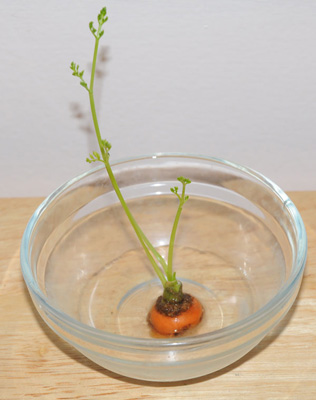
Save the top of a carrot and place it in a shallow bowl with a little water. Keep the cut side moist and refill the water as needed. Before long, green carrot tops will begin to grow.
While you will not grow a whole new carrot root from the top, the leafy greens are fun to watch and can later be planted in soil indoors or outside during warm weather.
Celery
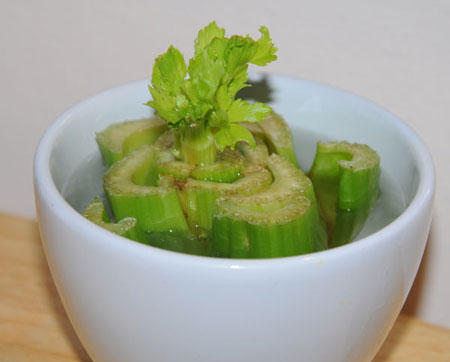
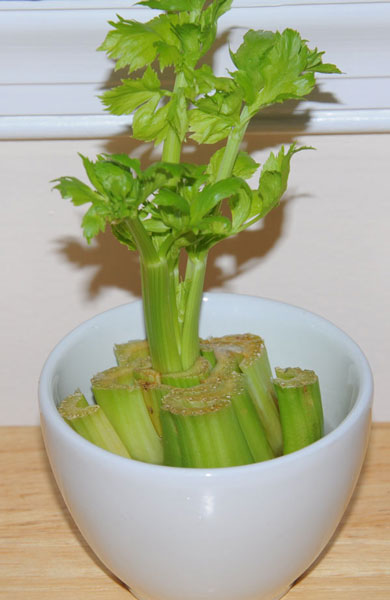
Cut off the base of a celery bunch and place it in a shallow bowl of water. Set it near a sunny window and keep the water fresh. In a few days, new leaves will begin growing from the center.
Once the celery base has started to regrow, you can transplant it into a garden or large pot. This is one of the easiest and most exciting vegetable scraps experiments for kids.
Lettuce
Save the bottom end of a head of lettuce and place it in a bowl with enough water to cover the base. Keep the bowl in a bright spot and add fresh water as needed. New leaves may begin to grow from the center in just a few days.
Lettuce scraps are a simple way for kids to see how plants can keep growing even after part of the vegetable has been used for food.
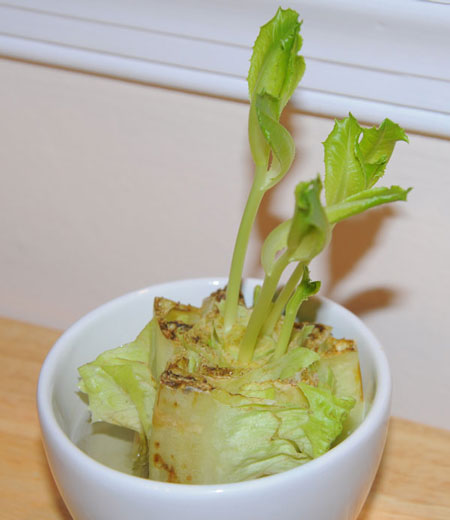
Growing Lettuce
By Sandra, MII teach at a Christian school. So we discuss how God made things. When doing the lettuce experiment, I use romaine lettuce.
The experiment is done in a small group. We cut off the top of the lettuce, leaving about 1.5 inches at the bottom. We taste the washed lettuce. The children can choose to dip it into a dressing if they would like. We talk about how things like produce, trees, and grass grow.
We place the 1.5 inch portion of the lettuce in water. I ask the children what they think is going to happen. The children draw a picture of the lettuce in the water in their journal. After a few days to one week, we draw another picture to record the growth of the lettuce. We discuss how big the lettuce will grow.
After a few weeks, if the lettuce has grown enough, we revisit the experiment by tasting it and attempting to regrow the lettuce again.
Avocado
Try growing an avocado seed and watch roots and a stem begin to form. This takes more time than some other scrap-growing projects, but it is a fun long-term activity for kids who like plant experiments.
Avocado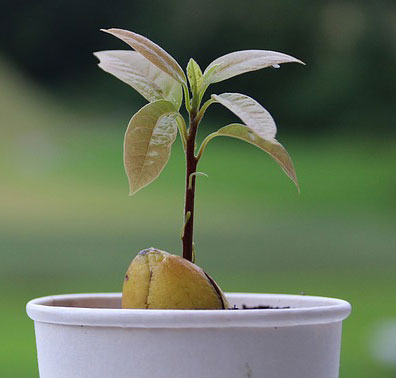
Bean Plant
Beans are another easy way to show kids how seeds sprout and grow. Place beans in a moist growing environment and watch the root and stem begin to develop.
Bean Plant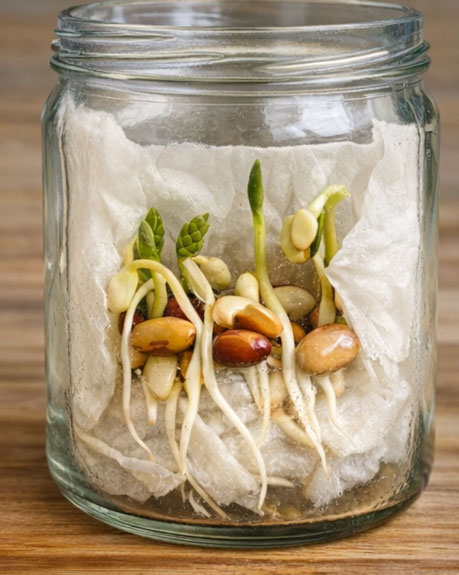
Onion Sprouting
Onions often begin sprouting on their own, which makes them a great plant observation activity. Kids can see how new green shoots form and continue growing.
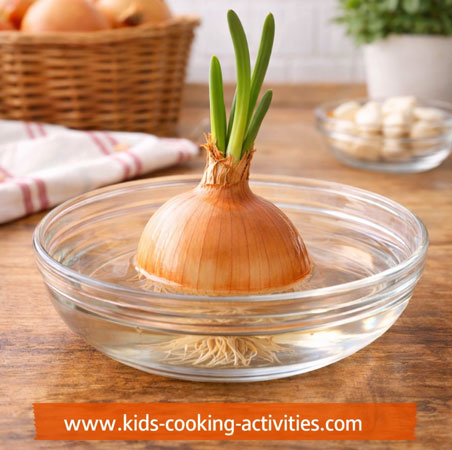
Onion Sprouting
Pineapple Growing
The top of a pineapple can also be replanted and grown. This project takes patience, but it is a fun way to show kids that some fruits can begin again from a leftover top.
Pineapple Growing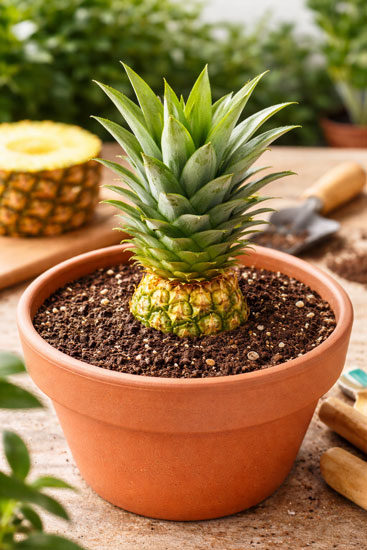
Food Science Connection
Growing food from scraps helps kids see that plants continue to live and grow when given water, sunlight, warmth, and sometimes soil. Some scraps regrow leaves, while others grow roots or sprouts.
This is a great way to talk about plant needs, photosynthesis, root growth, and how different vegetables reproduce or continue growing after harvest.
Why It Matters in Cooking
This activity connects gardening directly to cooking. Kids begin to understand that many kitchen ingredients are living plant parts and that food does not just come from a store.
- It teaches where vegetables come from
- It shows how fresh produce keeps growing
- It helps kids value ingredients and reduce waste
- It connects kitchen scraps, gardening, and cooking together
More Science Experiments to Try
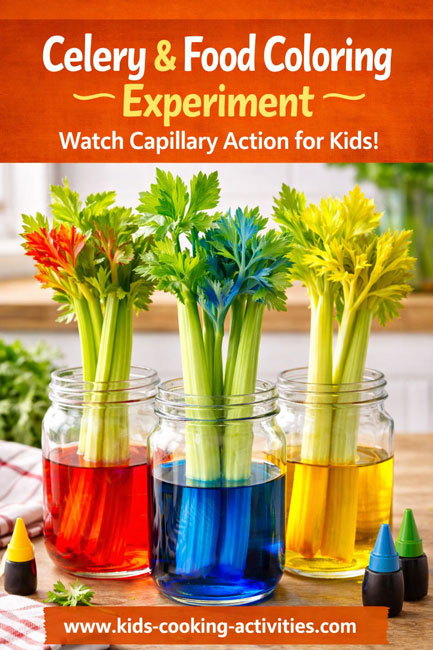
Celery Food Coloring Experiment
Watch colored water travel through celery stalks and see how water moves through their stems.
Bean Growing Experiments
Observe how seeds sprout and grow while learning about plant development.
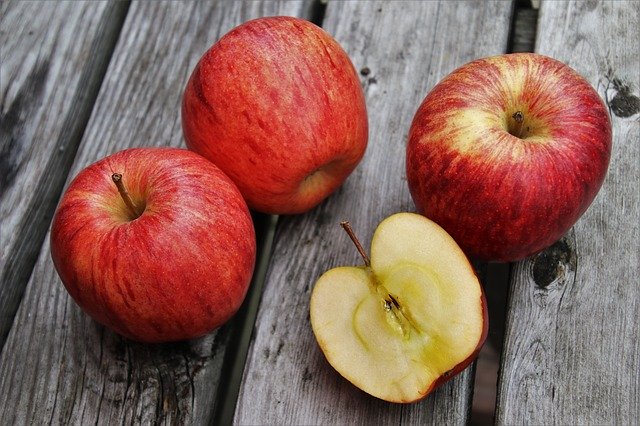
Apple Experiment
Use apples to explore freshness, browning, and how ingredients affect food over time.
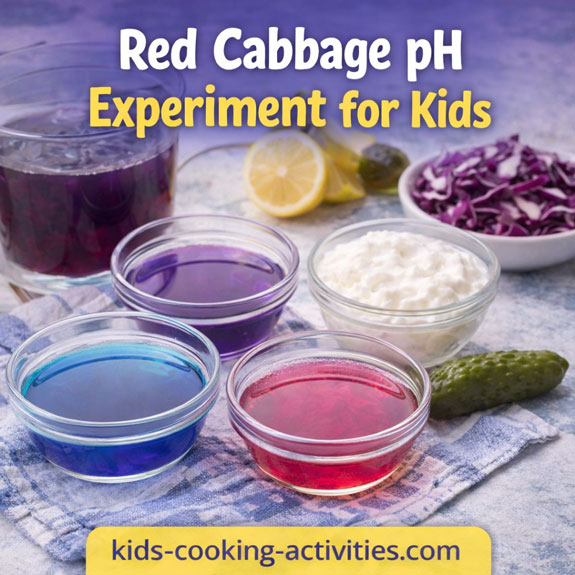
Red Cabbage pH Experiment
Use red cabbage water to test acids and bases and watch colorful changes happen.
Try Growing These from Scraps
Carrot Tops
Watch leafy green tops grow from a saved carrot top placed in water.
Celery
Regrow celery from the base and watch new leaves form in the center.
Lettuce
Use the bottom of a lettuce head to see fresh leaves begin growing again.
Avocado
Try a longer plant-growing project by sprouting an avocado seed.
Pineapple
Cut the top from a pineapple and grow a spiky plant.
Onion
Watch an onion sprout and grow new green shoots.
Grow Food from Scraps FAQ
What foods can kids regrow from scraps?
Kids can regrow foods such as carrot tops, celery, lettuce, avocado, onions, bean plants, and pineapple tops.
Why does food grow again from scraps?
Some vegetables and fruits still contain living plant tissue that can continue growing when given water, light, and the right conditions.
Is growing food from scraps a science experiment?
Yes. It helps kids observe roots, shoots, leaves, and plant growth over time while learning about living things and food systems.
Does every scrap grow a full new vegetable?
No. Some scraps regrow leaves or shoots, while others may sprout roots or become a larger plant, but not always a full new vegetable right away.
More Gardening Ideas
Explore more gardening projects and food growing ideas for kids:
- Growing an Herb Garden
- Grow an Italian Pizza Garden
- 14 Plants for Kids to Grow in a Garden
- Earth Day Food and Fun - Use these Earth Day ideas any time of year.
Grow and Cook Theme Kids Cooking Camp
Get Free Kids Recipe Cards + Cooking Printables
Join Kids Cooking Activities for fun recipes, cooking ideas, and printable resources for kids, families, and classrooms.
Follow Kids Cooking Activities too:





© Debbie Madson, Madson Web Publishing, LLC — All rights reserved.
The material on this site is for educational purposes only.