

Middle Eastern Cooking with Kids
Explore Middle Eastern cooking with kids through flavorful recipes, food traditions, geography, languages and hands-on cooking activities.
The Middle East is a large and culturally diverse region, so there is no single style of "Middle Eastern food." Cooking traditions vary from country to country and even between regions, cities and families. Foods found in Lebanon may be different from those in Saudi Arabia, Türkiye, Iran or Yemen.
As kids explore the region, they can discover ingredients such as chickpeas, lentils, yogurt, eggplant, bulgur, sesame, olive oil, lemons, herbs and fragrant spices. They can also see how similar ingredients are prepared in very different ways across the region.
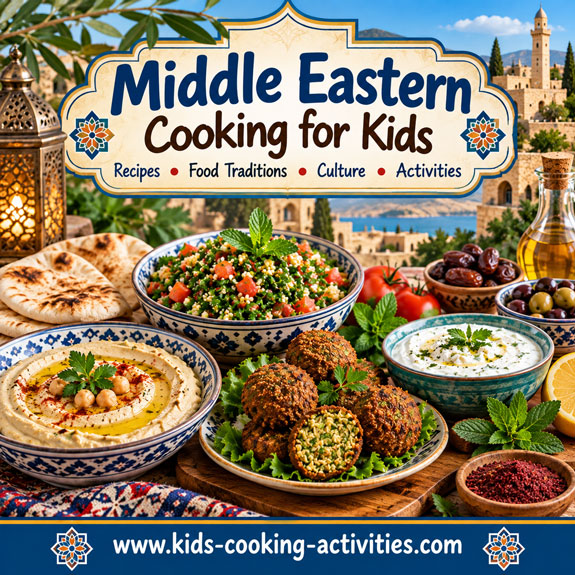
Explore the Middle East Through Cooking
Cooking is a hands-on way for kids to explore the geography and cultures of the Middle East. Locate the region on a map, investigate common ingredients, learn about different food traditions and prepare a recipe together.
As you explore: remember that a regional label such as "Middle Eastern cooking" includes many different cultures and cuisines. One recipe cannot represent the entire region.
The Middle East includes many countries, languages, religions, landscapes and cultural traditions. Foods may share ingredients or cooking techniques across borders, but each country and community has its own food history. Use this page as an introduction, then look more closely at individual places and dishes.
Kids Cooking Activities Teaching Materials
Teaching kids to cook? Save time with ready-made lesson plans used by parents and teachers. Browse teaching materials →


This page may contain affiliate links. We may earn a small commission at no extra cost to you. Learn more.
What Kids Will Learn
Cooking gives kids a hands-on way to explore the geography, cultures and food traditions of the Middle East. During this cooking study, kids can learn:
- Where the Middle East is located on a world map
- That the Middle East is a region rather than one country
- Why there is no single style of "Middle Eastern food"
- How geography and climate can influence what people grow and eat
- How ingredients such as chickpeas, lentils, yogurt, grains and sesame are used
- How herbs and spices add flavor and aroma
- How breads, dips, salads and other foods vary throughout the region
- That many different languages are spoken across the Middle East
- How neighboring food traditions can share ingredients and techniques
- Cooking skills such as measuring, mixing, chopping, blending and shaping
Kids Cooking Activities Teaching Materials
Teaching kids to cook? Save time with ready-made lesson plans used by parents and teachers. Browse teaching materials →
This page may contain affiliate links. We may earn a small commission at no extra cost to you. Learn more.
Middle Eastern Cooking Table of Contents
- What Kids Will Learn
- Explore the Middle East
- Middle Eastern Food Traditions
- Ingredients & Spices to Explore
- Learn a Little Language
- How Food Changes Across the Region
- Middle Eastern Recipes for Kids
- Baba Ghanoush
- Hummus
- Tabbouleh
- Easy Turkish-Style Manti
- Homemade Falafel
- Easy Tahini Sauce
- Yogurt & Rice Soup
- Homemade Labneh
- Turkish-Style Kofta
- More Middle Eastern Foods to Explore
- Extend Your Middle Eastern Cooking Lesson
- Cooking Around the World Curriculum
- Middle Eastern Cooking Questions
Explore the Middle East
The Middle East is a region that connects parts of Asia, Africa and Europe. It includes many countries and cultures and has been an important crossroads for people, trade, agriculture and food traditions for thousands of years.
There is no single universally agreed boundary for the Middle East. Countries commonly included in discussions of the region include Egypt, Israel, Jordan, Lebanon, Syria, Iraq, Iran, Saudi Arabia, Yemen, Oman, the United Arab Emirates, Qatar, Bahrain and Kuwait. Türkiye is also often included in discussions of the broader region.
The landscape is much more varied than the word "desert" might suggest. The region includes deserts, mountains, river valleys, fertile farming areas, Mediterranean coastlines and areas along the Red Sea, Persian Gulf and Arabian Sea.
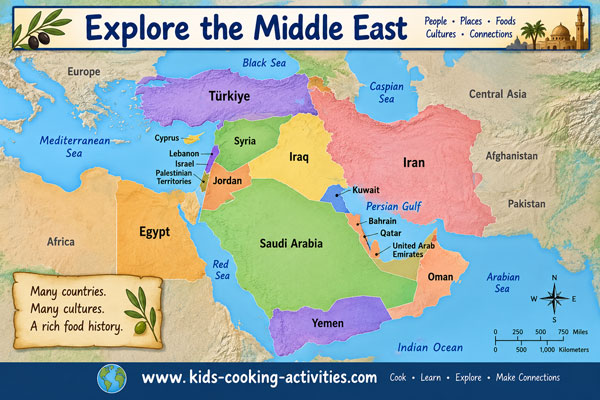
Find the Middle East on a world map. Locate the Mediterranean Sea, Red Sea, Persian Gulf and Arabian Sea. Then find several countries in the region and notice which ones have coastlines and which are landlocked.
Choose two countries to compare. Are they mountainous, coastal, desert or near an important river? As you continue the cooking lesson, look for clues about how those geographic differences might influence food.
Geography helps shape food traditions. Coastal communities may have greater access to fish and seafood, while farming areas can produce grains, fruits and vegetables. In dry regions, ingredients and farming practices reflect limited rainfall, while river valleys can support productive agriculture. Trade between neighboring regions has also helped ingredients, spices and cooking ideas travel over time.
Middle Eastern Food Traditions
Food traditions across the Middle East are incredibly varied, but neighboring cuisines often share ingredients and cooking techniques. Flatbreads, grains, chickpeas, lentils, yogurt, vegetables, herbs, sesame, olive oil, lemons and spices are important in many parts of the region.
Meals may include several dishes placed on the table for people to share. Breads can be used for scooping dips and foods, while salads, cooked vegetables, grains, beans, grilled meats and yogurt dishes may be served alongside one another. Exactly what appears at the table depends on the country, region, community and family.
Some foods are found in several countries and cultures, and their exact origins or names may be complicated. Hummus, falafel, flatbreads, stuffed vegetables and other foods can have many regional versions. Instead of assigning every food to one country, encourage kids to compare how similar foods are prepared and served in different places.
Choose two countries in the region and investigate a typical meal from each one. Look for ingredients that appear in both places and foods that are different. Kids may discover that neighboring cuisines share ingredients while preparing them in their own ways.
Middle Eastern Ingredients & Spices to Explore
One of the easiest ways for kids to explore Middle Eastern cooking is through its ingredients. Set out a few foods, herbs or spices and let kids look, smell and compare them before using them in a recipe.
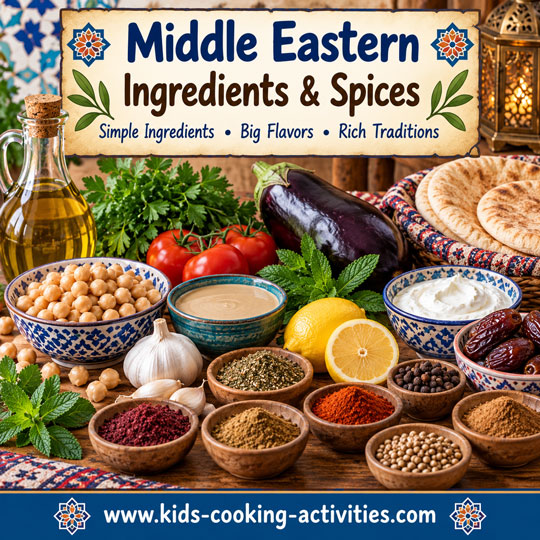
Choose four or five ingredients such as chickpeas, tahini, bulgur, cumin, mint, sumac or dates. Let kids examine each ingredient and describe its color, texture and aroma.
Then look through the recipes on this page and see where the ingredients appear. Which ingredient is used in more than one recipe?
Tahini is made by grinding sesame seeds into a smooth paste. It is an important ingredient in hummus and many sauces and dips. Let kids compare whole sesame seeds with tahini to see how grinding changes their texture.
Learn a Little Language
The Middle East is home to many languages. Arabic is widely spoken in many countries, but it is not the only language of the region. Persian (Farsi), Turkish, Hebrew, Kurdish and many other languages are also spoken.
Even within the same language, words and pronunciation can vary from country to country. For this regional study, choose a country first and then learn a word or phrase connected with the language spoken there.
Choose one country from the region and find out which languages are spoken there. Learn how to say hello, thank you or the name of a food in one of those languages.
If possible, look at how the word is written in its original writing system. Compare it with the alphabet you normally use.
Country borders and language borders do not always match. The same language may be spoken in several countries, while one country may be home to several languages. This is another reason to investigate individual places rather than thinking of the Middle East as one culture.
How Food Changes Across the Middle East
Just as languages and landscapes change across the Middle East, so do food traditions. Neighboring cuisines may share ingredients and dishes, but preparation methods, seasonings and names can vary from one country, community and family to another.
The groups below are only a starting point for exploring the region. They are not strict culinary boundaries, and every area contains many different local traditions.
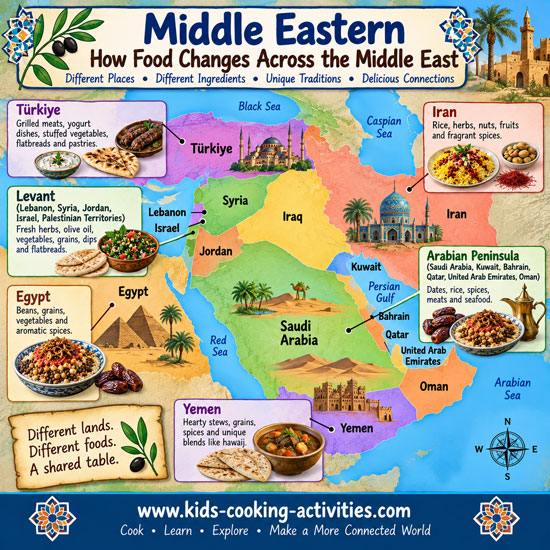
Print or draw a map of the region and choose several foods or ingredients to investigate. Add pictures or words for foods such as chickpeas, dates, rice, wheat, olives, yogurt, eggplant, herbs or spices.
Instead of assigning each food to only one country, use lines or symbols to show when an ingredient or dish appears in several places. This can help kids see how food traditions cross modern borders.
Countries such as Morocco, Algeria, Tunisia and Libya are in North Africa. Their food traditions have connections with the Middle East and the wider Mediterranean, but they also have their own Amazigh, Arab, African, Mediterranean and other cultural influences. For this cooking study, it is more useful to explore North African foods as their own regional study rather than treating all of North Africa as Middle Eastern cuisine.
Middle Eastern Recipes for Kids
Bring your Middle Eastern food study into the kitchen with recipes that introduce kids to ingredients such as chickpeas, tahini, eggplant, bulgur, yogurt, herbs and spices. Kids can practice measuring, mixing, mashing, chopping, shaping and tasting as they cook.
Many of these foods are prepared in different ways throughout the region. The recipes below are kid-friendly versions for exploring ingredients and cooking techniques rather than one definitive version of each dish.
Where Should We Start?
For exploring eggplant: Try Baba Ghanoush.
For practicing chopping: Make Fresh Tabbouleh.
For shaping and cooking: Try Falafel or Turkish-Style Kofta.
For a food-science activity: Make Homemade Labneh.
For exploring Turkish cooking: Try Easy Turkish-Style Manti. For exploring sesame: Make Easy Tahini Sauce.
For learning how to temper yogurt: Try Yogurt & Rice Soup.
Dips, Salads & Fresh Flavors
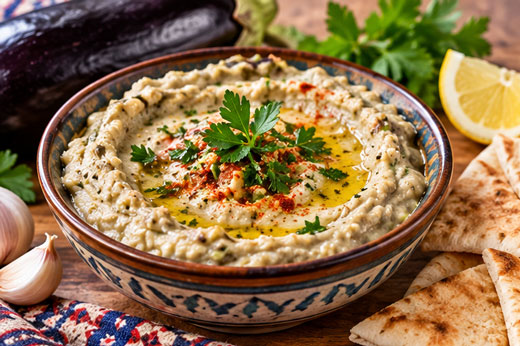
Easy Baba Ghanoush
Baba ghanoush is a creamy eggplant dip found in different forms in the eastern Mediterranean and surrounding areas. Roasting the eggplant until very soft gives the dip its smooth texture and roasted flavor.

Ingredients
- 1 medium eggplant
- 2 tablespoons tahini
- 2 tablespoons fresh lemon juice
- 1 small garlic clove, minced
- 1 tablespoon olive oil, plus extra for serving if desired
- 1/4 teaspoon salt, or to taste
- 1 tablespoon chopped fresh parsley, optional
- Pinch of ground cumin, optional
- Pita wedges or fresh vegetables, for serving
Directions
- Preheat the oven to 400F (200C).
- Wash the eggplant and pierce it several times with a fork.
- Place the eggplant on a foil- or parchment-lined baking sheet.
- Adult Step: Roast for about 40-50 minutes, or until the eggplant is very soft and the skin has wrinkled.
- Allow the eggplant to cool until it is safe to handle.
- Cut the eggplant open and scoop the soft flesh into a bowl. Discard the skin.
- Add the tahini, lemon juice, garlic, olive oil, salt and cumin if using.
- Mash well with a fork for a more textured dip, or blend until smoother.
- Taste and adjust the lemon juice or salt if needed.
- Sprinkle with parsley and serve with pita wedges or fresh vegetables.
Kid-Friendly Tip: Kids can measure the tahini and lemon juice, scoop cooled eggplant from the skin and help mash the ingredients together.
Cut a raw eggplant open before cooking and let kids examine its color and texture. Compare it with the roasted eggplant. What changed after cooking?
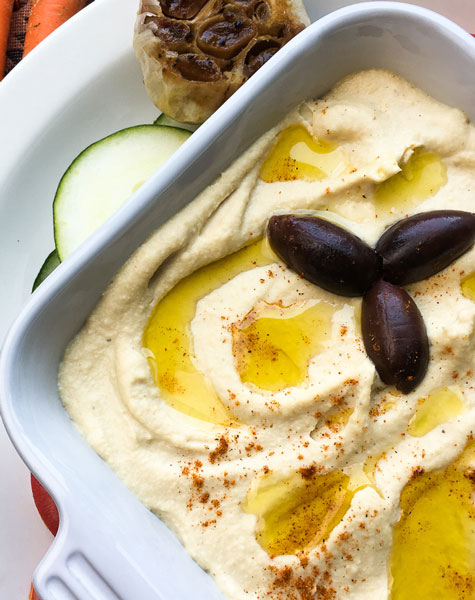
Easy Homemade Hummus
Hummus is a creamy chickpea and tahini dip with many variations. It is widely eaten in the Middle East and has particularly strong connections with food traditions of the eastern Mediterranean and Levant.
Ingredients
- 1 (15 oz.) can chickpeas, drained and rinsed
- 1/3 cup tahini
- 3 tablespoons fresh lemon juice
- 1 small garlic clove, minced
- 1/2 teaspoon salt
- 2-4 tablespoons cold water, as needed
- 1 tablespoon extra virgin olive oil, optional for serving
- Smoked or sweet paprika, optional for garnish
- Fresh vegetables or pita bread, for serving
Directions
- Drain and rinse the chickpeas.
- Add the chickpeas, tahini, lemon juice, garlic and salt to a food processor or blender.
- Adult Supervision: Blend until the ingredients begin to form a smooth paste.
- Add cold water 1 tablespoon at a time and continue blending until the hummus reaches the consistency you like.
- Taste and add a little more lemon juice or salt if needed.
- Spoon into a serving bowl.
- Drizzle with olive oil and sprinkle with paprika if desired.
- Serve with pita bread or fresh vegetables.
Kid-Friendly Tip: Kids can drain and rinse the chickpeas, measure the ingredients and arrange vegetables for dipping. An adult should supervise the food processor or blender.
Taste a plain chickpea before making the hummus. Then taste a tiny amount of tahini and smell the lemon and garlic. After blending everything together, see which individual flavors kids can still recognize.
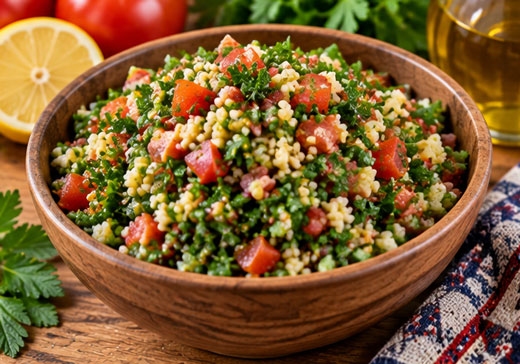
Fresh Parsley & Bulgur Tabbouleh
Tabbouleh is a fresh herb salad associated especially with Lebanese and Syrian food traditions and other parts of the Levant. Parsley is the star of the salad, with tomato, bulgur, lemon and olive oil adding flavor and texture.
Ingredients
- 1/2 cup fine bulgur wheat
- 1/2 cup hot water, or enough to prepare the bulgur according to package directions
- 2 cups finely chopped fresh parsley
- 1 large tomato, finely diced
- 1/2 cucumber, finely diced
- 2 green onions, finely sliced
- 2 tablespoons chopped fresh mint, optional
- 1/4 cup fresh lemon juice
- 3 tablespoons extra virgin olive oil
- 1/4 teaspoon salt, or to taste
- Black pepper, to taste
- Romaine lettuce leaves, optional for serving
Directions
- Prepare the bulgur according to the package directions. If using fine bulgur, it may only need to soak in hot water until tender.
- Drain away any extra water and allow the bulgur to cool.
- Wash and dry the parsley thoroughly.
- Finely chop the parsley and place it in a large bowl.
- Add the tomato, cucumber, green onions and mint if using.
- Add the cooled bulgur.
- Pour the lemon juice and olive oil over the salad.
- Season with salt and black pepper.
- Toss gently until everything is evenly combined.
- Serve on its own or with romaine lettuce leaves.
Kid-Friendly Tip: Tabbouleh is a great recipe for practicing careful measuring and chopping. Younger kids can wash herbs, measure ingredients and tear parsley leaves while older kids practice knife skills with adult supervision.
In tabbouleh, parsley isn't just sprinkled on top-it is one of the main ingredients. Compare a small bite of parsley with the finished salad and notice how lemon, olive oil, tomato and bulgur change the overall flavor.
Turkish & Chickpea Recipes
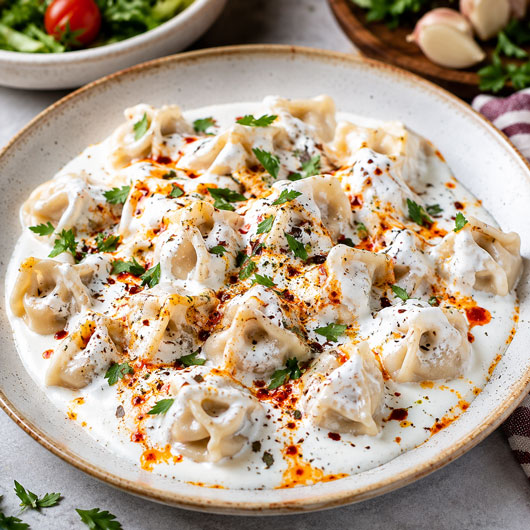
Easy Turkish-Style Manti
Mantı are small filled dumplings found in Turkish and other regional food traditions. Traditional Turkish mantı are made by filling small pieces of dough, often with seasoned meat, and carefully folding them into tiny dumplings.
This kid-friendly shortcut uses prepared meat-filled ravioli so families can explore the combination of dumplings, garlicky yogurt and butter without making the dough and filling from scratch.
Ingredients
- 1 package small meat-filled ravioli
- 1 cup plain yogurt
- 1 small garlic clove, minced
- Pinch of salt
- 2 tablespoons butter
- 1/2 teaspoon paprika
- 1/2 teaspoon dried mint, optional
- Chopped fresh parsley or mint, optional for serving
Directions
- Cook the ravioli according to the package directions until tender.
- While the ravioli cooks, stir together the yogurt, garlic and a pinch of salt in a small bowl.
- Adult Step: Melt the butter in a small saucepan over low heat.
- Stir the paprika and dried mint, if using, into the melted butter. Remove from the heat.
- Drain the cooked ravioli and divide among serving bowls.
- Spoon some of the garlic yogurt over the ravioli.
- Drizzle with a small amount of the seasoned butter.
- Sprinkle with fresh parsley or mint if desired and serve warm.
Kid-Friendly Tip: Kids can measure the yogurt and seasonings and stir together the yogurt sauce. An adult should handle the boiling water and hot butter.
Traditional Turkish mantı are handmade dumplings rather than ravioli. Dough is rolled thin, cut into small pieces, filled and folded before cooking. This recipe uses prepared ravioli as an easy cooking activity, but kids can investigate traditional mantı to see how the handmade version is different.
Homemade Falafel
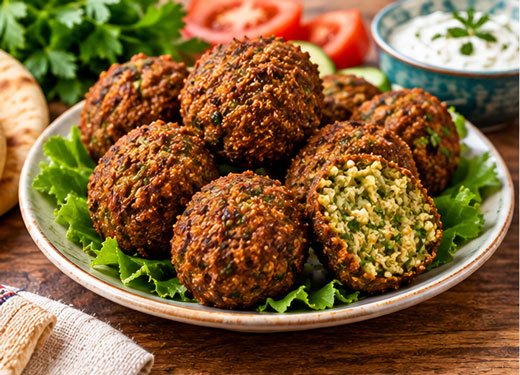
Falafel are seasoned patties or balls made from legumes and herbs. Chickpea falafel is especially associated with food traditions of the Levant and surrounding areas, while other versions may use fava beans or a combination of legumes.
This version begins with dried chickpeas soaked overnight. Do not cook the chickpeas before making the falafel—the soaked uncooked chickpeas help give traditional-style falafel its characteristic texture.
Ingredients
- 1 cup dried chickpeas
- 1/2 small onion, roughly chopped
- 2 garlic cloves
- 1/2 cup loosely packed fresh parsley
- 1 teaspoon ground cumin
- 1/2 teaspoon ground coriander
- 1/2 teaspoon salt
- 1/4 teaspoon black pepper
- 1/2 teaspoon baking powder
- 1–2 tablespoons flour, if needed
- Oil for frying
- Pita bread, tomatoes, cucumbers and tahini sauce, optional for serving
Prepare the Chickpeas
- Place the dried chickpeas in a large bowl and cover them generously with cool water.
- Soak for at least 12 hours or overnight. The chickpeas will expand as they soak, so make sure there is plenty of water in the bowl.
- Drain the chickpeas thoroughly and pat them dry.
Make the Falafel
- Add the soaked chickpeas, onion, garlic, parsley, cumin, coriander, salt and pepper to a food processor.
- Adult Supervision: Pulse until the mixture is finely chopped and crumbly. Do not blend it into a completely smooth paste.
- Transfer the mixture to a bowl and stir in the baking powder.
- If the mixture seems too wet to hold together, stir in 1 tablespoon flour. Add a little more only if needed.
- Cover and refrigerate the mixture for about 30 minutes.
- Shape into small balls or slightly flattened patties.
- Adult Step: Heat about 1 inch of oil in a deep skillet to approximately 350F (175C).
- Carefully fry a few falafel at a time for about 3-4 minutes, turning as needed, until deeply golden brown and cooked through.
- Transfer to a paper-towel-lined plate and repeat with the remaining mixture.
- Serve warm with pita, vegetables and tahini sauce if desired.
Kid-Friendly Tip: Kids can measure the seasonings and help shape the chilled falafel mixture. Frying is an adult-only step because of the hot oil.
Canned chickpeas are already cooked and contain much more moisture than dried chickpeas that have only been soaked. They can make this style of falafel too soft. For this recipe, start with dried chickpeas and soak them overnight without cooking them.
Easy Tahini Sauce
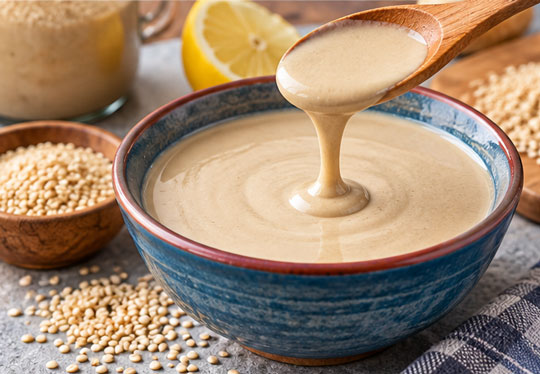
This creamy sesame sauce is an easy accompaniment for falafel, vegetables and pita. Tahini naturally thickens when lemon juice is added, then becomes creamy again as water is gradually mixed in.
Ingredients
- 1/2 cup tahini
- 3 tablespoons fresh lemon juice
- 1 small garlic clove, minced
- 1/4 teaspoon salt
- 1/4 cup cold water, plus more as needed
- 1 tablespoon chopped fresh parsley, optional
Directions
- Add the tahini, lemon juice, garlic and salt to a small bowl.
- Stir well. The tahini may become very thick at first.
- Add the cold water a tablespoon at a time, stirring after each addition.
- Continue adding water until the sauce becomes smooth and easy to drizzle.
- Stir in parsley if desired.
- Taste and adjust the lemon juice or salt before serving.
Kid-Friendly Tip: This is a great recipe for kids to observe a texture change. Watch what happens to the tahini when lemon juice is added and then again when water is stirred in.
Look at whole sesame seeds and then a spoonful of tahini. Tahini is made by grinding sesame seeds into a paste. Compare the color, texture and aroma before using the tahini to make the sauce.
Yogurt & Turkish-Style Recipes
Middle Eastern-Style Yogurt & Rice Soup
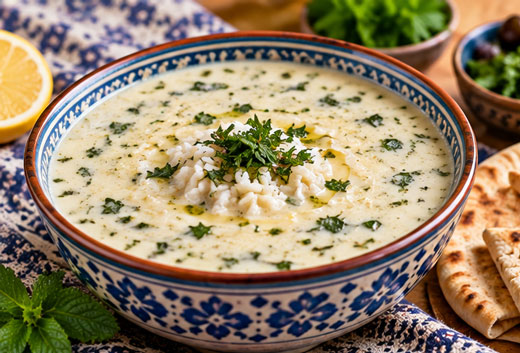
Yogurt is used in many savory dishes throughout the Middle East and surrounding regions. This warm soup combines rice, yogurt and mint for a creamy soup with a fresh herbal flavor.
Ingredients
- 6 cups chicken or vegetable broth
- 3/4 cup uncooked white rice
- 2 cups plain whole-milk yogurt
- 1 large egg
- 2 tablespoons all-purpose flour
- 1/2 teaspoon salt, or to taste
- 2 tablespoons butter
- 1 tablespoon dried mint
- Black pepper, optional
Directions
- Add the broth and rice to a large saucepan.
- Adult Step: Bring to a boil, then reduce the heat and simmer until the rice is tender, about 15–20 minutes.
- While the rice cooks, whisk together the yogurt, egg and flour in a medium bowl until smooth.
- When the rice is tender, scoop about 1 cup of the hot broth from the saucepan.
- Slowly whisk the hot broth into the yogurt mixture a little at a time. This gently warms the yogurt mixture before it goes into the soup.
- Reduce the soup to low heat.
- Slowly pour the warmed yogurt mixture into the saucepan while stirring constantly.
- Cook gently for about 5-8 minutes, stirring frequently. Do not let the soup boil vigorously.
- Season with salt and black pepper if desired.
- In a small saucepan, melt the butter over low heat.
- Stir in the dried mint and cook for about 30 seconds, just until fragrant.
- Stir the mint butter into the soup or drizzle a little over each bowl before serving.
Kid-Friendly Tip: Kids can measure the rice, yogurt and mint and whisk the yogurt mixture. An adult should handle the hot broth and stovetop.
Adding a little hot broth to the yogurt mixture before putting it into the soup is called tempering. It raises the temperature gradually and helps keep the yogurt and egg mixture smooth.
Homemade Labneh
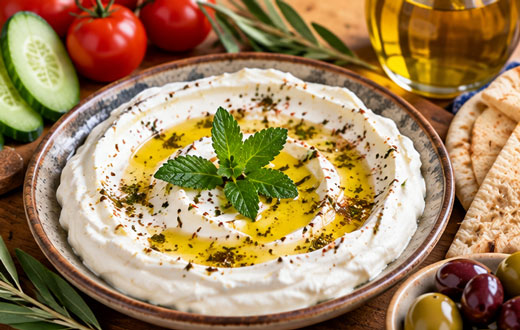
Labneh is thick, strained yogurt enjoyed in several Middle Eastern and eastern Mediterranean food traditions. As yogurt drains, some of its liquid whey separates from the solids, leaving a thicker, creamier food that can be spread or scooped.
Ingredients
- 3 cups plain whole-milk yogurt
- 1/2 teaspoon salt
- Extra virgin olive oil, optional for serving
- Za'atar, dried mint or chopped fresh herbs, optional for serving
- Pita bread or fresh vegetables, for serving
Directions
- Stir the yogurt and salt together in a bowl.
- Line a fine-mesh strainer with cheesecloth or a clean thin kitchen towel.
- Place the strainer over a deep bowl so there is room underneath for liquid to collect.
- Spoon the yogurt into the lined strainer.
- Fold the cloth loosely over the yogurt.
- Place the bowl and strainer in the refrigerator.
- Let the yogurt drain for about 12-24 hours. The longer it drains, the thicker the labneh will become.
- Spoon the finished labneh into a clean serving bowl.
- Drizzle with olive oil and sprinkle with za'atar, mint or fresh herbs if desired.
- Serve chilled with pita bread or fresh vegetables.
Kid-Friendly Tip: Kids can mix the yogurt and salt and help spoon it into the lined strainer. Check the bowl several hours later to see how much liquid has drained from the yogurt.
Before straining, look at the texture of the yogurt. Check it again after 12 hours and after 24 hours. The liquid collected in the bowl is mostly whey. As whey drains away, the yogurt becomes thicker.
Have kids predict what will happen before beginning the experiment, then record what they observe.
Turkish-Style Kofta
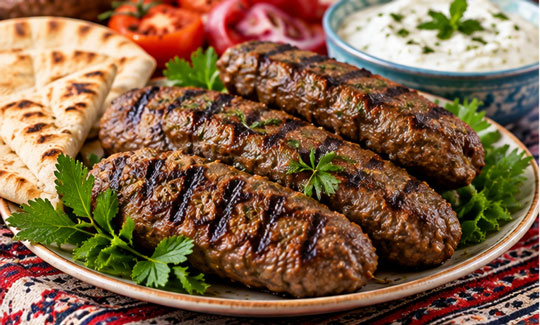
Köfte is the Turkish name for a large family of seasoned meatballs, patties and other shaped dishes. Recipes vary throughout Türkiye, with different families and regions using their own combinations of meat, herbs and seasonings.
This easy version uses ground lamb or beef with cumin, allspice, mint, garlic and parsley.
Ingredients
- 1 lb. ground lamb or ground beef
- 1/2 cup fine fresh breadcrumbs
- 1 large egg
- 2 garlic cloves, minced
- 2 tablespoons finely chopped fresh parsley
- 1 teaspoon ground cumin
- 1/2 teaspoon ground allspice
- 1/2 teaspoon dried mint
- 1/2 teaspoon salt
- 1/4 teaspoon black pepper
- 1 tablespoon olive oil
Directions
- Preheat the oven to 400F (200C).
- Line a baking sheet with parchment paper or lightly brush it with olive oil.
- Add the ground lamb or beef, breadcrumbs, egg, garlic, parsley, cumin, allspice, mint, salt and pepper to a large bowl.
- Mix gently until the ingredients are evenly combined. Avoid overmixing.
- Shape the mixture into small oval patties or short sausage shapes.
- Arrange the kofta on the prepared baking sheet and lightly brush the tops with olive oil.
- Adult Step: Bake for about 15-20 minutes, turning once, until browned and the center reaches 160F (71C).
- Serve warm with pita bread, tomatoes, cucumbers, hummus or a yogurt sauce.
Kid-Friendly Tip: Kids can measure the herbs and spices before the raw meat is added. Older kids can help shape the kofta with clean hands. Wash hands thoroughly with soap and water after handling raw meat and clean all surfaces and utensils that touched it.
Kofta is not just one recipe. Related seasoned meatballs and patties are prepared across Türkiye, the Middle East, South Asia, Central Asia and surrounding regions. Names, shapes, meats and seasonings vary widely. Compare this Turkish-style version with other kofta recipes to see what changes.
Middle Eastern Cooking Video: Sambusa
Sambusa is a filled pastry found in different forms and under related names in parts of the Middle East, East Africa, Central Asia and South Asia. Fillings, doughs, shapes and cooking methods vary depending on the region.
Watch this cooking video to see one way to prepare sambusa. As you watch, have kids look for the cooking skills used to prepare, fill and shape the pastry.
While watching the video, make a list of the cooking skills you notice. How is the filling prepared? How is the dough or wrapper shaped? How are the edges closed? Compare those steps with another filled food you have made, such as a dumpling, hand pie or stuffed pasta.
More Middle Eastern Foods to Explore
The recipes on this page are only a starting point. Choose another food from the region to investigate and find out where it is eaten, what ingredients are used and whether there are different regional versions.
Sometimes a food appears in several neighboring countries and cultures. Instead of trying to choose one place that "owns" the dish, investigate its history and compare different versions. Foods travel with people, trade and migration, and recipes often change as they move.
Extend Your Middle Eastern Cooking Lesson
Turn one cooking activity into a larger World Studies lesson with geography, language, science and comparison activities.
Create a small tasting plate with two or three foods from this lesson. For example, serve hummus, baba ghanoush and labneh with pita bread and vegetables.
Have kids compare the foods. Which is made from chickpeas? Which begins with eggplant? Which begins with yogurt? Describe the differences in color, texture, aroma and flavor.
Choose one country from the region and look at its location on a map. Is it near a sea, river, mountain range or desert? What crops are grown there?
Then choose a food from that country and write one sentence about how geography, agriculture or available ingredients may have influenced its food traditions.
After completing this Middle Eastern cooking introduction, choose one country or community for a closer study. Compare its foods with another place in the region. This helps kids see both the connections between neighboring cuisines and the traditions that make each place distinctive.
Cooking Around the World Curriculum
Continue your Middle Eastern cooking study with our Cooking Around the World curriculum. Kids can explore countries and regions through recipes, geography, food traditions, ingredients and hands-on activities.
Use this Middle Eastern cooking lesson as a starting point, then choose individual countries to investigate more closely. Compare maps, languages, ingredients and recipes to discover both the similarities and differences between food traditions around the world.
Turn Cooking into a World Studies Lesson
Choose a recipe from this page and combine it with a simple geography activity. Find the country or region connected with the food, locate it on a map, investigate one important ingredient and practice a new cooking skill.
For example: Make Tabbouleh while studying the Levant, prepare Easy Turkish-Style Manti while exploring Türkiye, or make Turkish-Style Kofta and compare it with kofta recipes from other regions.
Do you have an International Recipe or World Studies Fact?
Do you have an International recipe or know a lot about a country we could add to our world studies section? You can create your own page.
Reader's Submitted Recipes
Click below to see contributions from other visitors to this page...
Buddha Bowl with Creamy Tahini Sauce Not rated yet
Buddha Bowl with Creamy Tahini Sauce This colorful Buddha Bowl is packed with vegetables, protein-rich chickpeas, and fluffy quinoa. The creamy tahini …
Middle Eastern Cooking FAQ
Middle Eastern cooking is a broad term for many different food traditions found across countries and communities in the Middle East. There is no single Middle Eastern cuisine. Ingredients and cooking methods vary depending on geography, culture, religion, agriculture and family traditions.
There is no single universally agreed boundary for the Middle East. Countries commonly included in discussions of the region include Egypt, Israel, Jordan, Lebanon, Syria, Iraq, Iran, Saudi Arabia, Yemen, Oman, the United Arab Emirates, Qatar, Bahrain and Kuwait. Türkiye is also often included in discussions of the broader region.
Depending on the country and dish, ingredients may include chickpeas, lentils, rice, wheat, bulgur, yogurt, tahini, eggplant, tomatoes, cucumbers, olive oil, lemons, dates, parsley, mint and spices. Not every ingredient is common everywhere in the region.
Hummus, baba ghanoush, labneh and tahini sauce are good starting recipes because kids can help measure, mash, stir and taste ingredients. Tabbouleh is useful for practicing careful chopping, while falafel and kofta give older kids experience shaping ingredients before an adult handles the hot cooking steps.
Tahini is a paste made from ground sesame seeds. It has a creamy texture and nutty flavor and is used in foods such as hummus and tahini sauce.
No. Both can be made with chickpeas, but they are prepared differently. Hummus is a creamy dip usually made with cooked chickpeas and tahini. Chickpea falafel is made from soaked, uncooked dried chickpeas that are ground with herbs and seasonings, shaped and cooked.
Labneh is thick strained yogurt enjoyed in several Middle Eastern and eastern Mediterranean food traditions. As yogurt drains, some of the liquid whey separates, leaving a thicker, creamy texture.
Many languages are spoken throughout the region. Arabic is widely spoken, while Persian, Turkish, Hebrew, Kurdish and many other languages are also used. Some countries and communities are multilingual.
No. Herbs and spices may add plenty of flavor and aroma without making a dish hot. Cumin, coriander, cinnamon, allspice, mint, sumac and za'atar are examples of seasonings kids may encounter, but recipes and spice combinations vary throughout the region.
Kids can prepare a regional recipe, locate its country or area on a map, investigate an important ingredient, learn about languages spoken there and compare the food with recipes from neighboring places. Cooking helps connect geography, history, culture and practical kitchen skills.
Continue Cooking Around the World
Return to World Cooking | Next: Italian Cooking
Back to Kids Cooking Activities
Explore More Cooking Around the World
Get Free Kids Recipe Cards + Cooking Printables
Join Kids Cooking Activities for fun recipes, cooking ideas, and printable resources for kids, families, and classrooms.
Follow Kids Cooking Activities too:





© Debbie Madson, Madson Web Publishing, LLC — All rights reserved.
The material on this site is for educational purposes only.