

Eastern European Cooking for Kids
Explore Eastern European cooking for kids with recipes, food facts, geography activities and a look at food traditions from several countries across this diverse part of Europe. From Polish pierogi and Ukrainian borscht to Hungarian paprika dishes and Romanian mamaliga, cooking gives kids a hands-on way to explore Eastern Europe as part of a Cooking Around the World study.
Eastern Europe includes many countries, languages and cultures, so there is no single "Eastern European cuisine." Geography, climate, agriculture, history and local traditions have all helped shape the foods families prepare. Potatoes, cabbage, beets, grains, mushrooms, dairy products and preserved foods appear in many areas, but recipes and food traditions can change considerably from one country to another.
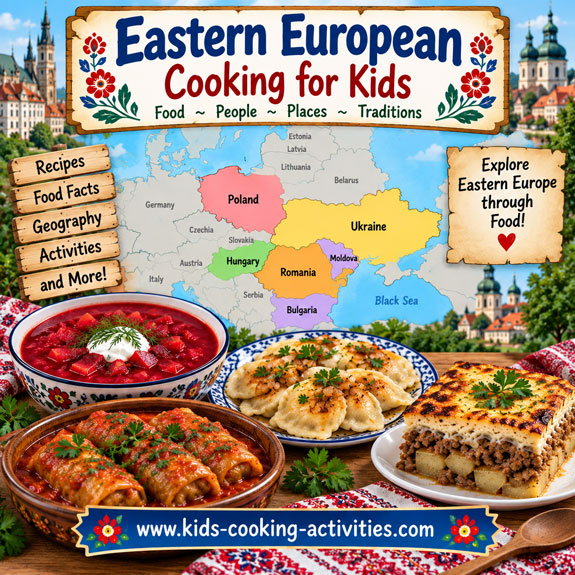
Explore Eastern Europe Through Cooking
This cooking lesson combines recipes with geography and cultural studies. Kids can locate countries on a map, compare ingredients and food traditions, learn a few words from different languages and prepare foods connected with Poland, Ukraine, Hungary, Romania, Bulgaria and other parts of the region.
Eastern Europe is a broad regional term rather than one single culture or cuisine. Countries throughout this part of Europe have their own languages, histories and food traditions. Some foods cross national borders and may have several regional versions, so look at the country or area connected with each dish as you explore.
What Kids Will Learn
- Where Eastern Europe is located
- Countries and food traditions explored in this region
- How geography and climate can influence food
- Ingredients used in different areas
- How foods and cooking traditions cross national borders
- A few words from languages spoken in the region
- Cooking skills such as rolling, filling, simmering and baking
- How to compare recipes from several countries
Kids Cooking Activities Teaching Materials
Teaching kids to cook? Save time with ready-made lesson plans used by parents and teachers. Browse teaching materials →


This page may contain affiliate links. We may earn a small commission at no extra cost to you. Learn more.
Eastern European Cooking Table of Contents
- What Kids Will Learn
- Explore Eastern Europe
- Eastern European Food Traditions
- Ingredients to Explore
- Learn a Little Language
- How Food Changes Across Eastern Europe
- Eastern European Recipes for Kids
- Borscht
- Stuffed Cabbage Rolls
- Vareniki Cooking Video
- Bulgarian-Style Moussaka
- Easy Slow Cooker Hungarian-Style Goulash
- Easy Chicken Paprikash-Inspired
- Homemade Pierogi
- Romanian Mamaliga
- More Eastern European Foods to Explore
- Extend Your Eastern European Cooking Lesson
- World Studies Notebook
- Eastern European Cooking Questions
Explore Eastern Europe
Eastern Europe covers a large area between Central Europe and parts of northern and southeastern Europe. Exactly which countries are described as "Eastern European" can vary depending on whether people are talking about geography, history or culture.
For this cooking study, we'll explore foods connected with countries including Poland, Ukraine, Hungary, Romania, Moldova and Bulgaria, along with nearby countries whose foods and histories often overlap.
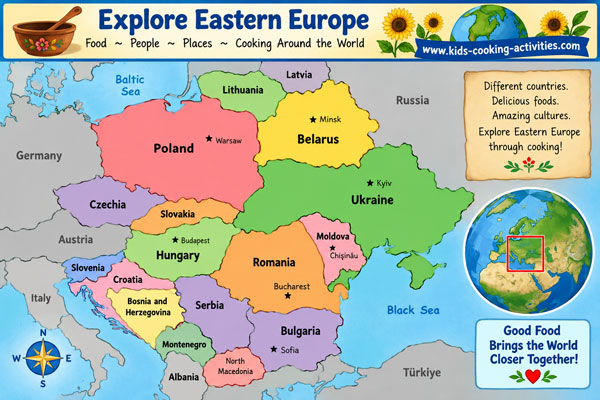
Find Europe on a world map. Then locate Poland, Ukraine, Hungary, Romania and Bulgaria. Look for the Baltic Sea, Black Sea, Danube River and Carpathian Mountains. Which countries are near one another? As you cook, mark the country connected with each recipe on your map.
Eastern European Food Traditions
Food traditions across Eastern Europe have developed over centuries and vary greatly from country to country. Climate and agriculture have played an important role in what people grow, preserve and cook.
In places with long, cold winters, foods that could be stored for months became especially useful. Potatoes, cabbage, beets, onions, carrots and grains could be kept through colder seasons, while vegetables were also pickled or fermented. Soups, stews, dumplings and baked dishes made it possible to turn these ingredients into filling family meals.
Summer brings a different selection of foods. Fresh berries, cherries, plums, tomatoes, cucumbers and other fruits and vegetables are used in seasonal dishes, desserts and preserves.
Before refrigerators and supermarkets, families needed ways to save food after the growing season ended. Pickling, fermenting, drying and making preserves helped vegetables and fruits last longer. Foods such as sauerkraut, pickled vegetables and fruit preserves are still part of many regional food traditions today.
Eastern European Ingredients to Explore
You don't need unusual ingredients to begin exploring Eastern European cooking. Many traditional dishes use simple foods that kids may already recognize.
Choose potatoes, cabbage, beets, paprika or another ingredient from the list. Find out where it grows and choose two Eastern European countries that use it. Are the foods prepared in the same way or differently?
Learn a Little Language
Unlike a country cooking lesson, there isn't one language to learn for all of Eastern Europe. Try a greeting or food word from several countries instead.
Choose the language connected with the recipe you're making and learn how to say "hello" or "thank you." Add the word and the name of the language to your World Studies notebook.
How Food Changes Across Eastern Europe
One of the best ways to understand Eastern European cooking is to compare foods from several countries. Some ingredients and dishes appear across borders, but every country has its own food traditions and regional specialties.
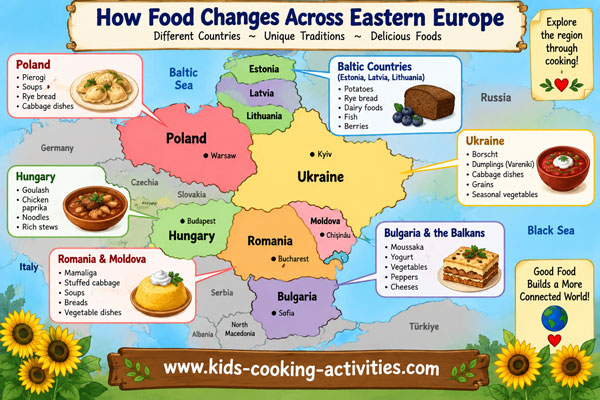
Choose two countries and find one recipe from each. Compare the main ingredients, cooking method and geography. Are there ingredients both recipes have in common? What makes each dish different?
Eastern European Recipes for Kids
Use the recipes below to bring your Eastern Europe study into the kitchen. Each recipe connects with a particular country or food tradition, although some dishes have related versions across several neighboring countries.
As you cook, locate the recipe's country on your map and talk about the ingredients and cooking methods used. Kids can also record the recipe in their World Studies notebook.
Where Should We Start?
For hands-on cooking: Make pierogi and let kids practice rolling, filling and sealing dough.
For a family meal: Try Hungarian goulash or easy chicken paprika.
For a food from Romania: Make mamaliga and compare this cornmeal dish with polenta and other cornmeal foods from around the world.
Soups & Comfort Foods
Borscht
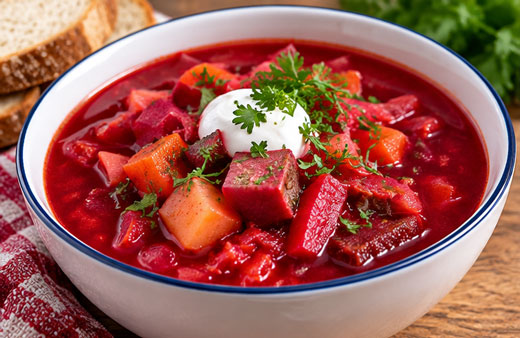
Borscht is a beet-based soup especially associated with Ukrainian food culture, although many versions are prepared throughout Eastern and Central Europe. Recipes vary by family and region and may include cabbage, potatoes, beans, meat or other vegetables.
This hearty family-style version combines beets, cabbage, potatoes, carrots and pork in a tomato-flavored broth.

Ingredients
- 1 to 2 cups cooked pork roast, shredded or cubed
- 3 carrots, diced
- 5 potatoes, peeled and diced
- 2 medium beets
- 1/2 head green cabbage, shredded
- 1 onion, chopped
- 1 to 2 cups tomato juice
- 2 chicken bouillon cubes
- Black pepper, to taste
- Fresh or dried parsley, for serving
- Cooked beans, optional
Directions
- Preheat the oven to 400F (205C).
- Wrap the beets in foil and roast for about 1 hour, or until tender enough to pierce easily with a fork.
- Allow the beets to cool enough to handle. Peel and shred or finely chop them.
- Add the carrots, potatoes, cabbage and onion to a large soup pot.
- Add the cooked pork and prepared beets.
- Add enough water to cover the ingredients.
- Bring to a gentle boil, then reduce the heat and simmer for about 1 hour, or until the vegetables are tender.
- Stir in the bouillon cubes and 1 cup tomato juice. Add more tomato juice if you would like a stronger tomato flavor.
- Add black pepper to taste. Stir in cooked beans if desired.
- Serve warm and sprinkle with parsley.
Kid-Friendly Tip: Kids can help wash the vegetables, measure ingredients and add cooled prepared vegetables to the pot. Beets can stain hands and cutting boards, so an adult may want to handle peeling and chopping them.
Borscht has many variations and is prepared in several countries, but Ukrainian borscht has an especially important place in Ukrainian food culture. Compare two borscht recipes and see how the vegetables, meat, beans or toppings change.
Stuffed Foods & Dumplings
Stuffed Cabbage Rolls
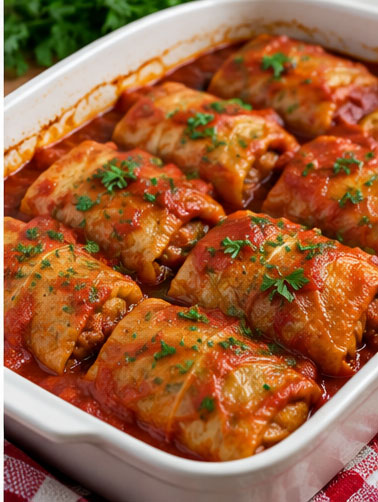
Stuffed cabbage leaves are prepared in many countries across Eastern and Central Europe. Names, fillings and sauces vary from place to place. This family-style version fills softened cabbage leaves with ground beef, rice and vegetables, then bakes them in tomato sauce.
Ingredients
- 1 large head cabbage, cored
- 1 medium onion, quartered
- 2 large carrots, cut into chunks
- 1 pound lean ground beef, uncooked
- 1 to 2 cups cooked white or brown rice
- 2 bay leaves
- 2 (8-ounce) cans tomato sauce, divided
- Tomato juice, as needed
- Salt and black pepper, to taste
- Sour cream for serving, optional
Prepare the Cabbage
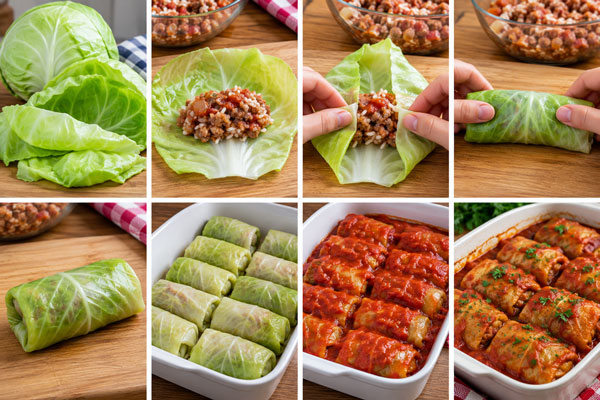
- Carefully cut around the core of the cabbage.
- Adult Step: Place the cabbage in a large pot of simmering water.
- As the outer leaves soften and loosen, carefully remove them with tongs.
- Continue until you have enough softened leaves for your cabbage rolls.
- Set the leaves aside until they are cool enough to handle.
Make the Filling
- Add the carrots, onion, about 1/2 cup cabbage and 1/2 cup tomato sauce to a blender or food processor.
- Blend until finely chopped.
- Transfer the vegetable mixture to a large bowl.
- Add the ground beef and cooked rice.
- Season lightly with salt and pepper.
- Mix until combined. Wash hands, utensils and work surfaces thoroughly after handling the raw meat mixture.
Fill and Bake the Cabbage Rolls
- Preheat the oven to 350F (175C).
- Lay one softened cabbage leaf on a work surface.
- Place a small portion of the meat and rice filling near the base of the leaf.
- Fold in the sides and roll the leaf around the filling.
- Place the cabbage roll seam-side down in a casserole dish.
- Repeat with the remaining cabbage leaves and filling.
- Pour the remaining tomato sauce and enough tomato juice over the rolls to keep them moist.
- Add the bay leaves and cover the rolls with any extra cabbage leaves.
- Cover the casserole dish tightly with foil.
- Bake for about 1 hour, or until the filling is completely cooked and the center of the meat filling reaches 160°F (71°C).
- Remove the bay leaves before serving. Serve with sour cream if desired.
Kid-Friendly Tip: Once the cabbage leaves have cooled, kids can help spoon in the filling and practice folding and rolling the leaves. An adult should handle the boiling water, raw meat mixture and hot casserole dish.
A similar meat-and-rice filling can also be used for stuffed zucchini or stuffed bell peppers. Compare how the same basic filling changes when it is cooked inside a different vegetable.
Vareniki Cooking Video
Vareniki are filled dumplings strongly associated with Ukrainian cooking. The dough can be wrapped around different fillings, including potatoes, cheese, cabbage, mushrooms, fruit and other ingredients.
Watch the video to see how the dough is filled, folded and sealed. Then compare the technique with the pierogi recipe later on this page. What looks similar? What differences do you notice?
Filled dumplings appear in many cultures around the world. As you continue your Cooking Around the World study, compare vareniki and pierogi with ravioli, empanadas, potstickers or another filled dough. Look at the dough, filling, shape and cooking method.
Main Dishes
Bulgarian-Style Moussaka
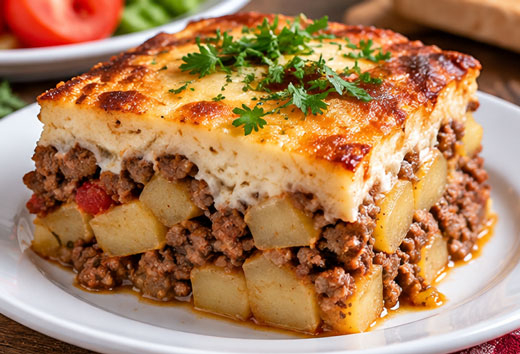
Moussaka has many versions throughout southeastern Europe and the eastern Mediterranean. In Bulgaria, moussaka is commonly made with potatoes and ground meat and finished with a creamy yogurt-and-egg topping.
This simple family version combines ground beef or pork, potatoes and tomatoes with an easy yogurt topping.
Ingredients
- 1 pound ground beef or ground pork
- 1 onion, finely chopped
- 2 pounds potatoes, peeled and diced into small pieces
- 2 tomatoes, finely chopped
- 2 tablespoons chopped parsley
- 1/2 cup water or broth
- Salt and black pepper, to taste
For the Topping
- 3 eggs
- 1 cup plain yogurt
- 2 tablespoons flour
Directions
- Preheat the oven to 350F (175C).
- Adult Step: Add the ground meat and chopped onion to a large skillet. Cook until the meat is browned, breaking it into small pieces as it cooks. Drain excess fat.
- Stir in the diced potatoes, tomatoes and parsley.
- Season lightly with salt and black pepper.
- Transfer the mixture to a lightly greased casserole dish and spread evenly.
- Add about 1/2 cup water or broth and cover with foil.
- Bake for about 45 to 60 minutes, or until the potatoes are tender.
- Remove the foil.
- In a bowl, whisk together the eggs, yogurt and flour until smooth.
- Pour the yogurt mixture evenly over the casserole.
- Return to the oven uncovered and bake for about 10 to 15 minutes more, or until the topping is set and lightly golden.
- Allow to cool for several minutes before serving.
Kid-Friendly Tip: Kids can whisk the yogurt topping, measure ingredients and help spread the cooked mixture in the casserole dish. An adult should handle the raw meat, skillet and hot baking dish.
Don't assume every moussaka looks the same. Greek versions often feature layers of eggplant, while Bulgarian moussaka commonly uses potatoes and ground meat. Compare pictures or recipes from two countries and see how one dish changes across borders.
Easy Slow Cooker Hungarian-Style Goulash
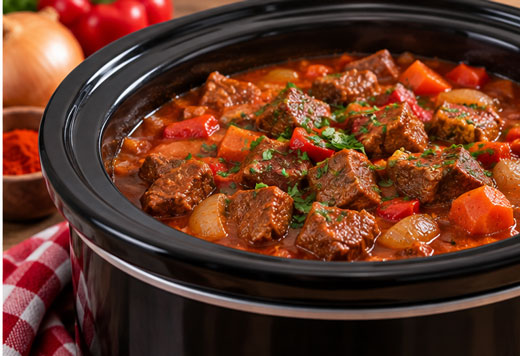
Goulash, or gulyás, has deep roots in Hungarian cooking and traditionally centers on meat seasoned with paprika. There are many related stews and family adaptations outside Hungary as well.
Our easy slow cooker version uses beef, tomatoes and paprika and finishes with sour cream. Serve it over noodles for a simple family meal.
Ingredients
- 2 pounds beef, cut into bite-size cubes
- 1 onion, chopped
- 1 clove garlic, minced
- 2 tablespoons flour
- 1 teaspoon salt
- 1/2 teaspoon black pepper
- 1 tablespoon sweet paprika
- 1 teaspoon dried thyme
- 1 bay leaf
- 1 (14.5-ounce) can diced tomatoes
- 1 cup sour cream
- Cooked noodles, for serving
Directions
- Place the beef in a bowl and toss it with the flour.
- Add the beef, onion and garlic to the slow cooker.
- Add the salt, pepper, paprika, thyme and bay leaf.
- Pour in the diced tomatoes and stir everything together.
- Cover and cook on LOW for 8 to 10 hours, or until the beef is tender and completely cooked.
- Remove and discard the bay leaf.
- Stir in the sour cream shortly before serving.
- Serve the beef mixture over cooked noodles.
Kid-Friendly Tip: Kids can measure the flour and seasonings, add ingredients to the slow cooker and stir in the sour cream with adult supervision. Wash hands and work surfaces carefully after handling raw meat.
Paprika is especially important in Hungarian cooking. It is made from dried and ground peppers and comes in different varieties, including sweet and hot. Let kids smell a small amount of sweet paprika before adding it to the recipe and describe its color and aroma.
Easy Chicken Paprikash-Inspired
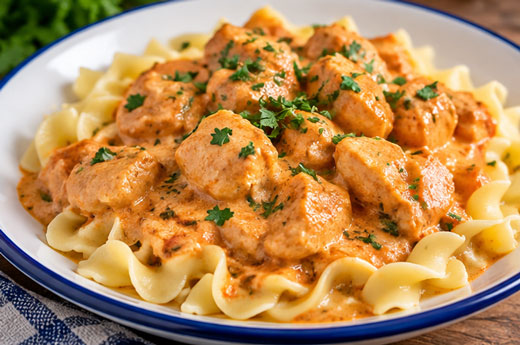
This simple chicken dish is inspired by Hungarian chicken paprikash, a well-known dish flavored with paprika and often finished with sour cream. Traditional recipes and family versions vary, so this easy version is designed as an introduction for kids.
Ingredients
- 4 boneless, skinless chicken breasts, cut into bite-size pieces
- 1 small onion, diced
- 3 tablespoons cooking oil
- 1 tablespoon sweet paprika
- 2 cups chicken broth or stock
- 1 cup sour cream
- Salt and black pepper, to taste
- 4 cups cooked noodles, for serving
Directions
- Adult Step: Heat the oil in a large skillet over medium heat.
- Add the chicken and onion.
- Cook until the chicken is lightly browned.
- Sprinkle the paprika over the chicken and stir gently.
- Add the chicken broth and stir to combine.
- Reduce the heat and simmer for about 20 minutes, or until the chicken reaches an internal temperature of 165°F (74°C).
- Reduce the heat to low and stir in the sour cream.
- Cook gently for about 5 minutes. Avoid bringing the sauce to a hard boil after adding the sour cream.
- Season with salt and pepper to taste.
- Spoon the chicken and sauce over warm cooked noodles.
Kid-Friendly Tip: Kids can measure the paprika and broth, stir together the sour cream and help prepare the noodles. An adult should handle the raw chicken and hot skillet.
Make a note of the ingredients in the Hungarian-style goulash and chicken paprika. Both use paprika, but the meats, sauces and cooking methods are different. Add your observations to your World Studies notebook.
Homemade Pierogi
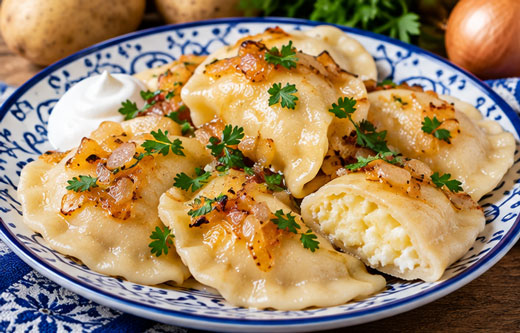
Pierogi are filled dumplings strongly associated with Polish cooking. Different fillings can include potatoes and cheese, cabbage, mushrooms, meat or fruit. Similar filled dumplings are also found in neighboring countries, making pierogi a great food for comparing cooking traditions across Eastern Europe.
Pierogi Dough
- 3 cups all-purpose flour
- 2 eggs
- 1 cup sour cream
- 1/2 teaspoon salt
Potato Cheese Filling
- 1/2 cup mashed potatoes
- 1 cup cottage cheese
- 1 small onion, minced
- 1 egg yolk, beaten
- 1 teaspoon sugar
- 1/4 teaspoon salt
- Black pepper, to taste
- Butter for sautéing the onion
Make the Dough
- Add the flour, eggs, sour cream and salt to a large mixing bowl.
- Mix until the ingredients come together and form a soft dough.
- Place the dough on a lightly floured surface.
- Knead for about 5 to 10 minutes, or until the dough becomes smooth.
- Wrap the dough and allow it to rest for about 30 minutes.
Make the Potato Cheese Filling
- Adult Step: Sauté the minced onion in a small amount of butter until softened.
- Allow the onion to cool slightly.
- In a bowl, combine the mashed potatoes, cottage cheese, sautéed onion, egg yolk, sugar and salt.
- Add a little black pepper to taste and mix well.
Fill the Pierogi
- Roll the rested dough out on a lightly floured surface.
- Use a round biscuit cutter or drinking glass to cut circles from the dough.
- Place a small spoonful of filling in the center of each circle. Do not overfill.
- Lightly moisten the edge of the dough with water.
- Fold the circle in half over the filling.
- Press the edges firmly together with your fingers or the back of a fork to seal.
- Continue until all of the dough and filling have been used.
Cook the Pierogi
- Adult Step: Bring a large pot of salted water to a gentle boil.
- Carefully add a few pierogi at a time so the pot isn't overcrowded.
- Cook until the pierogi float to the surface, then continue cooking for about 2 to 3 minutes, or until the dough is tender and the filling is thoroughly heated.
- Remove with a slotted spoon and drain.
- Serve with melted butter or sour cream.
Kid-Friendly Tip: Pierogi are a great hands-on recipe for kids. They can roll the dough, cut circles, spoon in small amounts of filling and seal the edges with a fork. An adult should handle the boiling water.
Pierogi can have savory or sweet fillings. After trying the potato and cheese version, research another traditional filling. Look for combinations using cabbage, mushrooms, cheese, meat or fruit and compare them with the version you made.
Cornmeal & Traditional Sides
Romanian Mamaliga
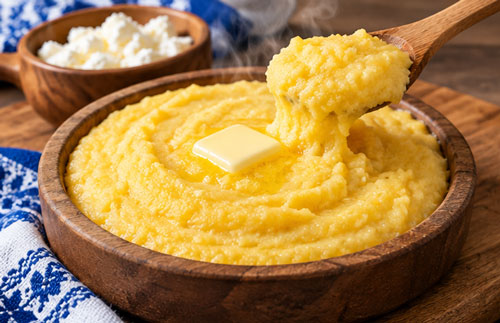
Mămăligă is a traditional cornmeal dish strongly associated with Romanian and Moldovan cooking. Cornmeal is slowly cooked with water and salt until thick, creating a simple dish that can be served alongside stews, vegetables, cheese or other foods.
This easy stovetop version is a good introduction for kids and can be served soft and creamy or cooked a little longer for a thicker mamaliga.
Ingredients
- 4 cups water
- 1 teaspoon salt
- 1 cup yellow cornmeal
- 1 tablespoon butter, optional
- Crumbled or grated cheese, for serving, optional
- Sour cream, for serving, optional
Directions
- Adult Step: Bring the water and salt to a boil in a medium saucepan.
- Reduce the heat to medium-low.
- Slowly pour in the cornmeal while whisking constantly so lumps do not form.
- Reduce the heat to low and continue cooking, stirring frequently with a wooden spoon, for about 20 to 30 minutes.
- The mamaliga is ready when it is thick and the cornmeal is tender. It should pull slightly away from the sides of the pan as it becomes thicker.
- Stir in the butter, if desired.
- For softer mamaliga, spoon it into bowls and serve warm.
- For thicker mamaliga, spread or turn it onto a plate or cutting board and allow it to stand for several minutes before slicing.
- Serve plain or with cheese, sour cream or alongside a stew or vegetable dish.
Kid-Friendly Tip: Kids can measure the cornmeal and water and help choose toppings. Because thick cornmeal can bubble and splatter while cooking, an adult should handle the saucepan and most of the stirring at the stove.
Mamaliga began as a simple cornmeal food and became an important part of Romanian cooking. It can be served in many ways, from a soft side dish to a firmer version served with cheese, sour cream, vegetables, meat or stews. In Moldova, mamaliga is also an important traditional food.
Compare mamaliga with Italian polenta. Both are made by cooking cornmeal in liquid, but the way they are prepared, served and paired with other foods can vary. Add the two countries to your map and record what the dishes have in common.
More Eastern European Foods to Explore
There are many more foods to discover beyond the recipes on this page. Choose a country, dish or ingredient below and use it as the starting point for another cooking or research activity.
Extend Your Eastern European Cooking Lesson
Turn one recipe into a larger geography, history and culture study with one or more of these activities.
Countries that are close together may share ingredients or similar foods without preparing them exactly the same way. When kids find two similar dishes, have them ask: What is the same? What is different? Where is each version prepared? This helps turn a recipe into a geography and culture lesson.
World Studies Notebook
Add Eastern Europe to your Cooking Around the World notebook. Because this lesson covers a region rather than one country, kids can create a regional overview page and then add smaller sections for the countries they explore.
- Region: Eastern Europe
- Continent: Europe
- Several countries labeled on a map
- One country's flag
- A greeting from one language you explored
- One ingredient you investigated
- One country you learned more about
- The recipe you prepared
- A cooking skill you practiced
- A drawing or photo of the finished food
Choose two countries from this lesson and divide a notebook page in half. Add a food, language, flag, ingredient and geographic feature for each country. Finish by writing down one similarity and one difference you discovered.
Continue Your Cooking Around the World Study
Explore another country or region from our Cooking Around the World collection, or use our World Studies Curriculum Unit to turn cooking into a larger geography and culture study.
Cooking Around the World Curriculum
Want to turn these cooking activities into a larger study? Our World Studies Curriculum combines geography, food, culture and hands-on learning. Kids can explore different parts of the world while building cooking skills and creating their own World Studies notebook.
Eastern European Cooking Questions
Food traditions vary by country, but potatoes, cabbage, beets, grains, mushrooms, onions, carrots and dairy products appear in many parts of Eastern Europe. Soups, stews, dumplings, stuffed vegetables, breads and preserved foods are also common in different areas.
No. Eastern Europe includes many countries, cultures and languages, each with its own food traditions. Some neighboring countries share ingredients or similar dishes, but recipes, names and cooking methods can change from one place to another.
The definition of Eastern Europe can vary depending on geography, history and culture. In this cooking lesson, kids explore foods connected with countries including Poland, Ukraine, Hungary, Romania, Moldova and Bulgaria, along with neighboring areas whose food traditions sometimes overlap.
Pierogi are especially good for hands-on cooking because kids can roll, fill and seal the dough. Kids can also help measure ingredients for mamaliga, prepare vegetables for borscht or mix the yogurt topping for Bulgarian-style moussaka. Choose cooking jobs that are appropriate for the child's age and have an adult handle boiling water, hot pans and raw meat.
Borscht is strongly associated with Ukrainian food culture, although many versions of beet and vegetable soups are prepared in Ukraine and neighboring countries. Recipes can vary by family and region and may include cabbage, potatoes, beans, meat or other vegetables.
Pierogi are filled dumplings strongly associated with Polish cooking. The dough can be filled with ingredients such as potatoes and cheese, cabbage, mushrooms, meat or fruit. Similar types of filled dumplings are found in other countries as well.
Paprika is a seasoning made from dried and ground peppers and is closely associated with Hungarian cooking. Different varieties can be sweet, mild or hot. It adds both color and flavor to dishes such as goulash and chicken paprikash.
Climate and growing seasons helped shape traditional cooking. Foods such as potatoes, cabbage, beets, onions and carrots could be grown locally and stored through colder months. Pickling, fermenting and preserving foods also helped families keep ingredients available beyond the growing season.
Kids can practice measuring, mixing, rolling dough, filling foods and following recipes while learning about geography, languages, ingredients and food traditions. They can also compare how neighboring countries use similar ingredients in different ways.
Find Europe on a map and locate countries such as Poland, Ukraine, Hungary, Romania, Moldova and Bulgaria. Then connect each recipe with a country or region. Kids can record the location, language, ingredients, recipe and what they learned in a World Studies notebook.
Do you have an International Recipe or World Studies Fact?
Do you have an International recipe or know a lot about a country we could add to our world studies section? You can create your own page.
Take Me to Another World Cooking Lesson: Mexican Cooking
Back to Kids Cooking Activities
Explore More Cooking Around the World
Get Free Kids Recipe Cards + Cooking Printables
Join Kids Cooking Activities for fun recipes, cooking ideas, and printable resources for kids, families, and classrooms.
Follow Kids Cooking Activities too:





© Debbie Madson, Madson Web Publishing, LLC — All rights reserved.
The material on this site is for educational purposes only.