
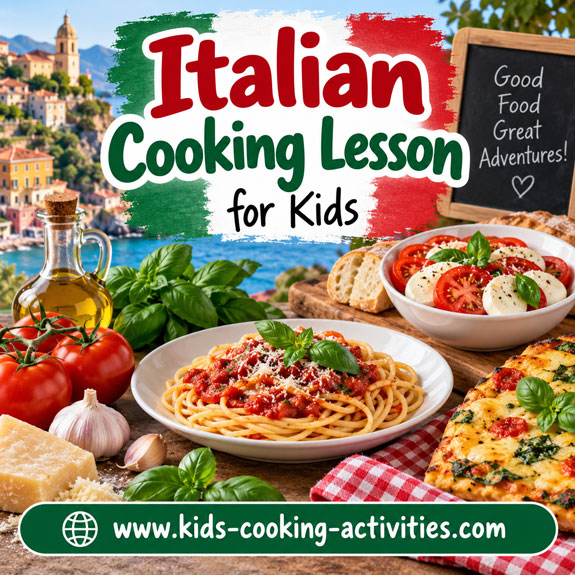
Italian Cooking Lesson for Kids
Travel to Italy without leaving your kitchen! This Italian cooking lesson introduces kids to Italian food, simple geography, everyday ingredients and a few Italian words while giving them plenty of recipes to make along the way.
Italy is famous for regional cooking traditions that use ingredients such as tomatoes, olive oil, vegetables, herbs, cheeses, rice, bread and pasta. What people eat can vary greatly from one part of Italy to another, making Italy a fun country to explore through food.
Start by finding Italy on a map and learning a few facts about the country. Then explore Italian ingredients, practice a few Italian words and choose one or more recipes to prepare together. Kids can keep notes about what they discover as part of a Cooking Around the World notebook or country study.
This page focuses on learning about Italy through our Cooking Around the World studies. If you're planning a complete themed meal or cooking party, visit our Italian Party Theme for more recipes and ideas.
Italian Cooking Lesson - On This Page
Use the links below to explore Italian facts, ingredients, cooking activities and recipes.
- Explore Italy
- Starters & Lighter Dishes
- Main Dishes & Cooking Activities
- Italian Baking
- Keep Exploring
Kids Cooking Activities Teaching Materials
Teaching kids to cook? Save time with ready-made lesson plans used by parents and teachers. Browse teaching materials →


This page may contain affiliate links. We may earn a small commission at no extra cost to you. Learn more.
What Kids Will Learn About Italy
Cooking is a fun way to connect geography and culture with hands-on learning. During this Italian cooking lesson, kids can explore where Italy is located, discover foods and ingredients used in Italian cooking and practice new kitchen skills while preparing Italian-inspired recipes.
- Find Italy on a map and identify its famous boot shape.
- Learn a few basic facts about Italy and its regions.
- Practice simple Italian words and phrases.
- Explore ingredients such as olive oil, tomatoes, basil, rice, pasta and Italian cheeses.
- Prepare one or more Italian recipes together.
- Compare Italian foods with foods your family commonly cooks and eats.
For a simple lesson, choose just one or two recipes from this page. For a longer country study, kids can prepare several dishes, locate their ingredients on a map and keep a Cooking Around the World notebook with recipes, drawings and facts they learn along the way.
Facts About Italy for Kids
Before heading to the kitchen, take a few minutes to learn about Italy. Find the country on a map or globe and notice its long peninsula extending into the Mediterranean Sea. Its familiar shape is often compared to a boot.
- Continent: Europe
- Capital: Rome
- Language: Italian
- Currency: Euro
- Famous shape: Italy's peninsula is often described as looking like a boot.
- Major islands: Sicily and Sardinia are two of Italy's largest islands.
Explore Italy on a Map
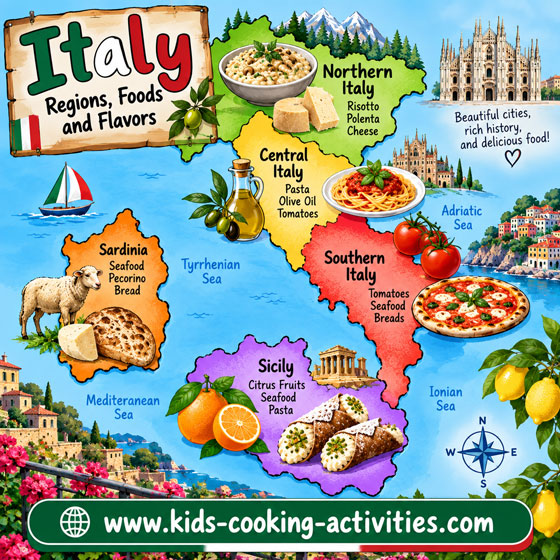
Italy has many regions, and foods can be quite different depending on where you travel. Northern Italy is known for dishes that use ingredients such as rice, polenta, butter and cheese, while tomatoes, olive oil, vegetables and seafood are especially important in many central and southern Italian dishes.
Have kids locate Rome, Florence, Venice, Milan, Naples, Sicily and Sardinia on a map. Ask which places are near the sea and which are farther north or south.
Mark Italy on a world map and draw a line from your home to Italy. Older kids can also look up the different regions of Italy and choose one food or recipe associated with a region they would like to learn more about.
What Is Italy Famous For?
Italy is known for much more than its food. Its long history has influenced art, architecture, music and science around the world. As you study Italy, kids may recognize some of these famous places and names:
- The Colosseum and other ancient Roman landmarks in Rome
- The Leaning Tower of Pisa
- The canals and bridges of Venice
- Florence and the art of the Renaissance
- Artists and thinkers such as Michelangelo and Leonardo da Vinci
- Mount Vesuvius and the ancient city of Pompeii
Learn a Little Italian
Add a simple language activity to your Italian cooking lesson by practicing a few words and phrases before you start cooking. Kids do not need to memorize them all—just choose a few to use during the lesson or at the table.
- Buongiorno – Good morning or good day
- Ciao – Hello or goodbye
- Grazie – Thank you
- Per favore – Please
- Ho fame – I'm hungry
- Buon appetito! – Enjoy your meal!
Choose one or two phrases for everyone to practice while cooking. Before you eat, have the whole family say Buon appetito!
Italian Food Words Kids May Recognize
Many Italian food words are already familiar in English-speaking kitchens. See how many of these kids recognize before explaining what they are:
- Pizza
- Pasta
- Lasagna
- Risotto
- Gnocchi
- Ravioli
- Bruschetta
- Frittata
- Mozzarella
- Parmesan
- Biscotti
- Gelato
Have kids choose three Italian food words from the list and find out what each one describes. They can add the words to their Cooking Around the World notebook along with a drawing or picture.
Italian Ingredients to Explore
Italian cooking uses many simple ingredients, but the foods can change quite a bit from one region of Italy to another. Before choosing a recipe, let kids look at, smell or taste a few ingredients that are common in Italian dishes.
- Olive oil
- Fresh tomatoes
- Garlic
- Onions
- Fresh basil
- Oregano
- Parsley
- Parmesan cheese
- Fresh mozzarella
- Ricotta cheese
- Pasta
- Rice
- Beans
- Bread
- Fresh vegetables
- Prosciutto and other cured meats
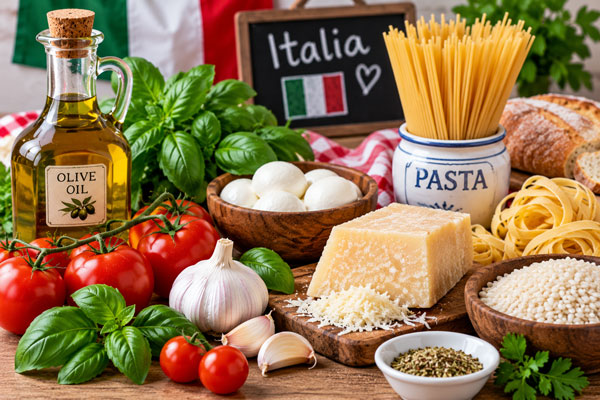
Choose three or four ingredients for kids to examine before cooking. Smell fresh basil, compare mozzarella and Parmesan, look at different pasta shapes or dip a small piece of bread into olive oil. Ask kids to describe each ingredient using words such as soft, firm, salty, sweet, smooth, rough, fresh or crunchy.
How Italian Food Changes by Region
There is no single style of Italian cooking. Different areas developed recipes based on the ingredients that were available nearby. Rice and creamy risotto dishes are especially common in parts of northern Italy, while tomatoes, olive oil and vegetables appear in many dishes from central and southern regions. Coastal areas also use plenty of seafood.
This makes Italian cooking a good way to show kids how geography, climate and local ingredients can influence what people eat.
Choose one ingredient from the list and ask: Where might this ingredient grow or be produced? Why might it be common in some parts of Italy but not others?
Italian Recipes for Kids to Try
Now it is time to bring your Italy study into the kitchen. These recipes give kids a chance to taste different ingredients, practice cooking skills and discover several types of Italian dishes. Choose one recipe for a short lesson or make several as you continue your study of Italy.
Choose Your Italian Recipes
You do not need to make every recipe on this page. For a simple Italian cooking lesson, choose one main recipe and one smaller dish. For a longer country study, try several recipes over a few days and compare the ingredients and cooking methods.
Try Tomato Bruschetta for a simple starter, Italian Frittata or Vegetable Lasagna for the main dish, and Italian Biscotti for a baking activity.
Italian Vegetable Frittata
A frittata is an Italian egg dish that is similar to an omelet, but the ingredients are mixed into the eggs and everything is cooked together. It is an easy recipe to customize with different vegetables, herbs and cheeses.
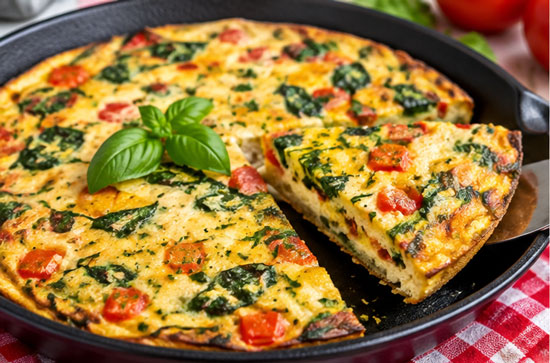

Ingredients:
- 8 eggs
- 1/2 teaspoon salt
- 1/4 teaspoon black pepper
- 1/2 cup grated Parmesan or Romano cheese
- 1/2 teaspoon dried basil
- 1/4 cup diced cooked ham or prosciutto, optional
- 1 small zucchini, diced
- 2 green onions, sliced
- 2 Roma tomatoes, sliced
- 1 teaspoon olive oil
Directions:
- Preheat the oven to 375F.
- Brush an oven-safe skillet or pie plate with the olive oil.
- Crack the eggs into a mixing bowl. Add the salt, pepper, Parmesan and basil and whisk until well blended.
- Stir in the ham or prosciutto, zucchini and green onions.
- Pour the egg mixture into the prepared pan.
- Arrange the tomato slices over the top.
- Bake for 15-20 minutes, or until the eggs are completely set in the center.
- Sprinkle with a little extra Parmesan, if desired. Let cool for several minutes before slicing and serving.
Kids can crack and whisk the eggs, measure the seasonings and cheese, stir in the vegetables and arrange the tomato slices. An adult should handle the hot skillet and oven.
Use the basic egg mixture and substitute ingredients your family enjoys. Try spinach and mozzarella, mushrooms and Parmesan, bell peppers and onions, or leftover cooked vegetables.
Cooking Around the World Connection: Frittatas are a good example of a flexible dish that can change depending on the ingredients available. Ask kids which vegetables, herbs or cheeses they would choose if they created their own version.
Tomato Bruschetta
Bruschetta is a simple Italian dish made with grilled or toasted bread. This version is topped with fresh tomatoes, garlic, olive oil and basil, making it an easy recipe for kids to help prepare.
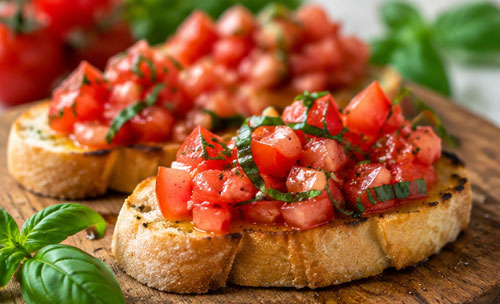
Ingredients:
- 1 loaf Italian bread or baguette, cut into slices
- 2 large ripe tomatoes, diced
- 1 garlic clove, minced
- 2 tablespoons olive oil
- 1/4 teaspoon salt
- Pinch of black pepper
- 1/2 cup chopped fresh basil
Directions:
- Preheat the oven to 400F.
- Arrange the bread slices in a single layer on a baking sheet.
- Toast for about 5-8 minutes, or until lightly golden. An adult should handle the hot pan.
- Meanwhile, combine the diced tomatoes, garlic, olive oil, salt, pepper and fresh basil in a bowl.
- Let the tomato mixture sit for several minutes so the flavors can blend.
- Spoon the tomato mixture over the toasted bread just before serving.
They are similar, but they are not exactly the same. Bruschetta traditionally begins with larger pieces of grilled or toasted bread, often rubbed with garlic and drizzled with olive oil. Crostini are usually smaller, thinner slices of toasted bread topped with ingredients such as cheese, vegetables or spreads.
Kids can tear or chop basil with an age-appropriate knife, measure the olive oil and seasonings, stir the tomato topping and spoon it onto the toasted bread.
Try a Bruschetta Taste Test
Make the basic tomato bruschetta and set out a few optional toppings such as diced fresh mozzarella, grated Parmesan, chopped roasted peppers or a small drizzle of balsamic vinegar. Let kids create a piece to taste and choose their favorite combination.
Cooking Around the World Connection: This recipe is a good example of how a few simple ingredients can create plenty of flavor. Have kids identify which ingredients are fresh and which are pantry ingredients, then compare the textures of the crisp bread and juicy tomatoes.
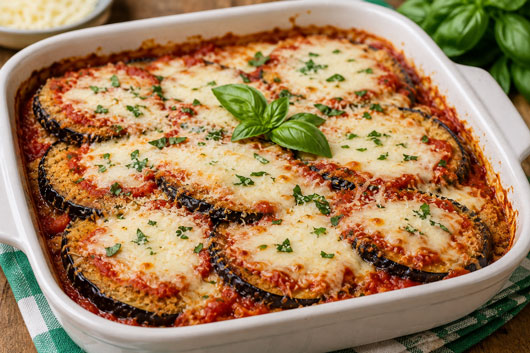
Vegetable Lasagna

Lasagna is a fun recipe for kids because they can help prepare the filling and build the dish one layer at a time. This version combines broccoli, carrots and bell pepper with tomato sauce and three cheeses.
Ingredients:
- 9 lasagna noodles, cooked according to package directions
- 1-2 tablespoons olive oil
- 2 cups small broccoli florets
- 2 carrots, shredded
- 1 bell pepper, chopped
- 4 cups pasta sauce
- 15 oz. ricotta or cottage cheese
- 1/2 cup grated Parmesan cheese
- 2 tablespoons dried parsley
- 2 large eggs
- 2 cups shredded mozzarella cheese, divided
Directions:
- Preheat the oven to 350F.
- Cook the lasagna noodles according to the package directions. Drain and set aside.
- Heat the olive oil in a large skillet over medium heat.
- Add the broccoli, carrots and bell pepper. Cook for about 5 minutes, stirring occasionally, until the vegetables begin to soften.
- Stir in the pasta sauce and simmer for another 5 minutes.
- In a separate bowl, combine the ricotta or cottage cheese, Parmesan, parsley, eggs and 1 cup of the mozzarella.
- Spread a thin layer of vegetable sauce over the bottom of a 9x13-inch baking dish.
- Add 3 lasagna noodles, followed by part of the cheese mixture and vegetable sauce.
- Repeat the layers two more times.
- Finish with sauce and sprinkle the remaining 1 cup mozzarella over the top.
- Cover with foil and bake for 25 minutes. Remove the foil and bake another 10-15 minutes, or until the lasagna is hot and bubbly.
- Let stand for about 10 minutes before cutting and serving.
You can use oven-ready noodles instead, but follow the package directions for the amount of sauce or liquid needed and the recommended baking time.
Kids can shred carrots, measure the cheeses, stir together the cheese filling and help build the lasagna layers. Let an adult handle the stove, hot sauce and baking dish.
Make Your Own Vegetable Lasagna
Try changing the vegetables to match what your family enjoys. Chopped spinach, zucchini, mushrooms or roasted vegetables can all work well. This is also a good recipe for showing kids how one basic dish can change depending on the ingredients available.
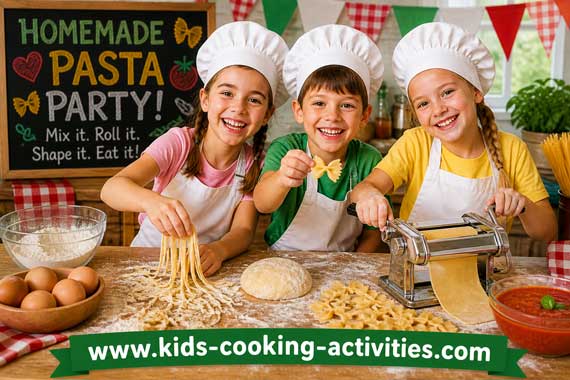
Make Homemade Pasta with Kids
Making pasta from scratch is one of the most hands-on activities you can add to an Italian cooking lesson. Kids get to see how a few basic ingredients can be mixed, kneaded, rolled and shaped into something completely different.
Start with our Homemade Pasta recipe for the basic dough and instructions. Kids can help mix and knead the dough, roll it out and experiment with different pasta shapes.
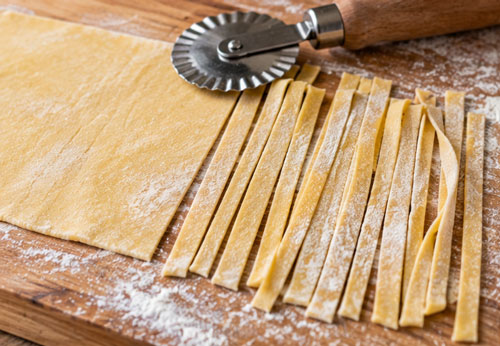
Divide the dough into smaller portions and let kids experiment with shapes. Try cutting long noodles, making small squares or rectangles, or shaping pieces by hand. Compare the finished shapes and talk about which ones might work best with different types of sauce.
Make Bow-Tie Pasta
For another fun shaping activity, learn how to make homemade bow-tie pasta. Kids can cut small rectangles of pasta dough and pinch the centers together to create the familiar bow-tie shape.
Making pasta gives kids practice measuring, mixing, kneading, rolling and cutting. Younger kids can help mix and shape the dough, while older kids can practice rolling it evenly and cutting pasta with supervision.
Add Homemade Tomato Sauce
Once your pasta is ready, pair it with Homemade Tomato Sauce. Making both pasta and sauce gives kids a chance to see how separate kitchen skills and ingredients come together to create a complete meal.
Look at several dried pasta shapes before you begin. Have kids compare their sizes, textures and shapes. Which have ridges? Which are hollow? Which are long and thin? Then talk about how different shapes can hold sauces in different ways.
Homemade Potato Gnocchi
Gnocchi are small Italian dumplings, and potato gnocchi are a fun hands-on recipe for kids. After making the dough, kids can roll it into long ropes and cut the ropes into small pieces before cooking.
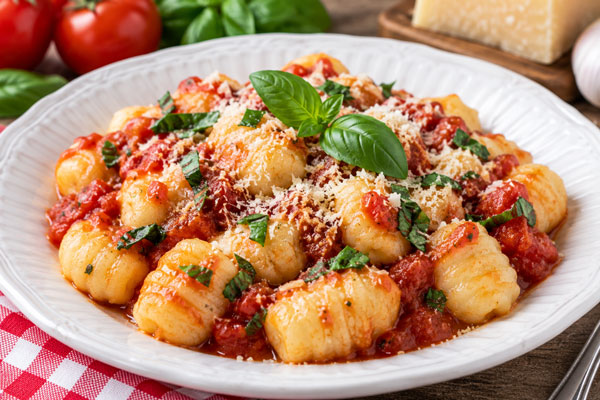
Ingredients:
- 1 cup plain mashed cooked potatoes, cooled
- 1 large egg
- 1/2 teaspoon salt
- 1/2 cup ricotta cheese
- 1/4 cup finely grated Parmesan cheese
- About 2 cups all-purpose flour, plus extra for the work surface
Directions:
- Cook and mash the potatoes without adding milk or butter. Measure 1 cup and let cool.
- In a large mixing bowl, combine the mashed potatoes, egg, salt, ricotta and Parmesan.
- Add the flour gradually, stirring until a soft dough forms. You may not need all of the flour.
- Turn the dough onto a lightly floured surface and knead gently just until it holds together. Avoid overworking the dough.
- Divide the dough into 4 pieces.
- Roll each piece into a long rope about 3/4 inch thick.
- Cut each rope into pieces about 3/4 inch long.
- Bring a large pot of salted water to a gentle boil. An adult should handle the boiling water.
- Cook the gnocchi in small batches. When they float to the surface, continue cooking briefly until cooked through, then remove them with a slotted spoon.
- Serve with tomato sauce, butter and herbs, or a sprinkle of Parmesan cheese.
How to Shape Gnocchi
Rolling and cutting the dough is a great job for kids. The pieces do not have to look exactly alike. Keeping them close to the same size will help them cook evenly. After rolling the dough into ropes, cut it into small bite-size pieces.
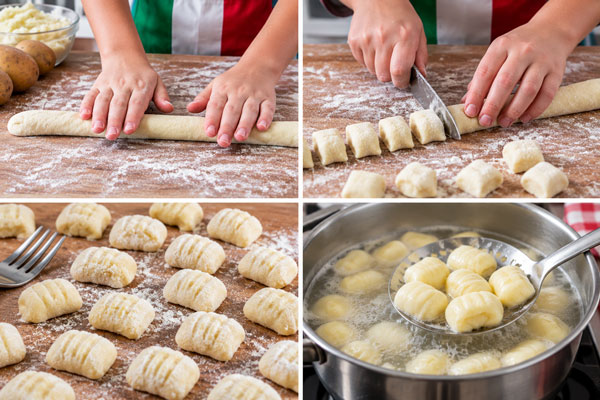
Add only enough flour to make the dough easy to handle. Too much flour or too much kneading can make the finished gnocchi heavier instead of soft and tender.
Kids can mash the cooled potatoes, measure ingredients, mix the dough, roll it into ropes and cut the ropes with an age-appropriate kitchen tool. An adult should be responsible for placing the gnocchi into boiling water and removing them.
Cooking Around the World Connection: Compare gnocchi with the homemade pasta you made earlier. Both start as dough, but they use different ingredients and have different textures. Ask kids which was easier to shape and which texture they preferred.
Parmesan Risotto
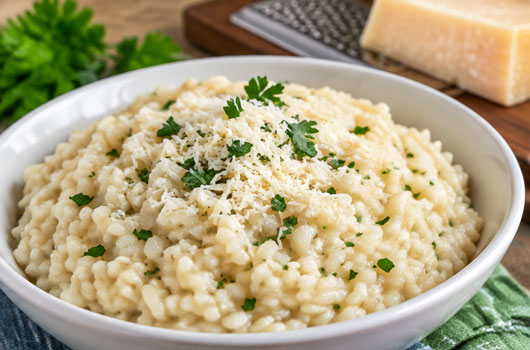
Risotto is a creamy rice dish especially associated with northern Italy. Instead of adding all the liquid at once, warm broth is added a little at a time while the rice cooks. This makes risotto a great recipe for showing kids how a cooking method can change the texture of an ingredient.
Ingredients:
- 5-6 cups chicken or vegetable broth
- 2 tablespoons olive oil
- 2 tablespoons butter, divided
- 1 small onion, finely chopped
- 1 1/2 cups Arborio rice
- 3/4 cup freshly grated Parmesan cheese
- Black pepper, to taste
Directions:
- Pour the broth into a saucepan and keep it warm over low heat.
- In a separate large saucepan, heat the olive oil and 1 tablespoon of the butter over medium heat.
- Add the onion and cook for 3-4 minutes, stirring occasionally, until softened.
- Add the rice and stir for 1-2 minutes so the grains are coated with the oil and butter.
- Add about 1/2 cup of the warm broth to the rice. Stir frequently until most of the liquid has been absorbed.
- Continue adding the warm broth about 1/2 cup at a time, stirring frequently and allowing most of the liquid to absorb before adding more.
- Continue cooking until the rice is creamy and tender but still has a slight bite. This will usually take about 20-25 minutes. You may not need all of the broth.
- Remove from the heat and stir in the remaining tablespoon of butter and Parmesan cheese.
- Add black pepper to taste and serve while warm and creamy.
Stirring the rice while gradually adding broth helps release starch from the rice. That starch is what gives risotto its naturally creamy texture without needing to add cream.
Kids can measure the rice, broth and cheese and help grate Parmesan. Older kids can also help stir the risotto with close adult supervision. Because this recipe requires working over a hot stove for several minutes, an adult should supervise the cooking closely.
Try a Risotto Variation
Once kids understand the basic method, try adding cooked peas, mushrooms, asparagus or finely chopped spinach near the end of the cooking time. This is another way to see how one basic Italian dish can be adapted with different ingredients.
Cooking Around the World Connection: Compare risotto with ordinary cooked rice. Ask kids to describe the differences in texture. Then locate northern Italy on your map and talk about how rice dishes give us another example of the variety found in Italian cooking.
Italian Biscotti
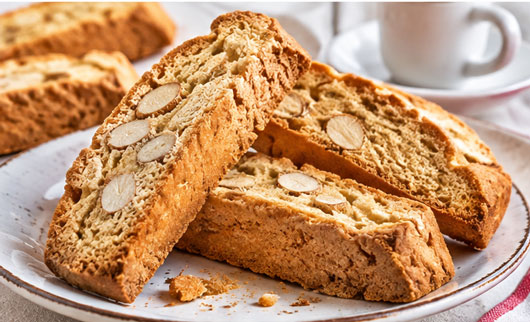
Biscotti are crisp Italian cookies that are baked twice. First, the dough is shaped into long logs and baked. Then the logs are sliced and the individual cookies are baked again until crisp. This makes biscotti a fun recipe for kids to learn how changing the baking method changes the texture of a cookie.
Ingredients:
- 3 1/2 cups all-purpose flour
- 1 teaspoon baking powder
- 3/4 teaspoon salt
- 1 cup chopped almonds
- 3 large eggs
- 1 1/2 cups sugar
- 1/2 cup butter, melted and cooled slightly
- 2 teaspoons vanilla extract
- 1 teaspoon almond extract
- 1 teaspoon finely grated lemon or orange zest
Directions:
- Preheat the oven to 350°F. Line a baking sheet with parchment paper.
- In a medium bowl, stir together the flour, baking powder, salt and chopped almonds.
- In a large mixing bowl, whisk together the eggs, sugar, melted butter, vanilla, almond extract and citrus zest.
- Gradually stir the dry ingredients into the egg mixture until a thick dough forms.
- Divide the dough in half.
- With lightly floured hands, shape each half into a long, flattened log on the prepared baking sheet.
- Bake for about 25-30 minutes, or until the logs are firm and lightly golden.
- Remove from the oven and let cool for about 10 minutes.
- With adult help, carefully cut each log diagonally into slices about 1/2-3/4 inch thick.
- Place the slices cut-side down on the baking sheet.
- Bake for another 10-15 minutes, turning the biscotti over halfway through, until dry and crisp.
- Transfer to a wire rack and let cool completely.
The first baking cooks the dough and makes it firm enough to slice. The second baking removes more moisture from the slices, giving biscotti their characteristic dry, crisp texture.
Kids can measure and mix the ingredients, help shape the dough into logs and arrange the sliced biscotti on the baking sheet. An adult should handle the hot pans and slice the warm biscotti.
Try a Biscotti Variation
Once you have tried the basic recipe, change the flavor by using a different add-in. Try mini chocolate chips, dried cranberries or another chopped nut your family enjoys. You can also experiment with lemon or orange zest to see how a small amount changes the flavor of the finished cookie.
Before the second baking, carefully feel or observe the texture of a cooled biscotti slice. Compare it with a completely cooled piece after the second baking. What changed? Ask kids why removing more moisture might help make a cookie crisp.
Easy Italian Wedding Soup
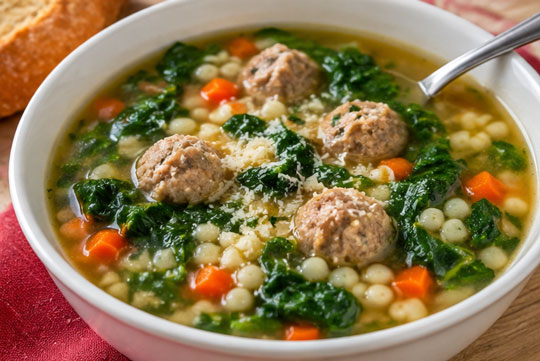
Italian wedding soup combines small meatballs, pasta and leafy greens in a flavorful broth. Despite its English name, the soup is not named because it is traditionally served at weddings. The name refers to the delicious combination, or "marriage," of the meat and greens.
Ingredients:
- 6 cups chicken broth
- 1 carrot, finely diced
- 1 celery stalk, finely diced
- 2 cups small cooked meatballs
- 3/4 cup small pasta, such as acini di pepe, orzo or small shells
- 2 cups fresh spinach, finely chopped
- 1/4 cup grated Parmesan cheese
- Salt and black pepper, to taste
- Extra Parmesan cheese for serving, optional
Directions:
- Pour the chicken broth into a large saucepan and bring to a gentle boil.
- Add the carrot and celery. Cook for about 5 minutes, or until they begin to soften.
- Add the pasta and cook according to the package directions.
- During the last few minutes of cooking, add the cooked meatballs and heat through.
- Stir in the chopped spinach and cook for another 1-2 minutes, or until the spinach wilts.
- Stir in the Parmesan cheese.
- Taste and add salt and pepper as needed.
- Ladle into bowls and sprinkle with additional Parmesan, if desired.
Use small homemade meatballs or fully cooked frozen meatballs. If your meatballs are large, cut them into smaller bite-size pieces before adding them to the soup.
Kids can measure the pasta and broth, wash and tear the spinach, grate Parmesan and count the meatballs. An adult should handle the hot soup and stove.
What Does "Wedding Soup" Mean?
The name can be confusing because Italian wedding soup is not actually a traditional wedding dish. Its name comes from the Italian idea of ingredients that are well "married," or combined together. In this soup, the meat, greens and broth complement one another.
Look at the ingredients in the soup and have kids sort them into groups: vegetables, grain, protein and dairy. Which ingredients have you already seen in other recipes during your Italian cooking lesson?
Panzanella Italian Bread Salad
Panzanella is an Italian bread and tomato salad associated with Tuscany in central Italy. It is a great example of how cooks can turn simple ingredients, including bread that is no longer fresh, into something new instead of letting food go to waste.
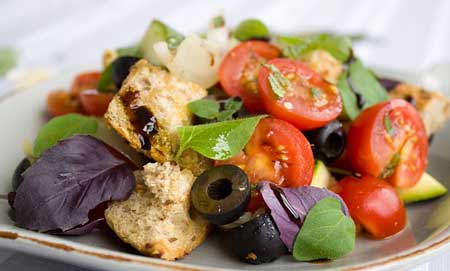
Ingredients:
- 4 cups cubed day-old Italian-style bread
- 3 ripe tomatoes, chopped, with their juices
- 1/4 red onion, thinly sliced
- 1/2 cup fresh basil leaves, torn or chopped
- 3 tablespoons olive oil
- 1 tablespoon red wine vinegar
- 1/2 teaspoon salt, or to taste
- Black pepper, to taste
Directions:
- If the bread is still soft, spread the cubes on a baking sheet and toast them in a 350°F oven for about 8-10 minutes, or until slightly dry but not hard.
- Place the chopped tomatoes and their juices in a large serving bowl.
- Add the sliced red onion and fresh basil.
- Add the bread cubes.
- Drizzle with the olive oil and red wine vinegar.
- Sprinkle with salt and black pepper.
- Toss everything together gently.
- Let the salad rest for about 15-20 minutes so the bread can soak up some of the tomato juices and dressing.
- Toss again and serve.
Bread that has become a little dry can absorb the tomato juices and dressing without immediately turning mushy. Panzanella is a good example of finding a new use for an ingredient that might otherwise be thrown away.
Kids can tear the basil, measure the olive oil and vinegar, add the ingredients to the bowl and gently toss the salad together. Older kids can help cut the bread and vegetables with an age-appropriate knife.
Try a Panzanella Variation
After trying the basic recipe, add other ingredients your family enjoys. Cucumber, bell pepper or small pieces of fresh mozzarella are easy additions. Keep the tomatoes, bread, olive oil and vinegar as the base and experiment from there.
Food traditions often developed around using ingredients wisely. Ask kids what other foods your family makes with ingredients that need to be used up. Leftover bread, ripe fruit and cooked vegetables can often become part of another meal instead of going to waste.
More Italian Recipes and Activities
Once kids have tried a few of the recipes in this Italian cooking lesson, there are plenty of ways to continue exploring. You can make another simple Italian dish, prepare a complete meal or turn your cooking activity into an Italian-themed party.
Turn Your Italy Lesson into an Italian Party
If your kids enjoyed cooking their way through Italy, take the lesson one step further and plan an Italian-themed meal or cooking party. Our Italian Party Theme brings together additional recipes and ideas for creating a complete Italian food experience.
Stay on this page when you're studying Italy as part of Cooking Around the World. Use the country facts, language activities, ingredient exploration and recipes as part of your Italy study.
Visit the Italian Party Theme when you're ready to plan a themed dinner, family cooking night or kids cooking party with additional Italian recipes and activities.
Build an Italian Meal Together
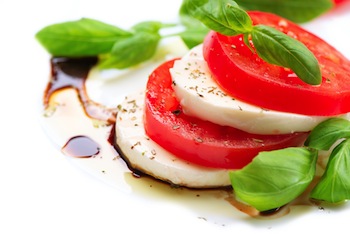
Let kids help choose the menu. They might start with bruschetta or Caprese salad, choose homemade pasta, lasagna or another favorite for the main dish, and finish with biscotti. Older kids can help plan which recipes need to be prepared first and create a grocery list for the meal.
Give each child a different job or dish. One child might prepare the salad, another can help make pasta or sauce, and another can set the table. Finish by having everyone share their favorite food or fact they learned about Italy.
Cooking Around the World Curriculum
Want to turn these country cooking activities into a more complete learning experience? Our Cooking Around the World studies help kids explore international foods while practicing hands-on cooking skills and learning about countries and cultures along the way.
Use the lessons for homeschool studies, cooking classes, after-school programs or simply as a fun way to explore the world together from your own kitchen.
Visit our Cooking Around the World hub to choose another country and continue your international cooking studies.
Where Will You Cook Next?
Italian Cooking Lesson FAQ
Do you have an International Recipe or World Studies Fact?
Do you have an International recipe or know a lot about a country we could add to our world studies section? You can create your own page.
Continue Your Cooking Around the World Adventure
Ready to explore another country through food?
Return to Cooking Around the World
Next Stop: French Cooking Lesson
Plan an Italian Cooking Party
Related Cooking around World Pages: ~International Cooking for Kids, ~American, ~Asian, ~British, ~Eastern Europe, ~French, ~Greece, ~India, ~Irish, ~Italy, ~Mexico, ~Middle East, ~South Africa, ~Southern USA ~World Studies Unit
Get Free Kids Recipe Cards + Cooking Printables
Join Kids Cooking Activities for fun recipes, cooking ideas, and printable resources for kids, families, and classrooms.
Follow Kids Cooking Activities too:





© Debbie Madson, Madson Web Publishing, LLC — All rights reserved.
The material on this site is for educational purposes only.