
- Home ›
- World Cooking ›
- American Cooking
American Cooking for Kids
American cooking is shaped by many cultures, regions and local ingredients. Instead of having one single style of food, the United States has a wide variety of food traditions influenced by Indigenous foods, immigration, agriculture and the different climates and ingredients found across the country.
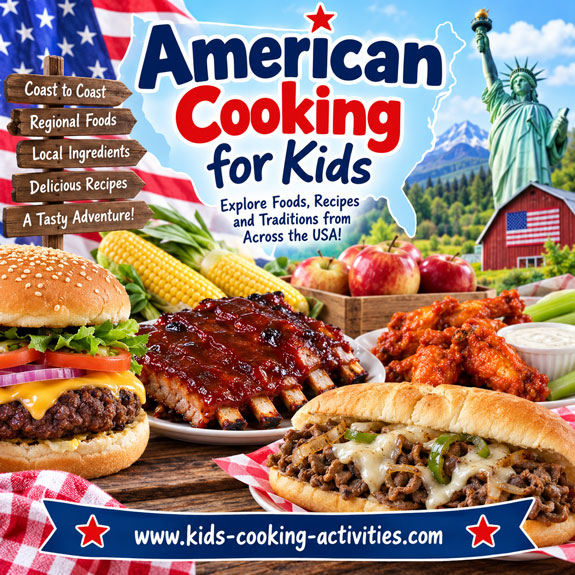
In this World Cooking lesson, kids can explore foods from different parts of the United States, discover how geography influences what people eat and try several American recipes at home.
Explore American Cooking
Use this page as a mini food and geography lesson. Kids can explore:
- Geography: Find major regions of the United States on a map.
- Regional foods: Compare foods from New England, the South, Midwest, Southwest and West Coast.
- Ingredients: Discover foods grown and produced in different parts of the country.
- Food traditions: See how many cultures have helped shape American cooking.
- Cooking: Choose an American recipe to prepare together.
Kids Cooking Activities Teaching Materials
Teaching kids to cook? Save time with ready-made lesson plans used by parents and teachers. Browse teaching materials →


This page may contain affiliate links. We may earn a small commission at no extra cost to you. Learn more.
- Explore the United States on a Map
- What Makes American Cooking Unique?
- American Foods and Ingredients
- American Food by Region
- Popular American Foods to Explore
- American Recipes to Make with Kids
- Barbecue Ribs
- Buffalo Wings
- Philly Cheesesteak
- USA Regional Cooking Activities
- American Cooking FAQ
- More World Cooking Lessons
Explore the United States on a Map
The United States stretches across a large area of North America, from the Atlantic Ocean to the Pacific Ocean. It includes mountains, plains, deserts, forests, farmland and thousands of miles of coastline. These differences in geography and climate help explain why foods can vary so much from one part of the country to another.
Have kids find the Atlantic Ocean, Pacific Ocean, Gulf of Mexico, Great Lakes, Rocky Mountains and Mississippi River on a map. Then locate a few regions known for distinctive food traditions, including New England, the South, Midwest, Southwest and West Coast.
What Makes American Cooking Unique?
There is no single food that represents all American cooking. Foods eaten in the United States have developed from a mixture of regional ingredients, cultural traditions and recipes brought by people from many parts of the world.
Some foods that are now familiar across the United States have roots in other countries and cultures. Pizza developed from Italian traditions, for example, while many breads, sausages, noodles, rice dishes and desserts reflect influences brought by generations of immigrants.
At the same time, different parts of the country developed their own specialties based on local ingredients and history. Seafood is important in many coastal areas, corn and grains are widely grown through the Midwest, barbecue traditions vary across the South, and Southwestern cooking makes frequent use of ingredients such as chiles, beans and corn.
American Foods and Ingredients
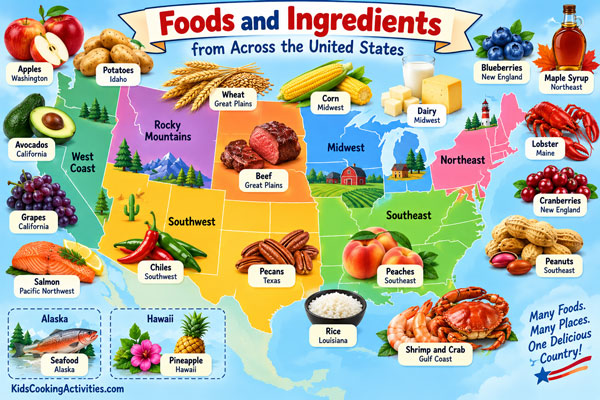
Because the United States has many climates and growing regions, a wide variety of foods are grown, raised and harvested across the country. Some ingredients are especially connected with certain states or regions.
As kids explore American cooking, look for ingredients they already recognize and talk about where those foods might be grown or produced.
American Food by Region
One of the best ways to understand American cooking is to explore it by region. Each area has been shaped by its geography, local ingredients, history and the cultures of the people who live there.
For a closer look at one important regional tradition, explore our Southern Cooking for Kids lesson with foods such as peach cobbler, grits, fried chicken and more.
Popular American Foods to Explore
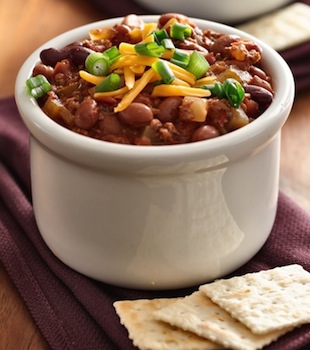
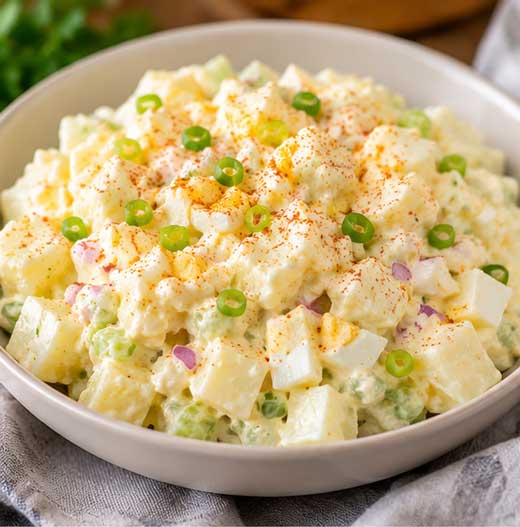
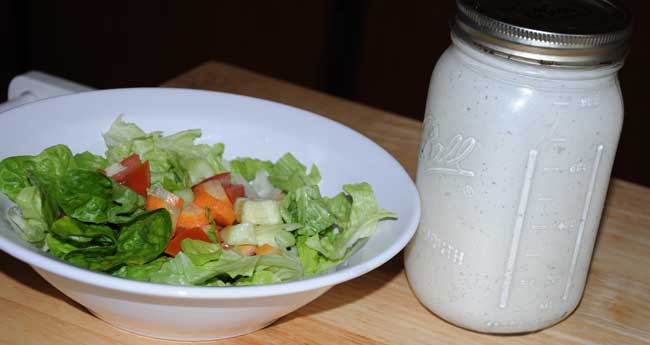
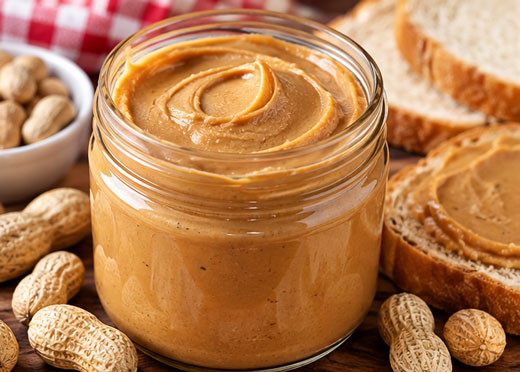
Many foods have become familiar across the United States even though their histories and influences come from different regions and cultures. Use these recipes to explore some popular American meals, side dishes, sauces and desserts with kids.
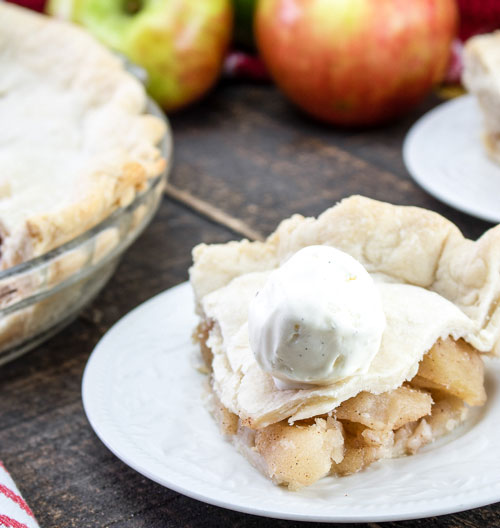
American Recipes to Make with Kids
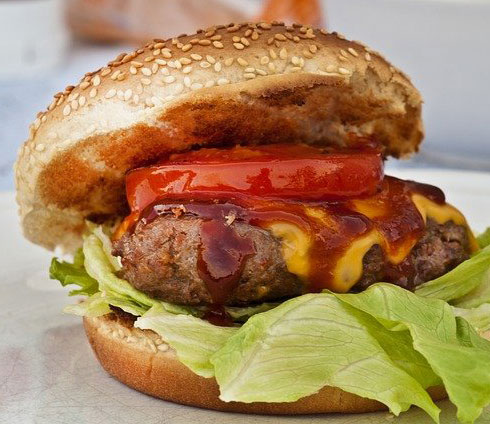
Ready to cook? The recipes below highlight foods associated with different parts of the United States. As you prepare each one, find its region or city on a map and talk about how food can become part of a place's identity.
Start with barbecue ribs, then travel to Buffalo, New York for Buffalo-style chicken wings and Philadelphia, Pennsylvania for a homemade Philly cheesesteak.
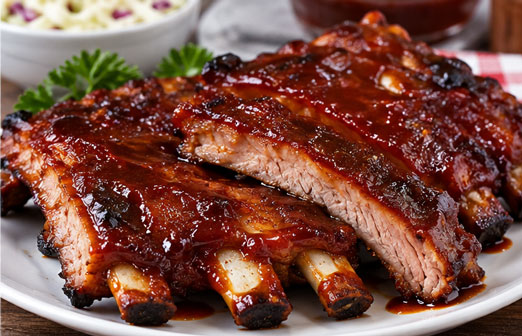
Easy Barbecue Ribs
Barbecue is an important part of American regional cooking, especially in the South and Midwest. Styles vary from place to place, with different regions using their own sauces, seasonings and cooking methods. This easy oven version uses a simple homemade barbecue-style sauce.

Ingredients
- 2-3 pounds pork or beef ribs
- 1/2 cup water
- 1/2 cup ketchup
- 1/4 cup apple cider vinegar
- 2 tablespoons brown sugar
- 2 tablespoons Worcestershire sauce
- 1 tablespoon prepared mustard
- 1 teaspoon salt
- 1/2 teaspoon black pepper
Directions
- Preheat the oven to 350F.
- Place the ribs in a roasting pan or large baking dish.
- In a mixing bowl, whisk together the water, ketchup, vinegar, brown sugar, Worcestershire sauce, mustard, salt and pepper.
- Pour the sauce evenly over the ribs.
- Cover the pan with foil and bake for about 1 1/2 hours.
- Carefully remove the foil and turn the ribs. Spoon some of the sauce from the pan over the top.
- Continue baking uncovered for about 30 minutes, or until the ribs are tender and fully cooked.
- Let the ribs rest for 5-10 minutes before serving.
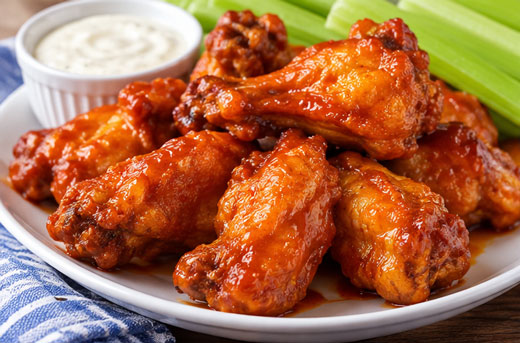
Kid-Friendly Buffalo Chicken Wings
Buffalo wings are associated with Buffalo, New York. Traditional Buffalo-style wings are coated in a buttery hot pepper sauce and are often served with celery and blue cheese dressing. This baked version lets you control the amount of hot sauce for a milder family-friendly recipe.
Ingredients
- 3 pounds chicken wings, split if needed
- 1 tablespoon oil
- 1/2 teaspoon salt
- 1/2 teaspoon black pepper
- 1/2 cup hot pepper sauce
- 4 tablespoons butter, melted
- 1 teaspoon Worcestershire sauce
- 1/4 teaspoon garlic powder
- Celery sticks, for serving
- Blue cheese or ranch dressing, optional
Directions
- Preheat the oven to 425F.
- Pat the chicken wings dry with paper towels.
- Place the wings in a large bowl. Add the oil, salt and pepper and toss to coat.
- Arrange the wings in a single layer on a foil-lined or parchment-lined baking sheet.
- Bake for about 40-45 minutes, turning once halfway through, until browned and the chicken reaches 165F in the thickest part.
- While the wings bake, whisk together the hot sauce, melted butter, Worcestershire sauce and garlic powder.
- Place the cooked wings in a clean large bowl. Pour the Buffalo sauce over them and toss until coated.
- Serve warm with celery sticks and blue cheese or ranch dressing, if desired.
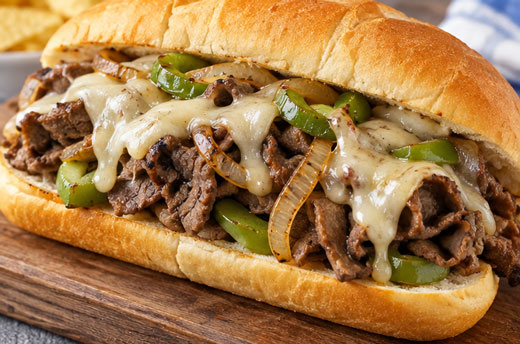
Easy Philly Cheesesteak
The Philly cheesesteak is associated with Philadelphia, Pennsylvania. It is made with thinly sliced beef cooked on a hot griddle or skillet and served on a long roll with melted cheese. Onions are a common addition, while other toppings vary.
Ingredients
- 1 pound ribeye steak, very thinly sliced
- 1 tablespoon oil
- 1 medium onion, thinly sliced
- 1 small green bell pepper, thinly sliced, optional
- 4 hoagie rolls
- 8 slices provolone cheese or another favorite melting cheese
- Salt and black pepper, to taste
Directions
- Heat the oil in a large skillet over medium-high heat.
- Add the onion and optional bell pepper. Cook for about 5 minutes, stirring occasionally, until they begin to soften.
- Add the thinly sliced steak. Season lightly with salt and pepper.
- Cook for about 4-6 minutes, stirring and separating the pieces of beef, until the meat is fully cooked.
- Divide the beef and vegetables into four portions in the skillet.
- Place 2 slices of cheese over each portion and allow the cheese to melt.
- Open the hoagie rolls and carefully fill each roll with one portion of the beef, vegetables and melted cheese.
- Serve warm.
Explore More with USA Regional Cooking Activities
Take the lesson beyond a few individual recipes by exploring foods from different regions of the United States. Kids can connect cooking with geography as they learn how climate, agriculture, history and local traditions help shape what people eat.
Our USA Regional Cooking Activities and Geography Camp expands this idea into a hands-on cooking and geography study for kids.
More American Cooking to Explore
American food changes as you travel from one part of the country to another. Continue your food study with more recipes, regional traditions and cooking activities.


Do you have an International Recipe or World Studies Fact?
Do you have an International recipe or know a lot about a country we could add to our world studies section? You can create your own page.
American Cooking FAQ
Question: What is considered traditional American food?
Answer: American food includes many different regional and cultural traditions rather than one single style of cooking. Hamburgers, barbecue, chili, pies, regional seafood dishes and sandwiches such as the Philly cheesesteak are familiar examples. American cooking also reflects Indigenous food traditions and foods, ingredients and cooking techniques introduced by people from many parts of the world.
Question: Why is American food different from one region to another?
Answer: The United States covers a large geographic area with different climates, landscapes and local ingredients. Coastal areas may feature seafood, farming regions use locally grown crops and livestock, and different cultural communities have influenced the foods prepared in each region.
Question: What are some easy American foods for kids to make?
Answer: Hamburgers, potato salad, homemade ranch dressing, chili and simple pies are good choices for cooking with kids. Kids can also help prepare barbecue sauce, measure ingredients for Buffalo wings and assemble Philly cheesesteak sandwiches while an adult handles raw meat and hot cooking equipment.
Question: How can you use American cooking for a geography lesson?
Answer: Choose a recipe or ingredient and locate the place connected with it on a map. Kids might find Philadelphia while making a cheesesteak, Buffalo while learning about Buffalo wings or a Southern state while exploring barbecue. They can also investigate where ingredients such as corn, cranberries, peaches, peanuts or maple syrup are produced.
Question: How have different cultures influenced American cooking?
Answer: American cooking has been shaped by Indigenous food traditions as well as generations of people who brought ingredients, recipes and cooking techniques from other parts of the world. Exploring food can help kids see connections between geography, migration, history and culture.
Explore More World Cooking Lessons
Continue your food studies by traveling to another part of the world through cooking. Compare ingredients, breads, main dishes, desserts and food traditions and look for connections between the foods you discover.
Explore More Cooking Around the World
Back to Kids Cooking Activities Home
Get Free Kids Recipe Cards + Cooking Printables
Join Kids Cooking Activities for fun recipes, cooking ideas, and printable resources for kids, families, and classrooms.
Follow Kids Cooking Activities too:





© Debbie Madson, Madson Web Publishing, LLC — All rights reserved.
The material on this site is for educational purposes only.