
- Home ,
- World Cooking ,
- Asia
Asian Cooking for Kids
Asia is the world's largest continent and is home to many countries, cultures, languages and food traditions. Chinese noodles, Japanese sushi, Korean barbecue, Indonesian satay and foods from Thailand, Vietnam, India and other countries can be very different from one another.
In this Asian cooking lesson, kids can sample recipes and cooking traditions from several parts of Asia while learning where different foods come from. Rather than thinking of "Asian food" as one type of cooking, encourage kids to notice how ingredients, flavors and cooking methods change from country to country.
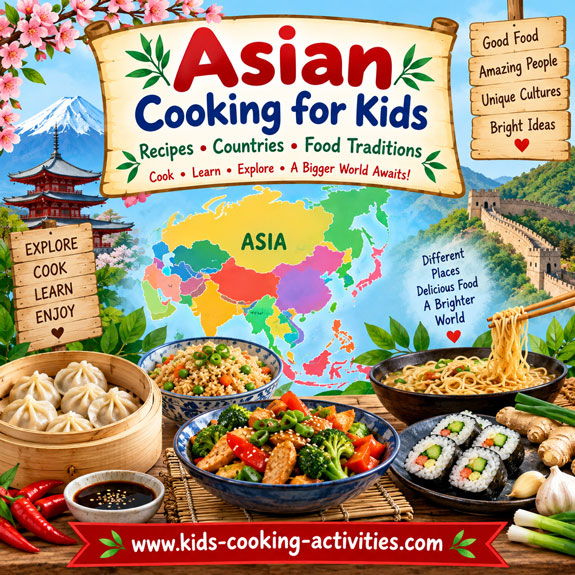
Explore Asia Through Cooking
Turn this page into a hands-on geography and cooking lesson. Find Asia on a world map, choose a few countries to locate and then match recipes on this page with the places they come from.
Start with: Choose one country or food tradition to explore instead of trying to study all of Asia at once. Make a recipe, find its country on a map and add what you learn to your World Studies notebook.
There is no single "Asian cuisine." Asia includes dozens of countries and an enormous variety of regional food traditions. Even within one country, recipes, ingredients and cooking styles can change from region to region. The recipes on this page are a sampling of foods from several Asian countries and traditions.
Kids Cooking Activities Teaching Materials
Teaching kids to cook? Save time with ready-made lesson plans used by parents and teachers. Browse teaching materials →


This page may contain affiliate links. We may earn a small commission at no extra cost to you. Learn more.
Explore Asian Cooking
- What Kids Will Learn
- Explore Asia
- Food Traditions Across Asia
- Asian Ingredients to Explore
- Cooking Methods to Discover
- Learn a Little Language
- Asian Recipes for Kids
- Chinese & Chinese-American Cooking
- Japanese Cooking
- Indonesian Cooking
- Korean Cooking
- Learn to Stir-Fry
- Recipes:
- Kung Pao Chicken
- Chicken Lo Mein
- General Tso Chicken
- Sweet and Sour Chicken
- Pork Chow Mein
- Chicken Satay with Peanut Sauce
- Easy Korean BBQ Marinade
- Easy Homemade Egg Rolls
- Easy Egg Drop Soup
- Easy Fried Rice
- Build Your Own Easy Stir Fry
- Lunar New Year Ideas for Kids
- Extend Your Asian Cooking Lesson
- World Studies Notebook
- Asian Cooking FAQ
What Kids Will Learn
Cooking is a fun way to connect geography, culture and everyday life. As kids explore the recipes and activities on this page, they can learn to:
- Locate Asia on a world map.
- Find countries such as China, Japan, Korea and Indonesia.
- Connect recipes with the countries and food traditions they represent.
- Discover common ingredients such as rice, noodles, soy sauce, ginger and sesame.
- Compare different ways foods are steamed, stir-fried, grilled, simmered and rolled.
- Practice cooking skills such as chopping, measuring, marinating, stirring and assembling foods.
- Explore how geography, climate and local ingredients can influence what people eat.
Explore Asia
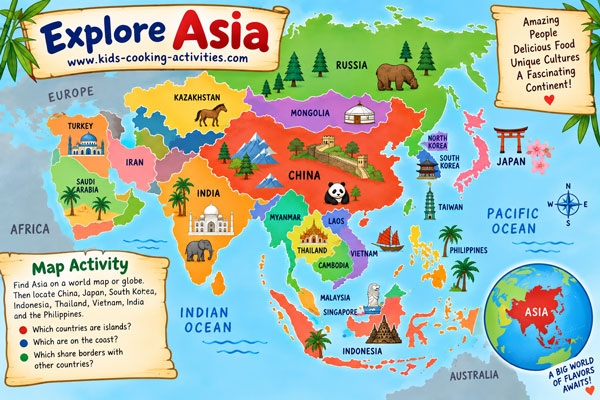
Asia is a very large continent stretching from the Mediterranean region in the west to the Pacific Ocean in the east. It includes many different landscapes, climates and cultures, from mountains and deserts to tropical islands, river valleys and crowded coastal cities.
Because the continent is so large, foods grown and eaten in one part of Asia may be very different from foods found somewhere else. Rice is important in many parts of Asia, while wheat and other grains are especially important in others. Coastal and island communities may use plenty of seafood, while inland regions may rely more on grains, vegetables, meat or dairy products.
Find Asia on a world map or globe. Then locate China, Japan, South Korea, Indonesia, Thailand, Vietnam, India and the Philippines. Which countries are islands? Which are on the coast? Which share borders with other countries?
Food Traditions Across Asia
One of the most important things for kids to learn from this lesson is how much Asian food traditions vary. Ingredients and cooking methods are shaped by local agriculture, geography, history and culture.
These are only a few examples. Thailand, Vietnam, India, the Philippines, Malaysia and many other Asian countries have their own cuisines and regional specialties to explore.
Asian Ingredients to Explore
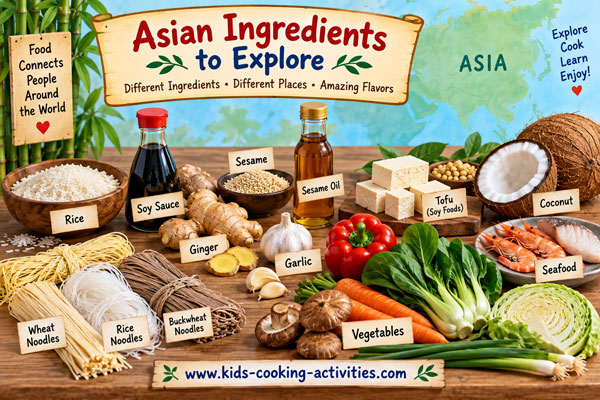
Instead of treating these as ingredients used everywhere in Asia, look for where each ingredient appears in the recipes you are studying. Some are common across several countries, while others are more closely associated with particular regions or dishes.
- Rice: eaten in many forms, including steamed rice, fried rice, rice noodles and rice-based dishes.
- Noodles: can be made from wheat, rice, buckwheat, mung beans and other ingredients.
- Soy sauce: adds salty, savory flavor to many dishes.
- Ginger: used fresh, dried or pickled in different recipes.
- Garlic: an aromatic ingredient found in many savory dishes.
- Sesame: seeds and sesame oil can add nutty flavor.
- Soy foods: tofu and other soybean products are important in several Asian food traditions.
- Coconut: coconut milk and coconut are especially important in many tropical parts of South and Southeast Asia.
- Seafood: fish and shellfish are important in many coastal and island communities.
- Vegetables: cabbage, greens, mushrooms, onions, peppers and many other vegetables appear in regional dishes.
Choose one ingredient that is new to your family. Find out where it grows or how it is made, then look for a recipe that uses it. Kids can record the ingredient, country and recipe in their World Studies notebook.
Cooking Methods to Discover
Comparing cooking methods is another way to explore food traditions. As you work through the recipes on this page, watch for these techniques:
- Stir-frying: cooking small pieces of food quickly in a hot pan or wok.
- Steaming: cooking food with steam rather than placing it directly in water.
- Simmering: gently cooking soups, sauces and other dishes in liquid.
- Grilling: cooking foods such as skewered meats over direct heat.
- Marinating: soaking food in a seasoned liquid before cooking.
- Rolling and folding: used for foods such as egg rolls, dumplings and sushi.
As kids cook, ask them to keep track of which recipes use rice, noodles, soy sauce, ginger or other ingredients. Then compare the cooking methods. Which recipe is stir-fried? Which is grilled? Which is simmered?
Learn a Little Language
Hundreds of languages are spoken across Asia, so there isn't one "Asian language." Learning even one food word can help remind kids that every recipe comes from a particular place and culture.
- Japanese: gohan can mean cooked rice and is also used in words referring to a meal.
- Korean: bap refers to cooked rice and can also be associated with a meal.
- Mandarin Chinese: fàn can refer to cooked rice or a meal, depending on how the word is used.
Try this: When you choose a country to study, learn how to say the name of one food, ingredient or polite table phrase in a language spoken there.
Choose a Country and Start Cooking
The recipes below introduce kids to several different food traditions. Look for the country or tradition connected with each recipe, locate it on your map and then head to the kitchen.
Cooking idea: Try recipes from two different countries and compare their ingredients, flavors and cooking methods.
Asian Recipes for Kids
Ready to start cooking? The recipes below come from several different Asian countries and food traditions. Some are traditional dishes, while others are family-friendly or Chinese-American versions of familiar favorites.
As kids choose recipes, have them find the country on a map and notice the ingredients and cooking techniques used. This makes each recipe part of the geography lesson instead of simply another dish to prepare.
Choose one country to explore first. Make one recipe, locate the country on your map and talk about what makes the dish different from foods your family usually prepares.
For beginning cooks: Egg Drop Soup, Fried Rice and Build your own Stir Fry are good places to practice basic measuring, stirring and stovetop skills.
Explore Chinese & Chinese-American Cooking
China has many regional cuisines, so Chinese cooking cannot be described as one single style. Rice, noodles, vegetables, tofu, meat and seafood are prepared in different ways throughout the country, using techniques such as stir-frying, steaming, braising and simmering.
Some dishes familiar to families in the United States have roots in Chinese cooking but developed or changed in Chinese-American restaurants. This makes them interesting foods to compare while learning how recipes can travel and change over time.
Choose one Chinese-American dish and find out how it compares with foods eaten in China. Ask kids why recipes might change when families move to another country and begin cooking with different ingredients and for new communities.
Explore Japanese Cooking
Rice, noodles, vegetables, seafood, soy-based foods and carefully prepared seasonal ingredients are important in many Japanese food traditions. The activities on this page give kids a simple introduction to two recognizable cooking styles.
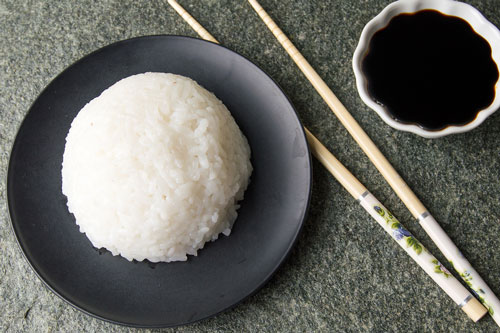
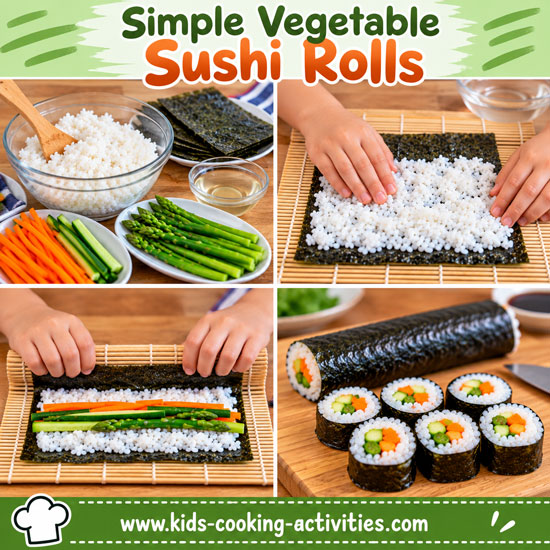
Sushi is centered around seasoned rice and can be prepared with many different fillings and toppings. Kid-friendly versions can use cooked seafood, vegetables, egg or other fully cooked ingredients.
Explore Indonesian Cooking
Indonesia is a large island nation with many regional cuisines. Rice, coconut, vegetables, herbs and spices are important in many dishes, and grilled foods are popular in different parts of the country.
Find Indonesia on a map. Notice that the country is made up of many islands. Talk about how living on islands and in a tropical climate might influence ingredients and food traditions.
Explore Korean Cooking
Korean meals can include rice, noodles, soups, grilled meats, vegetables and fermented foods. Marinades are one easy way for kids to explore how savory, sweet and aromatic ingredients can work together.
Compare the Korean BBQ marinade with another marinade your family uses. Which ingredients add saltiness, sweetness and aroma? What changes after the meat has time to marinate?
Learn the Stir-Fry Cooking Method
Stir-frying is a useful cooking technique to practice while exploring several East and Southeast Asian food traditions. Small pieces of food cook quickly over relatively high heat while being stirred or tossed frequently.
Build your own Stir Fry gives kids a chance to practice preparing vegetables, making a simple sauce and learning which ingredients need to go into the pan first.
Once kids understand the method, let them choose a combination of vegetables and a protein. Keep the basic cooking technique and sauce the same, then compare how different ingredient combinations change the finished meal.
Kung Pao Chicken
By Kids Cooking Activities
- Category: Main Dish
- Country: China
- Method: Stir-Fry
- Skill Level: Beginner
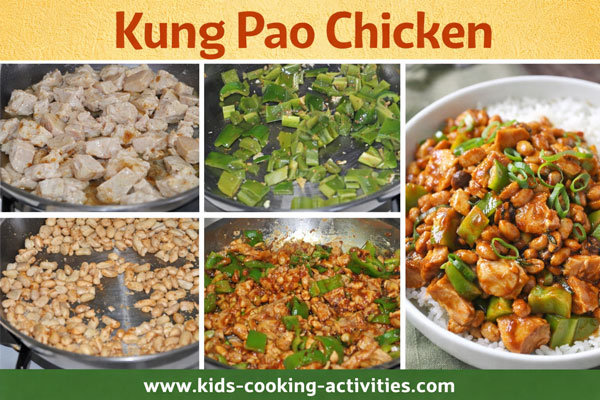


Prep: 20 minutes | Cook: 15 minutes | Yield: 4 servings
Ingredients
- 1 lb boneless, skinless chicken breast, cut into bite-size pieces
- 1 tablespoon oil
- 1 red bell pepper, chopped
- 1 small onion, chopped
- 1 cup broccoli florets
- 2 green onions, sliced
- 1/3 cup peanuts, optional
Kung Pao Sauce
- 1/4 cup low-sodium soy sauce
- 2 tablespoons rice vinegar
- 1 tablespoon brown sugar
- 1 teaspoon sesame oil
- 1 teaspoon cornstarch
- 1 garlic clove, minced
- 1 teaspoon grated fresh ginger
- Pinch of red pepper flakes, optional
Instructions
- Wash and prepare the vegetables. Have an adult help cut the chicken into bite-size pieces. Wash hands, cutting boards and utensils well after handling raw chicken.
- In a small bowl, whisk together soy sauce, rice vinegar, brown sugar, sesame oil, cornstarch, garlic, ginger and optional red pepper flakes.
- Heat oil in a large skillet or wok over medium-high heat.
- Add the chicken and cook, stirring often, until browned and cooked through to 165°F.
- Add bell pepper, onion and broccoli. Stir-fry for 3-5 minutes, or until the vegetables are tender-crisp.
- Stir the sauce again and pour it into the pan. Cook for 1-2 minutes, stirring, until the sauce thickens and coats the chicken and vegetables.
- Stir in the green onions and optional peanuts. Serve warm with rice.
Leave out the red pepper flakes for a mild version. Families who enjoy spicy food can add extra heat to individual servings.
Find Sichuan Province in southwestern China on a map. Older kids can compare this mild family version with traditional Kung Pao Chicken and identify ingredients that have been changed or left out.
Chicken Lo Mein
By Kids Cooking Activities
- Category: Main Dish
- Cooking Style: Chinese-Inspired
- Method: Stovetop
- Skill Level: Beginner
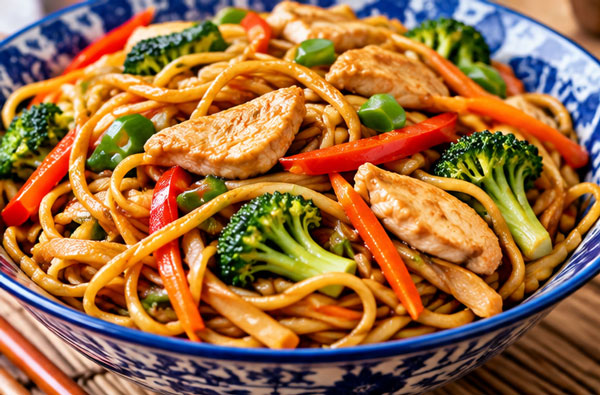
Prep: 20 minutes | Cook: 20 minutes | Yield: 4 servings
Ingredients
- 8 oz lo mein noodles or spaghetti
- 1 lb boneless, skinless chicken breast, cut into bite-size pieces
- 1 tablespoon oil
- 1 cup thinly sliced carrots
- 1 red bell pepper, thinly sliced
- 1 cup broccoli florets
- 2 green onions, sliced
Lo Mein Sauce
- 1/4 cup low-sodium soy sauce
- 1 tablespoon brown sugar or honey
- 1 tablespoon rice vinegar
- 1 teaspoon sesame oil
- 1 garlic clove, minced
- 1 teaspoon grated fresh ginger
Instructions
- Cook the noodles according to the package directions. Drain and set aside.
- In a small bowl, whisk together soy sauce, brown sugar or honey, rice vinegar, sesame oil, garlic and ginger.
- Heat oil in a large skillet over medium-high heat.
- Add the chicken and cook, stirring often, until it reaches 165°F and is cooked through.
- Add the carrots, bell pepper and broccoli. Cook for 3-5 minutes, stirring often, until the vegetables are tender-crisp.
- Add the cooked noodles and sauce to the skillet.
- Using tongs or two large spoons, gently toss everything together until the noodles are coated and heated through.
- Sprinkle with green onions and serve warm.
Try cabbage, mushrooms, snow peas or zucchini in place of some of the vegetables. Leftover cooked chicken can also be used; add it near the end and heat it thoroughly before serving.
Look at several types of noodles at the grocery store. Compare wheat noodles, rice noodles and other varieties. Check the ingredient labels and talk about how noodles can be made from different grains and starches.
General Tso Chicken
By Kids Cooking Activities
- Category: Main Dish
- Cooking Style: Chinese-American
- Method: Stovetop
- Skill Level: Beginner
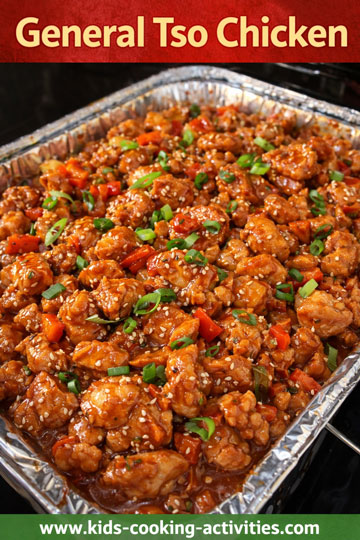
Prep: 20 minutes | Cook: 20 minutes | Yield: 4 servings
Ingredients
- 1 lb boneless, skinless chicken breast, cut into bite-size pieces
- 1/3 cup cornstarch
- 2 tablespoons oil
- 2 green onions, sliced
- Steamed rice, for serving
General Tso Sauce
- 1/4 cup low-sodium soy sauce
- 1/4 cup water
- 2 tablespoons rice vinegar
- 2 tablespoons brown sugar
- 1 tablespoon honey
- 1 teaspoon sesame oil
- 1 garlic clove, minced
- 1 teaspoon grated fresh ginger
- 1 teaspoon cornstarch
- Pinch of red pepper flakes, optional
Instructions
- Place the chicken pieces in a bowl and toss with 1/3 cup cornstarch until lightly coated.
- In a separate bowl, whisk together soy sauce, water, rice vinegar, brown sugar, honey, sesame oil, garlic, ginger, 1 teaspoon cornstarch and optional red pepper flakes.
- Heat the oil in a large skillet over medium-high heat.
- Add the chicken and cook, turning and stirring as needed, until golden and cooked through to 165°F.
- Stir the sauce again and pour it over the chicken.
- Cook for 2-3 minutes, stirring gently, until the sauce thickens and coats the chicken.
- Sprinkle with green onions and serve with steamed rice.
Leave out the red pepper flakes for younger kids or anyone who prefers mild food. Extra heat can always be added to individual servings.
General Tso Chicken is especially associated with Chinese-American restaurant cooking. Use it as an example of how dishes can develop and change as people, ingredients and cooking traditions move between countries.
Sweet and Sour Chicken
By Kids Cooking Activities
- Category: Main Dish
- Cooking Style: Chinese-Inspired
- Method: Stovetop
- Skill Level: Beginner
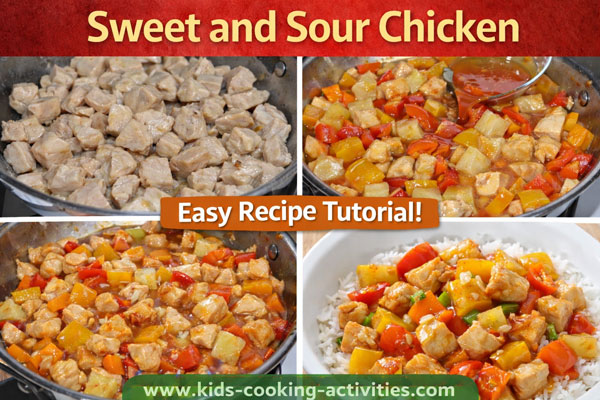
Prep: 20 minutes | Cook: 20 minutes | Yield: 4 servings
Ingredients
- 1 lb boneless, skinless chicken breast, cut into bite-size pieces
- 1 tablespoon oil
- 1 red bell pepper, chopped
- 1 green bell pepper, chopped
- 1 small onion, chopped
- 1 cup pineapple chunks, drained
- Steamed rice, for serving
Sweet and Sour Sauce
- 1/3 cup pineapple juice
- 1/4 cup ketchup
- 3 tablespoons rice vinegar
- 2 tablespoons brown sugar
- 1 tablespoon low-sodium soy sauce
- 1 tablespoon cornstarch
Instructions
- Whisk together pineapple juice, ketchup, rice vinegar, brown sugar, soy sauce and cornstarch. Set aside.
- Heat oil in a large skillet over medium-high heat.
- Add the chicken and cook, stirring often, until it reaches 165°F and is cooked through.
- Add the bell peppers and onion. Cook for 3-5 minutes, or until tender-crisp.
- Add the pineapple chunks.
- Stir the sauce again and pour it into the skillet.
- Cook for 2-3 minutes, stirring, until the sauce bubbles and thickens.
- Serve warm with steamed rice.
Have kids identify the ingredients that make the sauce sweet and the ingredients that make it sour. Taste the finished sauce and talk about how combining opposite flavors can create balance.
Pork Chow Mein
By Kids Cooking Activities
- Category: Main Dish
- Cooking Style: Chinese-Inspired
- Method: Stovetop
- Skill Level: Beginner
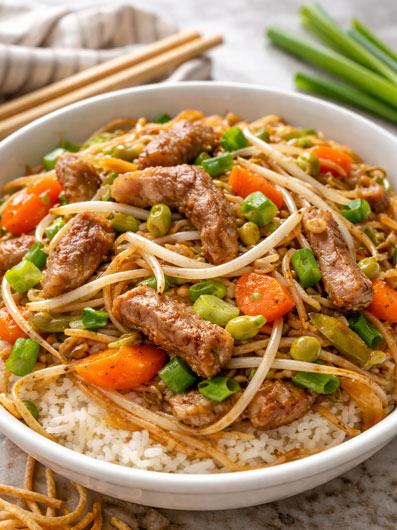
Prep: 20 minutes | Cook: 20 minutes | Yield: 4 servings
Ingredients
- 8 oz chow mein noodles or spaghetti
- 1 lb boneless pork loin, cut into thin strips or small pieces
- 1 tablespoon oil
- 1 cup shredded cabbage
- 1 carrot, thinly sliced or shredded
- 1 cup sliced mushrooms
- 2 green onions, sliced
Chow Mein Sauce
- 1/4 cup low-sodium soy sauce
- 1/4 cup water
- 1 tablespoon brown sugar
- 1 teaspoon sesame oil
- 1 teaspoon cornstarch
- 1 garlic clove, minced
Instructions
- Cook the noodles according to package directions. Drain and set aside.
- Whisk together soy sauce, water, brown sugar, sesame oil, cornstarch and garlic.
- Heat oil in a large skillet over medium-high heat.
- Add the pork and cook, stirring often, until browned and cooked through to 145°F. Let it rest for at least 3 minutes.
- Add cabbage, carrot and mushrooms. Cook for 3-5 minutes, stirring often, until the vegetables are tender-crisp.
- Add the cooked noodles and sauce.
- Toss everything together and cook for another 2-3 minutes, or until the sauce has thickened slightly and everything is hot.
- Sprinkle with green onions and serve.
Try broccoli, bell peppers, snow peas, bean sprouts or zucchini. This is an easy recipe for using vegetables your family already enjoys.
Compare this recipe with the Chicken Lo Mein above. Look at the noodles, vegetables, sauce and cooking method. Ask kids what is similar and what is different.
Vegetable Chow Mein Video
Want to try a meatless noodle dish? Vegetable Chow Mein is another way for kids to practice preparing vegetables, cooking noodles and combining ingredients in a hot pan.
Watch the video together and have kids look for the cooking techniques they have already practiced in the Chicken Lo Mein and Pork Chow Mein recipes.
Before watching, ask kids to predict which ingredients will go into the pan first. Afterward, talk about why some vegetables need more cooking time than others.
Chicken Satay with Peanut Sauce
By Kids Cooking Activities
- Category: Main Dish
- Country: Indonesia
- Method: Skewers
- Skill Level: Beginner
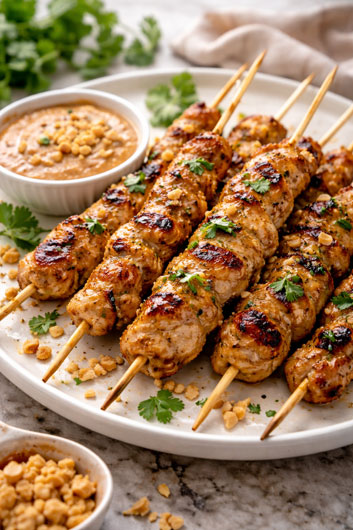
Prep: 20 minutes + marinating | Cook: 10-15 minutes | Yield: 4 servings
Chicken Satay
- 1 lb boneless, skinless chicken breast, cut into strips or bite-size pieces
- 1/4 cup low-sodium soy sauce
- 2 tablespoons brown sugar or honey
- 1 tablespoon lime juice
- 1 garlic clove, minced
- 1 teaspoon grated fresh ginger
- 1 tablespoon oil
- Wooden or metal skewers
Easy Peanut Sauce
- 1/2 cup creamy peanut butter
- 2 tablespoons low-sodium soy sauce
- 1 tablespoon lime juice
- 1 tablespoon brown sugar or honey
- 1/4 cup warm water, plus more as needed
Instructions
- If using wooden skewers for grilling, soak them in water for about 30 minutes before cooking.
- In a bowl, stir together soy sauce, brown sugar or honey, lime juice, garlic, ginger and oil.
- Add the chicken and toss to coat. Cover and marinate in the refrigerator for at least 30 minutes.
- Thread the chicken onto the skewers. Have an adult help with the pointed ends.
- Cook the skewers on a grill, grill pan or skillet, turning as needed, until the chicken is cooked through and reaches 165°F.
- To make the peanut sauce, whisk together peanut butter, soy sauce, lime juice, brown sugar or honey and warm water. Add a little more water if needed to reach a dipping consistency.
- Serve the warm chicken skewers with peanut sauce for dipping.
If peanuts are not safe for your family or group, serve the chicken without the peanut sauce or use an appropriate allergy-safe dipping sauce.
Find Indonesia on a map and notice how many islands make up the country. Satay can be prepared in different ways throughout Indonesia and neighboring parts of Southeast Asia, making it a good example of how one type of food can have many regional variations.
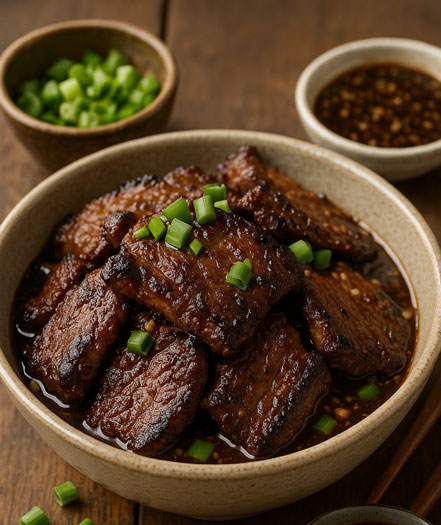
Easy Korean BBQ Marinade
By Kids Cooking Activities
- Category: Marinade
- Country: Korea
- Skill: Marinating
- Skill Level: Beginner
Prep: 10 minutes + marinating | Yield: Enough marinade for about 1 lb meat
Ingredients
- 1/3 cup low-sodium soy sauce
- 2 tablespoons brown sugar or honey
- 1 tablespoon sesame oil
- 2 garlic cloves, minced
- 1 teaspoon grated fresh ginger
- 2 green onions, sliced
- 1 teaspoon sesame seeds, optional
- 1 lb thinly sliced beef or bite-size chicken pieces
Instructions
- Whisk together soy sauce, brown sugar or honey, sesame oil, garlic, ginger, green onions and optional sesame seeds.
- Place the beef or chicken in a covered container or food-safe bag.
- Pour the marinade over the meat and turn to coat.
- Marinate in the refrigerator for at least 30 minutes. Do not marinate meat at room temperature.
- Remove the meat from the marinade and discard marinade that has touched raw meat.
- Cook the meat in a skillet, on a grill or using another appropriate cooking method. Cook chicken to 165°F. Cook beef to the appropriate safe temperature for the cut being used.
- Serve with rice and vegetables.
A marinade surrounds food with flavorful ingredients before cooking. Have kids smell the garlic, ginger and sesame oil separately, then notice how the aromas combine in the finished marinade.
Compare this marinade with the Chicken Satay marinade. Which ingredients appear in both? Which ingredients make each one taste different?
Homemade Sushi for Kids
Sushi is one of the foods many kids associate with Japan. The word sushi refers to dishes made with specially seasoned rice, which can be paired with many different fillings and toppings.
Kid-friendly homemade sushi can be made with ingredients such as cucumber, avocado, cooked seafood, egg or other fully cooked fillings. Making rolls is also a fun way to practice arranging ingredients and carefully rolling food into a neat shape.
For a kids cooking activity, choose fully cooked or vegetable fillings. This keeps the activity simple while still letting kids practice making and rolling sushi.
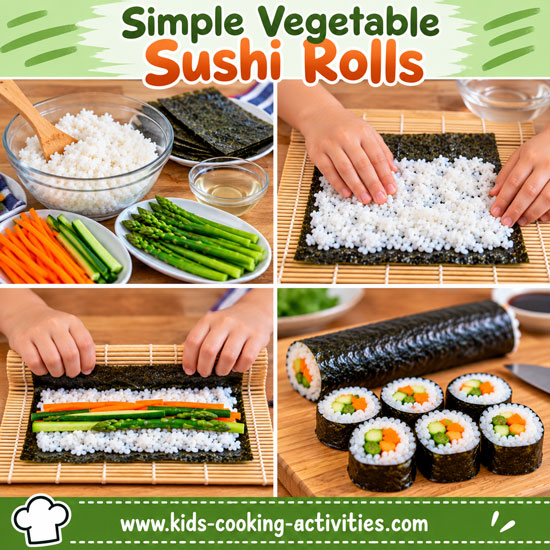
Notice how the ingredients are arranged before the sushi is rolled. Ask kids why evenly spreading the rice and placing the fillings in a line can make rolling easier.
Japanese Skewers Cooking Video
Skewered foods are another cooking style kids can explore while learning about Japan. Japanese cooking includes several kinds of foods prepared on skewers, so use the video as a starting point for comparing this cooking method with the Indonesian Chicken Satay recipe.
Look back at the Chicken Satay from Indonesia. Both activities use skewers, but that does not make the dishes the same. Compare the ingredients, seasonings, sauces and cooking methods and locate both Japan and Indonesia on your map.
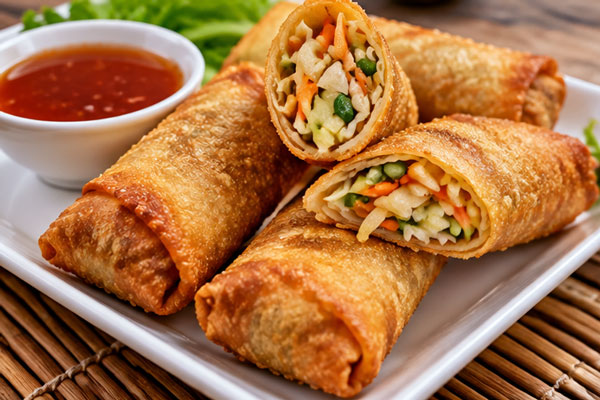
Easy Homemade Egg Rolls
By Kids Cooking Activities
- Category: Appetizer
- Cooking Style: Chinese-American
- Skill: Filling & Rolling
- Skill Level: Beginner
Prep: 25 minutes | Cook: 15 minutes | Yield: 12 egg rolls
Ingredients
- 12 egg roll wrappers
- 2 cups finely shredded cabbage
- 1 carrot, shredded
- 2 green onions, sliced
- 1 cup finely chopped mushrooms, optional
- 1 tablespoon low-sodium soy sauce
- 1 teaspoon sesame oil
- 1 teaspoon grated fresh ginger
- 1 tablespoon oil
- Water, for sealing wrappers
Instructions
- Heat 1 tablespoon oil in a large skillet over medium heat.
- Add cabbage, carrot, green onions and optional mushrooms. Cook for 3-5 minutes, stirring often, until the vegetables begin to soften.
- Stir in soy sauce, sesame oil and ginger. Remove from the heat and let the filling cool slightly.
- Place one egg roll wrapper on a clean work surface with one corner pointing toward you.
- Spoon about 2 tablespoons filling near the lower center of the wrapper.
- Fold the bottom corner over the filling. Fold the two side corners toward the center and roll tightly toward the remaining corner.
- Brush the final corner with a little water and press gently to seal. Repeat with the remaining wrappers and filling.
- Place the egg rolls seam-side down on a lightly greased baking sheet. Lightly brush or spray the tops with oil. Bake at 400°F for 15-20 minutes, turning once, until crisp and golden. An adult should handle the hot oven and baking sheet.
Add finely chopped cooked chicken, pork or shrimp to the cooled vegetable filling. If using leftover meat, make sure it is reheated thoroughly when the egg rolls are cooked.
Rolling egg rolls is a good lesson in following a sequence. Have kids describe the steps as they work: fill, fold the bottom, fold the sides, roll and seal.
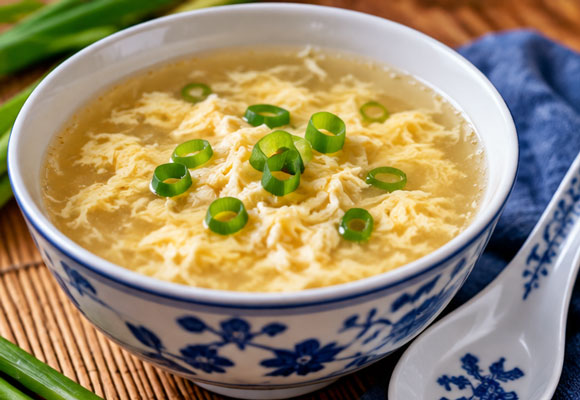
Easy Egg Drop Soup
By Kids Cooking Activities
- Category: Soup
- Cooking Style: Chinese-Inspired
- Method: Stovetop
- Skill Level: Beginner
Prep: 5 minutes | Cook: 10 minutes | Yield: 4 servings
Ingredients
- 6 cups chicken broth
- 1 tablespoon low-sodium soy sauce
- 3 eggs
- 2 green onions, thinly sliced, optional
- 1/2 cup green peas, optional
Instructions
- Add the chicken broth and soy sauce to a soup pot and bring to a gentle simmer.
- Crack the eggs into a bowl and whisk until well blended.
- Have an adult slowly drizzle the beaten eggs into the simmering broth while gently stirring the soup in one direction.
- Let the egg cook for about 1 minute. Thin ribbons of cooked egg will form in the broth.
- Stir in optional peas and simmer until heated through.
- Ladle into bowls and sprinkle with optional green onions. Serve warm.
The fun part of this recipe is seeing liquid egg turn into thin cooked ribbons. Drizzle slowly rather than pouring all of the egg into the broth at once.
Ask kids what happens to the egg when it touches the hot broth. This is an easy example of how heat changes the proteins in food as it cooks.
Easy Fried Rice
By Kids Cooking Activities
- Category: Main Dish or Side Dish
- Skill: Stir-Frying
- Method: Stovetop
- Skill Level: Beginner
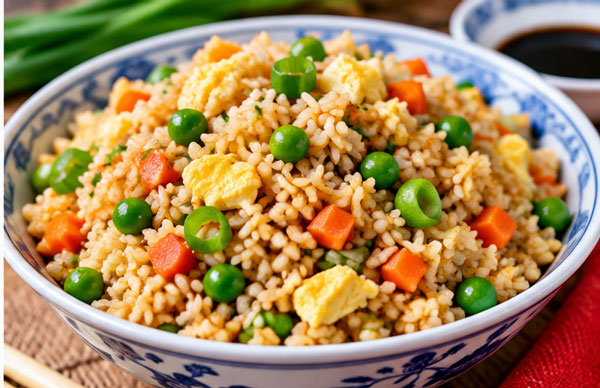
Prep: 10 minutes | Cook: 10 minutes | Yield: 4 servings
Ingredients
- 3 cups cold cooked rice
- 2 eggs, beaten
- 1 tablespoon oil
- 1 cup frozen peas and carrots
- 2 green onions, sliced
- 2-3 tablespoons low-sodium soy sauce
- 1 teaspoon sesame oil, optional
Instructions
- Break up any clumps in the cold cooked rice with a fork.
- Heat a large skillet over medium-high heat and add a small amount of the oil.
- Pour in the beaten eggs and gently scramble until cooked. Transfer the eggs to a plate.
- Add the remaining oil and the peas and carrots to the skillet. Cook for 2-3 minutes.
- Add the cold rice and cook for several minutes, stirring and breaking up any remaining clumps.
- Stir the cooked egg back into the skillet.
- Add soy sauce and optional sesame oil. Stir until everything is evenly combined and hot.
- Sprinkle with green onions and serve.
Chilled cooked rice is firmer and separates more easily in the pan. Freshly cooked rice is softer and can make fried rice stickier.
Add leftover cooked chicken, pork, shrimp or tofu, or change the vegetables. Have kids write down their combination and give their new fried rice recipe a name.
Build Your Own Easy Stir Fry
By Kids Cooking Activities
- Category: Main Dish
- Skill: Stir-Frying
- Method: Stovetop
- Skill Level: Beginner
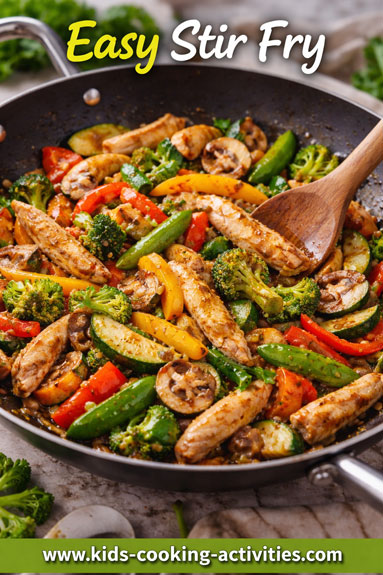
Prep: 20 minutes | Cook: 10 minutes | Yield: 4 servings
Choose About 4 Cups of Vegetables
- Carrots, thinly sliced
- Zucchini, sliced or diced
- Mushrooms, sliced
- Bell peppers, sliced
- Broccoli florets
- Snow peas or green peas
- Cabbage, shredded
Choose a Protein - Optional
- 1 lb chicken, cut into thin strips
- 1 lb beef, cut into thin strips
- 1 lb pork, cut into thin strips
- 1 lb shrimp, peeled and deveined
- 14 oz firm tofu, drained and cubed
Stir Fry Sauce
- 1/4 cup low-sodium soy sauce
- 1 tablespoon Worcestershire sauce
- 1/4 cup brown sugar
- 1/4 cup water
- 2 teaspoons grated fresh ginger
- 1 garlic clove, minced
- 1 tablespoon cornstarch
You will also need: 1-2 tablespoons oil for cooking.
Instructions
- Wash and prepare about 4 cups of vegetables. Cut them into small, fairly even pieces so they cook quickly.
- If using chicken, beef, pork or tofu, cut it into bite-size pieces. Keep raw meat and its cutting board separate from vegetables and other ready-to-eat foods.
- Whisk together soy sauce, Worcestershire sauce, brown sugar, water, ginger, garlic and cornstarch. Set aside.
- Heat 1 tablespoon oil in a large skillet or wok over medium-high heat.
- If using a protein, cook it first. Cook chicken to 165°F, pork to 145°F followed by a 3-minute rest, and shrimp until opaque and 145°F. Remove cooked protein to a clean plate if needed while the vegetables cook.
- Add a little more oil if needed. Add firm vegetables such as carrots and broccoli first.
- After 1-2 minutes, add quicker-cooking vegetables such as peppers, mushrooms, zucchini, cabbage or peas.
- Stir-fry until the vegetables are brightly colored and tender-crisp.
- Return the cooked protein to the skillet if using.
- Whisk the sauce again and pour it into the pan. Stir for 1-2 minutes, until the sauce thickens and everything is hot.
- Serve with rice or noodles.
Prepare everything before turning on the stove. Stir-frying moves quickly, so vegetables, protein and sauce should all be ready before cooking begins.
Have kids choose four vegetables and decide whether to add a protein. Write down the combination before cooking, then rate the finished stir fry. Next time, change one ingredient and compare the results.
More Asian & Asian-Inspired Recipes
Keep exploring with more kid-friendly recipes from around the site. Some are connected with a particular country or cooking tradition, while others are Asian-inspired family recipes that use ingredients and flavors found in several Asian cuisines.

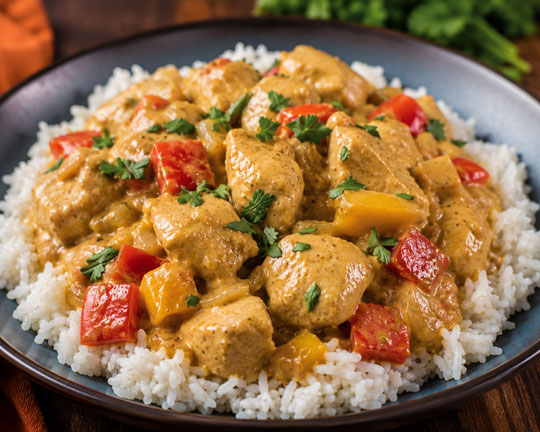
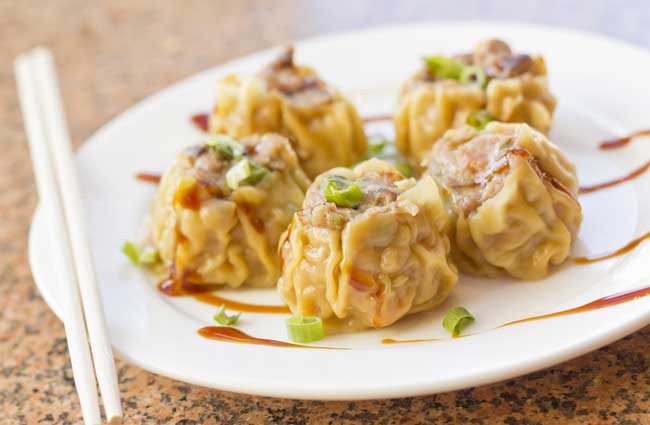
For a World Studies activity, choose one recipe connected with a particular country or food tradition. Find the place on a map and compare its ingredients and cooking method with one of the recipes above.
Cooking Around the World Studies
Lunar New Year Ideas for Kids
Lunar New Year celebrations are an interesting way for kids to explore food, family traditions and culture in several parts of Asia. Traditions are not the same everywhere, so this is also a good opportunity to compare how different countries and communities celebrate.
In China, the celebration is commonly called Chinese New Year or the Spring Festival. Korea celebrates Seollal, and Vietnam celebrates Tết. Each celebration has its own foods, customs and traditions.
It is easy to use "Lunar New Year" and "Chinese New Year" as if they mean exactly the same thing, but celebrations vary by culture. When studying a tradition or recipe, help kids identify the country and community it comes from.
Explore Chinese New Year Through Food
Food plays an important role in Chinese New Year celebrations. Families may gather for special meals, and particular foods can be connected with wishes for happiness, prosperity, togetherness or good fortune.
The exact foods and customs vary among families and regions, so encourage kids to explore the story behind a food rather than assuming every family celebrates in exactly the same way.
Chinese New Year Food Ideas
- Dumplings: Make or fold dumplings together as a family cooking activity.
- Noodles: Explore noodle dishes and talk about foods associated with wishes for a long life.
- Fish: Research why fish may be served at New Year meals.
- Mandarin oranges: Add fresh citrus fruit to a celebration meal or snack.
- Rice dishes: Compare different ways rice is prepared and served.
- Spring rolls: Practice filling and rolling while learning about foods served during celebrations.
Choose one Chinese New Year food and find out what it can symbolize. Add the food, its meaning and a picture or drawing to your World Studies notebook.
Compare Lunar New Year Traditions
Older kids can expand the lesson by comparing celebrations in several countries. Choose two or three and investigate the foods, names and family traditions connected with each one.
Make a simple chart with columns for country, name of the celebration, special foods and family traditions. Look for similarities and differences without assuming that one country's traditions represent all Lunar New Year celebrations.
Lunar New Year Activities for Kids
Add a few simple activities to turn the celebration into a larger cooking and culture lesson.
- Map It: Find China, Korea and Vietnam on a map of Asia.
- Calendar Talk: Compare how Lunar New Year dates move on the calendar from year to year.
- Food Symbol Search: Research a food associated with a New Year celebration and discover what it represents.
- Wish Tree: Write hopes or wishes for the coming year on paper tags and hang them on a small branch or classroom display.
- Lucky Color Search: Investigate colors used in a particular celebration and learn what they can represent.
- Try a New Food: Choose one celebration food your family has never tasted before.
You do not need to recreate every tradition. Choose one country, one or two foods and one activity. Kids will learn more by understanding where a tradition comes from than by combining customs from many cultures into one party.
Plan a Simple Chinese New Year Cooking Activity
For a simple hands-on lesson, focus specifically on Chinese New Year and build the activity around food, geography and one cultural tradition.
- Find China on the map.
- Choose one recipe such as dumplings, noodles, fried rice or spring rolls.
- Research the food and find out whether it has a special connection with New Year celebrations.
- Add one activity such as a food-symbol search, paper craft or wish activity.
- Record what you learned in your Cooking Around the World or World Studies notebook.
Set up stations for mapping, cooking, food-symbol research and a simple craft. Rotate small groups through the activities so everyone has a chance to participate.
Extend Your Asian Cooking Lesson
After trying a few recipes, use these activities to connect cooking with geography, culture, language and food science.
- Recipe Map: Mark each country represented by a recipe on this page.
- Ingredient Hunt: Choose ginger, rice, noodles, soy sauce, sesame or coconut and investigate where and how it is produced.
- Noodle Comparison: Compare wheat, rice and other noodles. Look at their ingredients, shapes and cooking methods.
- Rice Investigation: Compare several varieties of rice and notice differences in grain size, texture and cooking time.
- Cooking Method Chart: Sort recipes by stir-frying, simmering, grilling, marinating, rolling or steaming.
- Country Comparison: Choose two countries and compare one recipe or food tradition from each.
- Food Vocabulary: Learn the name of a food or ingredient in a language spoken in the country you are studying.
- Create a Menu: Plan a meal using foods from one particular country rather than combining unrelated dishes from across Asia.
Choose China, Japan, Korea or Indonesia. Find it on a map, make one recipe connected with that country and record three things you learned about its food traditions.
Add Asia to Your World Studies Notebook
Use your cooking activity as part of a larger country study. Kids can create one notebook page for each country they explore instead of trying to fit all of Asia onto a single page.
Include:
- Country name
- Country flag
- Capital city
- Location on a map
- Language or languages explored
- Recipe prepared
- New ingredient discovered
- Cooking technique practiced
- Food tradition learned
- Drawing or photo of the finished dish
There is no need to explore every country at once. Return to this page throughout your World Studies lessons and add another country, recipe and notebook page each time.
Share your Asian Cooking Recipes
Do you have an International Recipe or World Studies Fact?
Do you have an International recipe or know a lot about a country we could add to our world studies section? You can create your own page.
Reader's Submitted Recipes
Click below to see contributions from other visitors to this page...
Spicy Seafood Pasta 
Spicy Seafood Pasta This flavorful seafood pasta combines shrimp, mussels, tuna, fresh tomatoes, and a touch of jalapeño for a mildly spicy meal. …
Thai-style Chicken Salad Not rated yet
Thai-Style Chicken Salad This colorful Thai-inspired salad combines rice noodles, chicken, vegetables, fruit, and a sweet-tangy dressing. It makes …
Peanut orange chicken Not rated yet
Peanut Orange Chicken This easy Asian-inspired chicken recipe combines sweet orange juice, tangy chili sauce, crunchy peanuts, and tender chicken. …
Thailand Food Facts Not rated yet
Thailand Food Facts
Rice is an extremely important part of Thai food. In fact the Thai word for rice "khaw" is often used to mean food in general. …
Creamy Thai Chicken Curry Not rated yet
Creamy Thai Chicken Curry This mild Thai-inspired curry combines tender chicken, colorful vegetables, creamy peanut butter, and yogurt for a rich …
Egg Rolls Not rated yet
Homemade Egg Rolls These homemade egg rolls are packed with pork, shrimp, vegetables, and crunchy water chestnuts. Make a large batch and freeze …
Asian Cooking FAQ for Kids
No. Asia is a very large continent with many countries, cultures and regional food traditions. Chinese, Japanese, Korean, Indonesian, Vietnamese, Thai and Indian cooking, for example, each include their own ingredients, dishes and cooking styles. Even within one country, food can vary greatly from region to region.
Fried rice, Egg Drop Soup and a simple stir fry are good choices for beginning cooks. Kids can practice measuring, stirring, preparing vegetables and combining ingredients while an adult supervises hot stovetop cooking.
There is no single ingredient list used throughout Asia. Depending on the country and region, recipes may include rice, noodles, soy products, ginger, garlic, sesame, vegetables, seafood, coconut, herbs and spices. Look at each recipe individually to discover which ingredients are important to that particular food tradition.
No. Some dishes and regional cuisines use plenty of chilies and other spicy ingredients, while many others are mild. Families can also adjust the heat in many recipes by reducing or leaving out hot peppers and spicy sauces.
Stir-frying is a cooking method that cooks small pieces of food fairly quickly in a hot pan or wok while the ingredients are stirred or tossed frequently. Preparing all of the ingredients before heating the pan makes stir-frying easier and safer.
Chinese cooking includes many regional food traditions from China. Chinese-American cooking developed as Chinese immigrants and later generations adapted dishes, ingredients and cooking traditions in the United States. Some familiar restaurant dishes therefore have connections to Chinese cooking but developed into distinct Chinese-American foods.
No. Sushi is made with seasoned rice and can include many different fillings and toppings. For a kids cooking activity, try vegetables, egg, cooked seafood or other fully cooked ingredients.
Lunar New Year traditions are found in several Asian countries and communities, but the celebrations are not all the same. China celebrates Chinese New Year or Spring Festival, Korea celebrates Seollal and Vietnam celebrates Tết, each with its own foods and customs.
Choose one recipe and locate the country connected with it on a map. Kids can then investigate the country's flag, capital, language, geography, ingredients and food traditions. Add what they learn to a Cooking Around the World or World Studies notebook.
Match cooking jobs to each child's age and skill level. Kids can measure, whisk, wash produce, assemble ingredients and help with other preparation tasks. Adults should supervise knives, hot pans, grills, boiling liquids and raw meat, and foods should be cooked to safe temperatures.
Keep Exploring Asia Through Cooking
This Asian cooking lesson is only a starting point. Asia is home to many countries and thousands of regional food traditions, so there is always another recipe, ingredient or cooking technique to discover.
Choose one country at a time, find it on your map, prepare a recipe and record what you learn. As kids add more countries to their World Studies notebook, they can begin comparing how geography, ingredients and family traditions influence food in different parts of Asia.
Continue your Cooking Around the World study by choosing another country or region, or explore one of the Asian countries from this lesson in greater depth.
Explore More Cooking Around the World
Back to Home
Get Free Kids Recipe Cards + Cooking Printables
Join Kids Cooking Activities for fun recipes, cooking ideas, and printable resources for kids, families, and classrooms.
Follow Kids Cooking Activities too:





© Debbie Madson, Madson Web Publishing, LLC — All rights reserved.
The material on this site is for educational purposes only.