
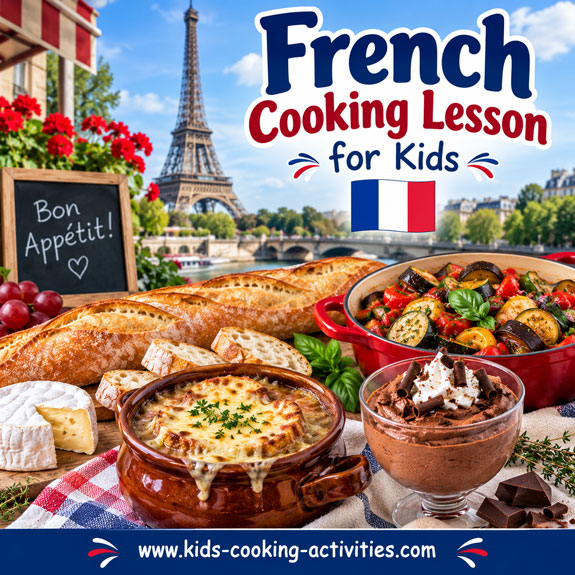
French Cooking Lesson for Kids
Explore France through food with this French cooking lesson for kids. As part of our Cooking Around the World studies, kids can learn about France, discover ingredients used in French cooking, practice a few French words and prepare recipes inspired by French food traditions.
French cooking includes everything from crusty breads and delicate crêpes to vegetable dishes, soups, sauces and desserts. Foods and cooking styles vary from one region of France to another, making France a fun country for kids to explore through hands-on cooking.
Start by finding France on a map and learning a few facts about the country. Then explore French ingredients, practice a few French words and choose one or more recipes to prepare together. Kids can keep notes about what they discover as part of a Cooking Around the World notebook or country study.
This page focuses on learning about France through our Cooking Around the World studies. If you're planning a complete themed meal or cooking party, visit our Paris Theme Party for more recipes and ideas.
Kids Cooking Activities Teaching Materials
Teaching kids to cook? Save time with ready-made lesson plans used by parents and teachers. Browse teaching materials →


This page may contain affiliate links. We may earn a small commission at no extra cost to you. Learn more.
French Cooking Lesson
Use the links below to explore France, learn about French food and cooking traditions, or jump directly to a recipe.
What Kids Will Learn About France
Cooking is a fun way to connect geography and culture with hands-on learning. During this French cooking lesson, kids can explore where France is located, discover foods and ingredients used in French cooking and practice new kitchen skills while preparing French-inspired recipes.
- Find France on a map and locate it within Europe.
- Learn a few basic facts about France and its regions.
- Practice simple French words and phrases.
- Explore ingredients such as bread, butter, cheese, herbs, vegetables and cream.
- Learn about French cooking techniques such as making sauces, baking bread and preparing custards.
- Prepare one or more French recipes together.
- Compare French foods with foods your family commonly cooks and eats.
For a simple lesson, choose just one or two recipes from this page. For a longer country study, kids can prepare several dishes, locate places in France on a map and keep a Cooking Around the World notebook with recipes, drawings and facts they learn along the way.
Facts About France for Kids
Before heading to the kitchen, take a few minutes to learn about France. Find the country on a map or globe and notice its location in western Europe. France borders several countries and has coastlines along both the Atlantic Ocean and the Mediterranean Sea.
- Continent: Europe
- Capital: Paris
- Language: French
- Currency: Euro
- Famous landmark: The Eiffel Tower in Paris
- Geography: France includes mountains, farmland, river valleys and coastal regions.
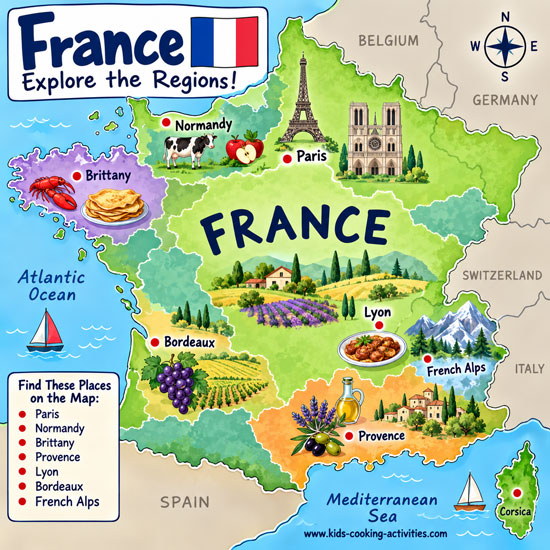
Explore France on a Map
France has many different regions, and foods can vary depending on where you travel. Some areas are known for cheeses and dairy products, while others are known for seafood, breads, vegetables, herbs or dishes made with local meats.
Have kids locate Paris, Normandy, Brittany, Provence, Lyon, Bordeaux and the French Alps on a map. Ask which places are near the ocean, which are farther inland and which are close to mountains.
Mark France on a world map and draw a line from your home to France. Older kids can choose one region of France to research and find a food, ingredient or dish associated with that area.
What Is France Famous For?
France is known around the world for its art, architecture, history, fashion and food. As you study France, kids may recognize some of these famous places and traditions:
- The Eiffel Tower in Paris
- The Louvre Museum
- Notre-Dame Cathedral
- The Palace of Versailles
- The Tour de France bicycle race
- French cafés, bakeries and markets
- The French Alps and countryside
Learn a Little French
Add a simple language activity to your French cooking lesson by practicing a few words and phrases before you start cooking. Kids do not need to memorize them all—choose a few to use while preparing the meal or sitting down to eat.
- Bonjour – Hello or good day
- Au revoir – Goodbye
- Merci – Thank you
- S'il vous plaît – Please
- J'ai faim – I'm hungry
- Bon appétit! – Enjoy your meal!
Choose one or two French phrases for everyone to practice while cooking. Before you begin eating, have the whole family say Bon appétit!
French Food Words Kids May Recognize
Many French food and cooking words are already familiar in English-speaking kitchens. See how many of these kids recognize before explaining what they mean:
- Baguette
- Croissant
- Crêpe
- Soufflé
- Ratatouille
- Quiche
- Omelette
- Mayonnaise
- Mousse
- Crème brûlée
- Béchamel
- Vinaigrette
Have kids choose three French food words from the list and find out what each one describes. They can add the words to their Cooking Around the World notebook along with a drawing or picture.
French Ingredients to Explore
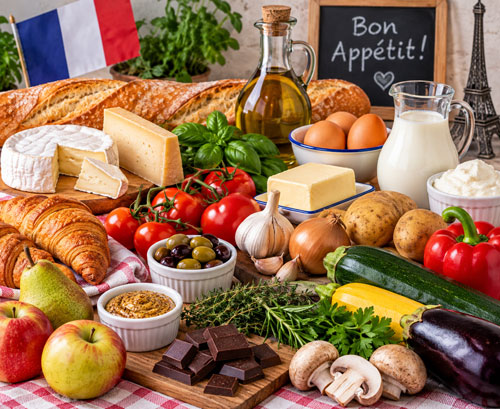
French cooking uses a wide variety of ingredients, and the foods can change quite a bit from one region of France to another. Before choosing a recipe, let kids look at, smell or taste a few ingredients that are commonly used in French cooking.
- Butter
- Olive oil
- Fresh bread
- Cheese
- Milk and cream
- Eggs
- Garlic
- Onions
- Fresh herbs
- Potatoes
- Mushrooms
- Tomatoes
- Fresh vegetables
- Apples and pears
- Mustard
- Chocolate
Choose three or four ingredients for kids to examine before cooking. Smell fresh herbs, compare two types of cheese, taste a small piece of baguette with butter or look at the texture of a square of chocolate. Ask kids to describe each ingredient using words such as soft, firm, creamy, salty, sweet, smooth, crisp, mild or strong.
How French Food Changes by Region
There is no single style of French cooking. Different regions developed foods and recipes based on their climate, geography and the ingredients available nearby. Coastal areas have strong seafood traditions, farming regions produce many cheeses and dairy products, and southern France uses ingredients such as olive oil, tomatoes, garlic and herbs in many dishes.
For example, Normandy is known for foods made with apples and dairy products, Brittany is associated with seafood and crêpes, and the cooking of Provence often features olive oil, tomatoes, garlic and herbs. The area around the French Alps has traditions that make good use of hearty foods and cheeses.
This makes French cooking a good way to show kids how geography, climate and local ingredients can influence what people eat.
Choose one ingredient from the list and ask: Where might this ingredient grow or be produced? Why might it be especially useful or popular in one part of France?
French Recipes for Kids to Try
Now it is time to explore France in the kitchen. The recipes below introduce kids to several different cooking skills, including making bread dough, preparing vegetables, whisking sauces and creating French-inspired desserts.
Choose recipes that fit your children's ages and cooking experience. Younger kids can measure, pour, stir and shape ingredients, while older kids can practice kneading dough, chopping vegetables and working with sauces and custards with adult supervision.
You do not need to make every recipe on this page. For a simple French cooking lesson, choose one main cooking activity and one smaller dish or dessert. For a longer country study, try several recipes over a few days and compare the ingredients and cooking techniques.
Try French Baguettes for a bread-making activity, Ratatouille for a colorful vegetable dish, and Chocolate Mousse for dessert.
French Baguettes
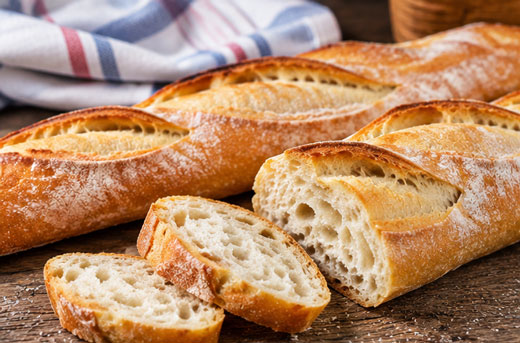
Making bread from scratch is a fun hands-on activity for a French cooking lesson. Kids can watch yeast come alive, knead the dough and shape it into long loaves similar to traditional French baguettes.

Ingredients
- 1 1/2 cups warm water
- 2 1/4 teaspoons active dry yeast
- 1 teaspoon sugar
- 3 1/2 to 4 1/2 cups all-purpose or bread flour
- 1 1/2 teaspoons salt
- 1 tablespoon olive or vegetable oil
- Cornmeal for the baking sheet, optional
Directions
- Pour the warm water into a large mixing bowl. Sprinkle the yeast and sugar over the water and let it stand for about 5 to 10 minutes, or until the mixture looks foamy.
- Add 3 1/2 cups of flour, the salt and oil. Stir until a shaggy dough begins to form.
- Turn the dough onto a lightly floured surface. Knead for about 8 to 10 minutes, adding a little more flour as needed, until the dough is smooth and elastic.
- Place the dough in a lightly greased bowl. Cover and let rise in a warm place for about 1 hour, or until doubled in size.
- Gently press down the dough and divide it into 2 equal pieces.
- Shape each piece into a long loaf. Place the loaves on a parchment-lined baking sheet or a baking sheet lightly sprinkled with cornmeal.
- Cover loosely and let rise for about 30 to 45 minutes.
- Preheat the oven to 425 degrees.
- With adult help, use a sharp knife to make several shallow diagonal slashes across the top of each loaf.
- Bake for about 20 to 25 minutes, or until the baguettes are golden brown and sound hollow when tapped on the bottom.
- Transfer to a cooling rack and allow the bread to cool before slicing.
Kids can measure the ingredients, watch the yeast become foamy, stir the dough, knead and shape the loaves. An adult should handle the hot oven and help with cutting the slashes in the dough.
Ask kids to notice the difference between the baguette's crisp outside and soft inside. What makes this bread different from the sandwich bread or rolls your family usually eats?
More French Recipes & Cooking Skills
Some French foods are best explored through their full step-by-step recipe pages. These make good additions to your France study when kids want to practice baking, whisking or working with dough.
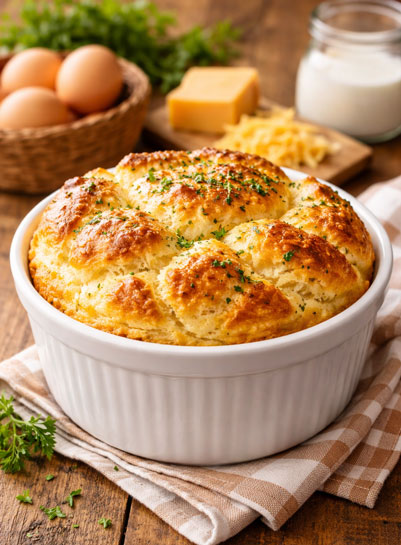
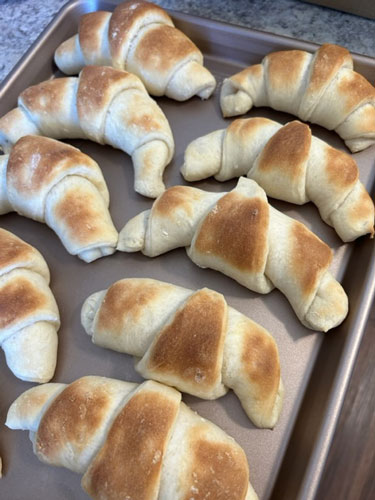
Ask kids how these recipes are different. Soufflés depend on carefully whipped eggs, croissants use shaped dough, and crêpes use a thin batter cooked quickly in a pan. Which technique would they most like to try?
Béchamel Sauce
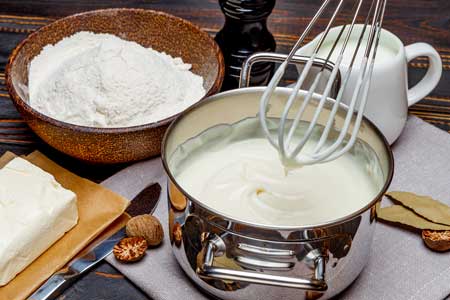
Béchamel is a classic French white sauce made by combining butter and flour to make a roux, then gradually whisking in milk. Learning this basic technique gives kids a sauce they can use with pasta, vegetables, casseroles and other dishes.
Ingredients
- 4 tablespoons butter
- 4 tablespoons all-purpose flour
- 4 cups milk
- 1/2 teaspoon salt
- 1/4 teaspoon black pepper
- Pinch of ground nutmeg, optional
Directions
- Melt the butter in a saucepan over medium-low heat.
- Add the flour and whisk until the butter and flour form a smooth paste. Continue cooking and whisking for about 1 to 2 minutes. This mixture is called a roux.
- Slowly pour in a small amount of the milk while whisking constantly.
- Continue adding the milk a little at a time, whisking until the mixture is smooth before adding more.
- Cook over medium heat, stirring frequently, until the sauce begins to gently simmer and thickens enough to coat the back of a spoon.
- Stir in the salt, pepper and nutmeg, if using.
- Remove from the heat and use the sauce with pasta, cooked vegetables or another recipe that calls for a creamy white sauce.
A roux is a mixture of fat and flour used to thicken sauces. Have kids watch how the butter and flour first form a paste and then change into a smooth sauce as milk is gradually whisked in. Older kids can practice whisking at the stove with close adult supervision.
Turn Béchamel into Mornay Sauce
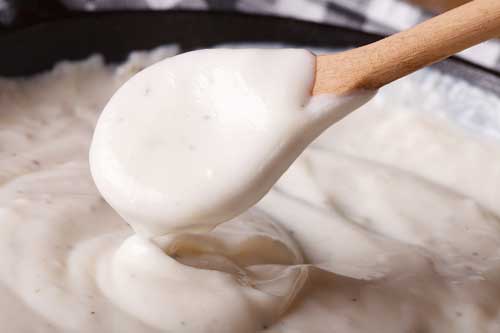
A simple way to experiment with this basic sauce is to add cheese. Mornay sauce is a cheese sauce traditionally made from a Béchamel base.
After removing the Béchamel from the heat, stir in about 1 to 1 1/2 cups shredded cheese until melted and smooth. Try Gruyère, Swiss, Parmesan or a combination of cheeses.
Use the finished cheese sauce with pasta, vegetables or other dishes that need a creamy cheese sauce.
Before adding the cheese, spoon a little Béchamel into a small bowl. After making the Mornay sauce, compare the two. How did adding cheese change the taste, texture and color?
Learn About the Five French Mother Sauces
Béchamel is traditionally grouped with five basic sauces known as the French mother sauces. Learning about them can introduce older kids to an important part of classical French cooking.
- Béchamel - a white sauce made with milk
- Velouté - a light sauce made with stock
- Espagnole - a brown sauce made with brown stock
- Hollandaise - a rich sauce made with egg yolks and butter
- Tomato Sauce - a cooked tomato-based sauce
Easy Ratatouille
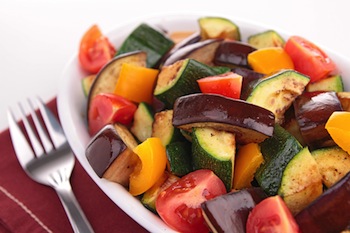
Ratatouille is a colorful vegetable dish from Provence in southern France. It traditionally combines summer vegetables such as eggplant, zucchini, tomatoes, peppers and onions with olive oil, garlic and herbs.
This is a good French recipe for helping kids practice washing, measuring, stirring and identifying different vegetables. Older kids can also practice chopping with supervision.
Ingredients
- 1 medium eggplant, cut into bite-size cubes
- 2 small zucchini, sliced or chopped
- 1 bell pepper, chopped
- 1 small onion, chopped
- 2 to 3 ripe tomatoes, chopped
- 2 tablespoons olive oil
- 2 cloves garlic, minced
- 1/2 teaspoon salt
- 1/4 teaspoon black pepper
- 1 teaspoon dried herbes de Provence, or a mixture of dried thyme and oregano, optional
- Fresh basil or parsley for serving, optional
Directions
- Wash and prepare all of the vegetables.
- Heat the olive oil in a large skillet or Dutch oven over medium heat.
- Add the onion and bell pepper. Cook for about 4 to 5 minutes, stirring occasionally.
- Add the eggplant and zucchini. Cook for another 5 minutes, stirring occasionally.
- Stir in the tomatoes, garlic, salt, pepper and herbs, if using.
- Reduce the heat to medium-low and cover loosely.
- Cook for about 15 to 20 minutes, stirring occasionally, until the vegetables are tender but still hold their shape.
- Taste and adjust the seasonings if needed.
- Sprinkle with fresh basil or parsley before serving, if desired.
Younger kids can wash the vegetables, measure seasonings and add prepared ingredients to bowls. Older kids can practice chopping the vegetables and stirring them at the stove with adult supervision.
Before cooking, have kids identify the colors of the eggplant, zucchini, pepper and tomatoes. After the ratatouille cooks, compare the vegetables again. Which changed the most in color, texture or size?
Find Provence in southern France on your map. Notice how close it is to the Mediterranean Sea. Ingredients such as tomatoes, garlic, olive oil and herbs are common in the cooking of this part of France.
Easy French Onion Soup
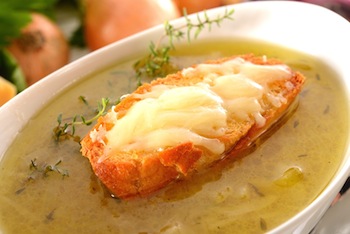
French onion soup turns a simple ingredient—onions—into a rich, flavorful soup. The secret is cooking the onions slowly until they become soft, golden and slightly sweet. The soup is traditionally served with toasted bread and melted cheese on top.
This recipe is especially useful for showing kids how time and heat can change the flavor, color and texture of an ingredient.
Ingredients
- 3 tablespoons butter
- 4 large yellow or sweet onions, thinly sliced
- 1 clove garlic, minced
- 6 cups beef broth
- 1 bay leaf
- 1 teaspoon Worcestershire sauce, optional
- 1/4 teaspoon black pepper
- Salt, to taste
- 6 to 8 slices French baguette
- 1 to 1 1/2 cups shredded Gruyère or Swiss cheese
Directions
- Melt the butter in a large saucepan or Dutch oven over medium-low heat.
- Add the sliced onions and cook slowly for about 25 to 35 minutes, stirring often, until the onions are very soft and golden brown. Lower the heat if they begin to burn.
- Add the garlic and cook for about 1 minute.
- Pour in the beef broth and stir in the bay leaf, Worcestershire sauce and black pepper.
- Bring the soup to a gentle boil, then reduce the heat and simmer for about 20 minutes.
- Remove the bay leaf. Taste the soup and add salt if needed.
- Preheat the oven to 400 degrees.
- Meanwhile, place the baguette slices on a baking sheet and toast until lightly crisp.
- Sprinkle the toasted bread with shredded cheese and return it to the oven until the cheese melts.
- Ladle the warm soup into bowls and place a cheesy baguette slice on top of each serving.
Kids can measure the broth and seasonings, grate or measure the cheese and arrange baguette slices on the baking sheet. Older kids can help stir the onions with close adult supervision. An adult should handle slicing the onions and removing hot pans from the stove and oven.
Save a small piece of raw onion for comparison. As the onions cook, notice how they become softer, darker and sweeter. Ask kids what changed and why they think the cooked onions taste different from the raw onion.
French onion soup is a good example of how simple ingredients can be transformed through cooking. Instead of rushing this recipe, give the onions plenty of time to cook slowly and develop their flavor.
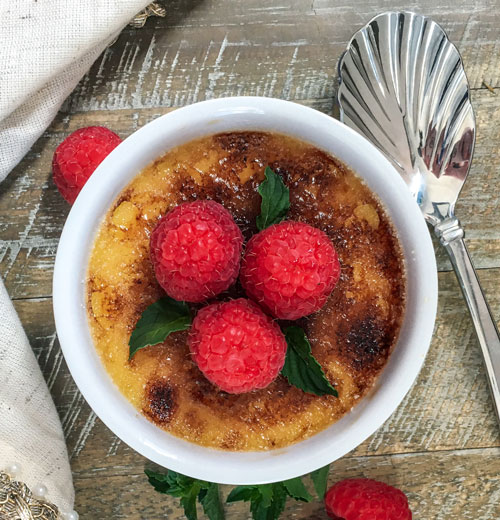
Crème Brûlée
Crème brûlée is a creamy French custard topped with a thin layer of caramelized sugar. The name means "burnt cream" in French, referring to the crisp sugar topping.
This recipe is a good choice for older kids who are ready to practice separating eggs, whisking, tempering and baking custard in a water bath. Younger kids can help measure and mix while an adult handles the hot cream, oven and caramelized topping.
Ingredients
- 2 cups heavy cream
- 5 large egg yolks
- 1/3 cup granulated sugar
- 1 teaspoon vanilla
- Pinch of salt
- 3 to 4 tablespoons granulated sugar for the topping
Directions
- Preheat the oven to 325 degrees.
- Place 4 to 6 small ramekins in a deep baking dish.
- Pour the heavy cream into a saucepan. Heat over medium-low heat until the cream is hot and steaming but not boiling. Remove from the heat.
- In a mixing bowl, whisk together the egg yolks, 1/3 cup sugar, vanilla and salt until smooth.
- Slowly drizzle a small amount of the hot cream into the egg mixture while whisking constantly.
- Continue adding the warm cream gradually until it is completely combined. Adding it slowly keeps the hot cream from scrambling the eggs.
- Divide the custard mixture evenly among the ramekins.
- With adult help, carefully pour hot water into the baking dish around the ramekins until the water reaches about halfway up their sides. This is called a water bath.
- Bake for about 30 to 40 minutes, or until the edges are set but the centers still have a slight jiggle.
- Carefully remove the ramekins from the water bath and allow them to cool.
- Cover and refrigerate for at least 2 hours, or until completely chilled.
- Just before serving, sprinkle a thin, even layer of granulated sugar over each custard.
- Have an adult caramelize the sugar with a kitchen torch, or place the ramekins briefly under the broiler while watching them very closely, until the sugar melts and turns golden brown.
- Allow the topping to cool for a minute or two so it becomes crisp before serving.
Tempering means slowly warming eggs by adding a hot liquid a little at a time while whisking. If all of the hot cream were poured into the egg yolks at once, the eggs could cook too quickly and become scrambled.
Before baking, the custard mixture is liquid. As it heats, the proteins in the egg yolks help the mixture set into a soft custard. The water bath surrounds the ramekins with gentle, even heat and helps the custard cook smoothly.
Once the sugar topping has cooled and hardened, let kids gently tap it with the back of a spoon. A finished crème brûlée should have a crisp sugar shell covering the creamy custard underneath.
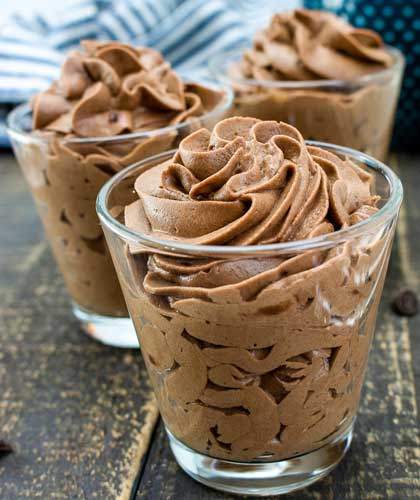
Easy French Chocolate Mousse
Chocolate mousse is a light, creamy dessert with a rich chocolate flavor. The word mousse means "foam" in French, which is a good description of the dessert's soft and airy texture.
This kid-friendly version uses melted chocolate and whipped cream, making it an easy way to practice melting, whipping and folding ingredients together.
Ingredients
- 8 ounces semisweet chocolate, chopped
- 2 tablespoons butter
- 1 teaspoon vanilla
- 1 1/2 cups heavy whipping cream, divided
- 2 tablespoons powdered sugar
- Fresh berries or chocolate shavings for serving, optional
Directions
- Place the chopped chocolate, butter and 1/2 cup of the heavy cream in a microwave-safe bowl.
- Microwave for 20 seconds at a time, stirring after each interval, until the chocolate is almost completely melted.
- Continue stirring until the mixture is smooth. Stir in the vanilla and set aside to cool until it is no longer hot.
- Pour the remaining 1 cup heavy cream into a mixing bowl.
- Add the powdered sugar and beat with an electric mixer until soft peaks form.
- Stir a small spoonful of whipped cream into the cooled chocolate mixture to lighten it.
- Add about half of the remaining whipped cream and gently fold it into the chocolate with a rubber spatula.
- Fold in the remaining whipped cream just until no large white streaks remain. Avoid overmixing so the mousse stays light and fluffy.
- Spoon the mousse into small serving dishes.
- Cover and refrigerate for at least 2 hours before serving.
- Top with berries or chocolate shavings, if desired.
Folding is a gentle way to combine a light, airy ingredient with a heavier mixture. Use a rubber spatula to cut down through the center, sweep along the bottom of the bowl and lift the mixture over the top. Turn the bowl and repeat instead of stirring quickly.
Whipping cream traps tiny bubbles of air. Gently folding the whipped cream into the chocolate helps keep those bubbles in the mixture, giving chocolate mousse its light and airy texture.
The French word mousse means "foam." Ask kids to look at a spoonful of finished mousse and describe its texture. How is it different from chocolate pudding or chocolate frosting?
More French Cooking Ideas
Want to keep exploring French food? Add another recipe or turn your France study into a themed family meal. These activities give kids more opportunities to practice French cooking techniques while discovering different foods.
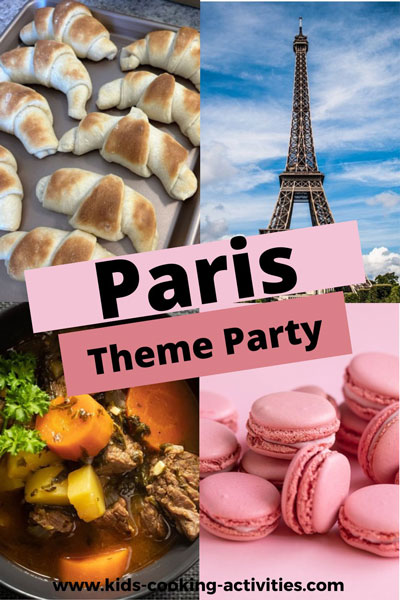


Use this French cooking lesson when you want kids to explore France as part of a Cooking Around the World study, including geography, language, regional foods and cooking skills. Use the Paris Theme Party when you want to plan a themed dinner, family cooking night or kids cooking party.
Build a French-Inspired Meal
Kids can also choose several recipes from this lesson and combine them into a French-inspired meal. There is no need to prepare everything at once - choose dishes that match your family's tastes and your children's cooking abilities.
- Bread: Homemade French Baguettes
- Vegetable: Easy Ratatouille
- Soup: French Onion Soup
- Main Dish: Pasta with Bechamel Sauce
- Dessert: Chocolate Mousse or Crème Brûlée
Continue Your Cooking Around the World Study
A French cooking lesson can be more than preparing a few recipes. Combine cooking with geography, language and culture to turn the experience into a hands-on country study.
As kids explore different countries, encourage them to compare the foods they discover. Which ingredients appear in several countries? Which cooking techniques are new? How might geography and climate affect the foods people grow, prepare and eat?
Give each country its own page or section. For France, kids can include:
- A drawing or picture of the French flag
- A small map showing where France is located
- The capital city, language and other country facts
- A few French words or phrases
- French ingredients they explored
- A region of France and a food associated with it
- Recipes they prepared
- A drawing or photo of their favorite French dish
- One new cooking skill they practiced
After completing another Cooking Around the World lesson, compare it with France. Look for similarities and differences in breads, cheeses, vegetables, herbs, sauces, desserts and cooking methods. Kids can make a simple chart showing what the two food traditions have in common and what makes each one different.
Turn Cooking into a World Studies Unit
Our Cooking Around the World World Studies Curriculum expands this idea into a complete learning experience. Kids explore countries through geography, culture, food and hands-on cooking activities while building connections between what they learn and what they prepare in the kitchen.
French Cooking Lesson FAQ
What can kids learn from a French cooking lesson?
Kids can combine cooking with geography, language and culture. They can find France on a map, learn a few French words, explore regional ingredients and prepare recipes while practicing skills such as measuring, kneading, whisking, chopping, baking and making sauces.
What is an easy French recipe for kids to make?
Ratatouille is a good choice because kids can help wash, measure and prepare the vegetables. French baguettes are another fun hands-on activity for kids who enjoy working with dough. For dessert, chocolate mousse gives kids a chance to practice whipping and folding.
What French ingredients can kids explore?
Try ingredients such as butter, olive oil, bread, cheese, milk, cream, eggs, garlic, onions, herbs, potatoes, mushrooms, tomatoes, mustard and chocolate. Kids can smell, taste and compare a few ingredients before using them in a recipe.
Do we need to make all of the French recipes?
No. For a short lesson, choose one or two recipes that match your children's ages and cooking skills. For a longer Cooking Around the World study, spread the recipes over several days and use them to practice different cooking techniques.
How can I make this French cooking lesson into a country study?
Start by finding France on a map. Learn a few facts and French words, explore several ingredients and prepare a recipe together. Kids can record what they learn in a Cooking Around the World notebook with the French flag, a map, food words, drawings and their favorite recipe.
How does French food change by region?
French cooking varies throughout the country. Normandy is known for ingredients such as apples and dairy products, Brittany has strong seafood and crêpe traditions, and Provence often uses olive oil, tomatoes, garlic and herbs. Regional food traditions reflect local geography, climate and available ingredients.
How is this page different from the Paris Theme Party?
This French cooking lesson is designed as part of our Cooking Around the World studies, with country facts, language, regional ingredients and hands-on recipes. Our Paris Theme Party is better when you want to plan a themed dinner, family cooking night or kids cooking party.
How can older kids get more involved in the French cooking lesson?
Older kids can research a region of France, choose a recipe, make a grocery list and take responsibility for more of the preparation. They can also practice techniques such as kneading bread dough, making a roux, tempering eggs or folding whipped cream into chocolate mousse.
What should we study after France?
Choose another destination from our Cooking Around the World collection. Comparing two countries is a great way for kids to notice differences in ingredients, cooking techniques and food traditions.
Where Will You Cook Next?
After exploring France, choose another country or region and continue your Cooking Around the World adventure. Kids can compare the ingredients, recipes and cooking techniques they discover in each new destination.
Ask kids to choose their favorite part of the lesson. Was it learning about France, practicing French words, exploring new ingredients or preparing a recipe? Add their favorite discovery to their Cooking Around the World notebook before moving on to the next destination.
As you begin another country study, look for foods or cooking techniques that are similar to those you discovered in France. Also look for ingredients and traditions that are completely different.
Continue Your Cooking Around the World Adventure
Ready to explore another part of the world through food?
Return to Cooking Around the World
Next Stop: Asian Cooking
Plan a Paris Cooking Party
Explore More Cooking Around the World
Get Free Kids Recipe Cards + Cooking Printables
Join Kids Cooking Activities for fun recipes, cooking ideas, and printable resources for kids, families, and classrooms.
Follow Kids Cooking Activities too:





© Debbie Madson, Madson Web Publishing, LLC — All rights reserved.
The material on this site is for educational purposes only.