

Cooking with a Toaster Oven
Learn how to safely teach kids to use a toaster oven with beginner recipes, kitchen safety tips, and simple meals children can help prepare.
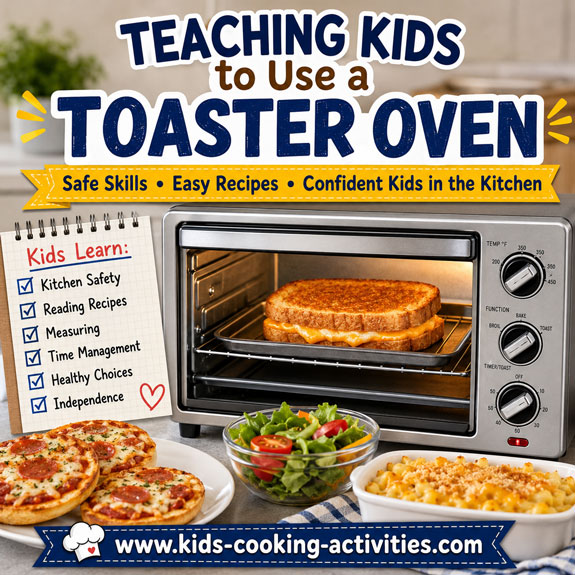
A toaster oven is one of the easiest kitchen appliances for children to learn because it heats quickly, uses simple controls, and can prepare everything from toast and pizzas to vegetables and baked meals. Kids can practice assembling recipes, measuring ingredients, setting temperatures, and learning how heat transforms food while building confidence in the kitchen.
Although a toaster oven is smaller than a conventional oven, it still becomes extremely hot during use. Children should always cook with adult supervision and learn how to safely handle hot trays, racks, and oven doors before cooking independently.
Start Here: Learning to Use a Toaster Oven
- Learn safety first. Practice using oven mitts and handling hot cookware.
- Identify the parts. Become familiar with the heating elements, rack, baking tray, crumb tray, timer, and temperature controls.
- Start with easy recipes. Toast, grilled cheese sandwiches, pizzas, and roasted vegetables are perfect beginner projects.
- Watch cooking times carefully. Foods usually cook faster in a toaster oven than in a full-sized oven.
- Clean after every use. Empty crumbs, wash trays, and wipe the inside after the appliance cools.
Kids Cooking Activities Teaching Materials
Teaching kids to cook? Save time with ready-made lesson plans used by parents and teachers. Browse teaching materials →


This page may contain affiliate links. We may earn a small commission at no extra cost to you. Learn more.
On This Page
Toaster Oven Safety Rules
A toaster oven is a wonderful appliance for beginner cooks because it is easy to operate and heats quickly. However, the heating elements, oven rack, baking tray, and door become extremely hot while cooking. Review these safety rules before preparing your first recipe.
Toaster Oven Safety Checklist
- Always ask an adult before using the toaster oven.
- Wash and dry your hands before plugging in the appliance.
- Keep the toaster oven on a flat, heat-safe countertop.
- Never touch the heating elements.
- Always use oven mitts when removing hot food.
- Open the door slowly to avoid escaping hot steam.
- Keep paper, towels, and plastic away from the hot oven.
- Never place metal utensils against the heating elements.
- Turn the toaster oven off after cooking.
- Allow the appliance to cool completely before cleaning.
Important Safety Reminder
The rack, baking pan, oven door, and heating elements remain hot for several minutes after cooking. Always assume they are hot until an adult says they are cool enough to touch.
Get to Know Your Toaster Oven
Before preparing your first recipe, take a few minutes to learn about the different parts of a toaster oven. Understanding how each part works helps children cook more safely and with greater confidence.
Before Every Recipe
Take a moment to check that the crumb tray is empty, the baking rack is in the correct position, and the timer has been reset before preheating the toaster oven.
How to Use a Toaster Oven
Learning to use a toaster oven safely helps children prepare snacks, lunches, side dishes, and simple family meals with confidence. Follow these basic steps every time you cook.
Step 1: Read the Recipe
Read the recipe from beginning to end before turning on the toaster oven. Gather all ingredients, pans, and utensils you'll need before you begin cooking.
Step 2: Preheat the Toaster Oven
Many recipes cook more evenly if the toaster oven is preheated for several minutes. Check your recipe for the recommended temperature before placing food inside.
Kids Can Help
- Gather ingredients.
- Measure seasonings.
- Prepare toppings.
- Assemble sandwiches or pizzas.
- Arrange food on the baking pan.
Step 3: Arrange the Food
Place food in a single layer on the baking pan or oven-safe dish. Leave a little space between foods so heat can circulate evenly.
Step 4: Set the Temperature and Timer
Select the correct cooking function, set the recommended temperature, and choose the cooking time listed in your recipe.
Step 5: Watch While Food Cooks
Foods often cook faster in a toaster oven than in a full-sized oven. Check near the end of the cooking time to avoid overcooking or burning.
Be Careful!
Never reach inside the toaster oven while it is on. Heating elements remain extremely hot and can cause serious burns.
Step 6: Remove Food Safely
Turn the toaster oven off before opening the door. Use oven mitts to carefully remove the hot baking pan or oven rack.
| Food | Minimum Safe Internal Temperature |
|---|---|
| Chicken | 165F (74C) |
| Ground Beef | 160F (71C) |
| Pork | 145F (63C) |
| Fish | 145F (63C) |
Good Toaster Oven Habits
- Read the recipe before cooking.
- Preheat when the recipe recommends it.
- Use oven mitts every time.
- Watch food closely during the last few minutes.
- Turn the toaster oven off when finished.
- Let the appliance cool before cleaning.
Why Cook with a Toaster Oven?
A toaster oven is one of the most useful kitchen appliances for young cooks because it combines the convenience of a toaster with many of the features of a full-sized oven. Children can prepare quick breakfasts, lunches, snacks, side dishes, and small family meals while learning valuable cooking skills.
Unlike a traditional oven, a toaster oven heats up quickly and uses less energy for smaller recipes. It's an excellent choice for teaching beginner cooks because they can watch food cook through the glass door while learning how heat changes ingredients.
A toaster oven is also perfect for baking small batches of cookies, pizzas, sandwiches, and desserts. Instead of heating a full-sized oven, families can prepare quick meals and treats while saving both time and energy.
Foods You Can Cook in a Toaster Oven
A toaster oven can prepare much more than toast. From quick lunches and healthy vegetables to homemade desserts, it's a versatile appliance that helps kids practice a variety of cooking skills. Here are just a few of the delicious foods you can make.
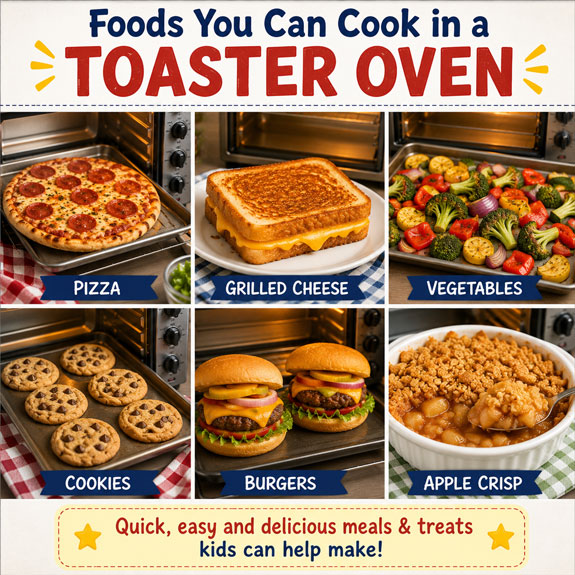
Best Foods to Cook in a Toaster Oven
Foods That Aren't Ideal
Some recipes work better in a full-sized oven or on the stovetop. Very large casseroles, oversized roasts, and foods that require lots of space may not cook evenly in a toaster oven.
- Large whole chickens or turkeys
- Extra-large casseroles
- Large sheet-pan meals
- Recipes requiring oversized baking dishes
- Foods that touch the heating elements
Learning Opportunity
Encourage children to compare the same recipe made in a toaster oven and a conventional oven. They can observe differences in cooking time, browning, texture, and energy use while developing critical thinking and problem-solving skills.
Easy Toaster Oven Recipes Kids Can Make
Once children understand basic toaster oven safety, they can begin preparing simple recipes with adult supervision. Start with toast and sandwiches, then gradually move on to pizzas, vegetables, baked meals, and easy desserts as confidence grows.
Start Here: Best Beginner Toaster Oven Recipes
- First-time cooks - Begin with Grilled Cheese Sandwiches or Garlic Toast.
- Quick lunches - Try Pizza Toast, French Bread Pizza, Pizza Bagels, or Quesadillas.
- Family favorites - Bake Macaroni and Cheese or Burgers.
- Healthy side dishes - Roast vegetables, broccoli, carrots, or bake potatoes.
- Simple desserts- Finish with brownies, cookies, or apple crisp.
- Practice new skills - Learn timing, temperature control, and safe handling of hot baking pans.
The following recipes are organized from beginner to more advanced so children can gradually build confidence while safely learning to use a toaster oven.
Beginner Recipes
Cinnamon Toast
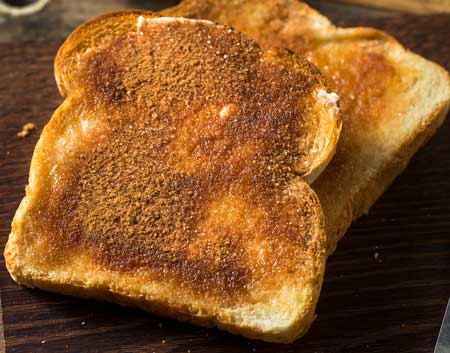
Cinnamon toast is a classic beginner recipe that's perfect for breakfast, snacks, or dessert. Kids learn how butter melts, sugar caramelizes, and bread browns while using simple ingredients. Try some of these fun toast recipe ideas.
Ingredients
- 4 slices bread
- 2 tablespoons softened butter
- 2 tablespoons sugar
- 1 teaspoon ground cinnamon
Directions
- Preheat the toaster oven to 350F.
- Spread butter over each slice of bread.
- Mix the cinnamon and sugar together.
- Sprinkle evenly over the buttered bread.
- Bake for 5-7 minutes until lightly toasted.
- Serve warm.
Fun Variations
Try adding a drizzle of honey, maple syrup, or a sprinkle of chopped pecans for extra flavor.
Toaster Oven Grilled Cheese Sandwich
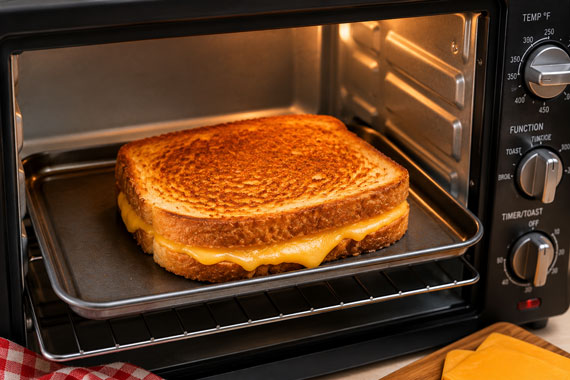
Grilled cheese is one of the easiest toaster oven recipes for beginner cooks. Children learn how bread toasts, cheese melts, and cooking time affects the finished sandwich while creating a classic comfort food. Check out some more sandwich ideas
Ingredients
- 2 slices bread
- 2 slices cheddar, American, Swiss, or mozzarella cheese
- 1 tablespoon softened butter
Directions
- Preheat the toaster oven to 375F.
- Spread butter on one side of each slice of bread.
- Place one slice of bread butter-side down on the baking tray.
- Add the cheese slices.
- Top with the second slice of bread, butter-side up.
- Bake for 4-5 minutes.
- Carefully flip the sandwich with a spatula.
- Bake another 3-5 minutes until both sides are golden brown and the cheese has melted.
- Allow to cool slightly before serving.
Try Different Cheeses
Experiment with cheddar, Monterey Jack, provolone, Swiss, pepper jack, or mozzarella. Kids can compare how each cheese melts and changes the flavor.
Easy Garlic Toast
Garlic toast is a quick side dish that teaches children how seasonings, butter, and baking time work together. It pairs perfectly with pasta, soups, and salads.

Ingredients
- 4 slices French bread or Italian bread
- 2 tablespoons softened butter
- 1 teaspoon garlic powder
- 1 teaspoon dried parsley
- Optional: grated Parmesan cheese
Directions
- Preheat the toaster oven to 375F.
- Mix the butter, garlic powder, and parsley.
- Spread evenly over each slice of bread.
- Sprinkle with Parmesan cheese if desired.
- Bake for 5-7 minutes until lightly golden.
- Serve warm.
Serving Suggestion
Serve garlic toast with spaghetti, marinara sauce, chili, vegetable soup, or a fresh salad.
Easy Toaster Oven Nachos
Nachos are a fun snack that teaches children how layering ingredients creates different textures and flavors.
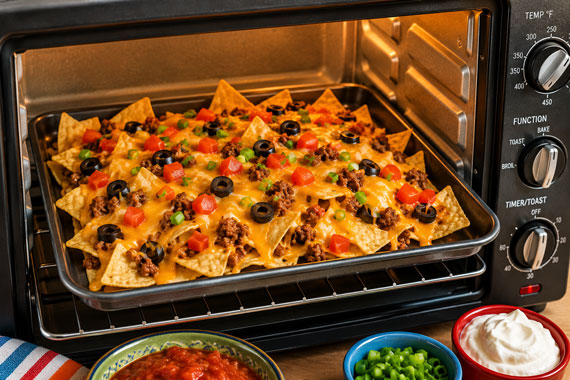
Ingredients
- Tortilla chips
- 1 cup shredded cheddar or Mexican blend cheese
- Cooked taco meat or black beans (optional)
- Diced tomatoes
- Sliced olives
- Green onions
Directions
- Spread tortilla chips on a baking tray.
- Sprinkle with cheese.
- Add meat or vegetables if using.
- Bake at 350F for 4-6 minutes until the cheese melts.
- Top with tomatoes and green onions before serving.
Serve With
Add salsa, sour cream, guacamole, or homemade pico de gallo for a complete snack or meal.
Quick Lunches
French Bread Pizza
French bread pizza lets kids create their own personal pizzas while learning to spread sauce, measure toppings, and monitor baking time.
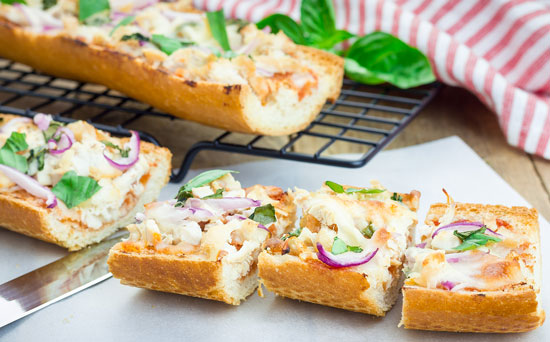
Ingredients
- 1 small French bread loaf
- 1 cup marinara sauce
- 1 1/2 cups shredded mozzarella cheese
- Pepperoni, cooked sausage, vegetables, or favorite toppings
- Italian seasoning (optional)
Directions
- Preheat the toaster oven to 375F.
- Slice the French bread in half lengthwise.
- Spread marinara sauce over each half.
- Sprinkle with mozzarella cheese.
- Add desired toppings.
- Bake for 8-10 minutes until the cheese is melted and bubbly.
- Slice and serve.
Fun Topping Ideas
Try mushrooms, olives, peppers, pineapple, spinach, cooked chicken, ham, bacon, or fresh tomatoes.
Pizza Bagels
Pizza bagels are one of the quickest lunches kids can prepare. This simple recipe builds confidence while teaching assembly, measuring, and baking skills. Try more pizza ideas.
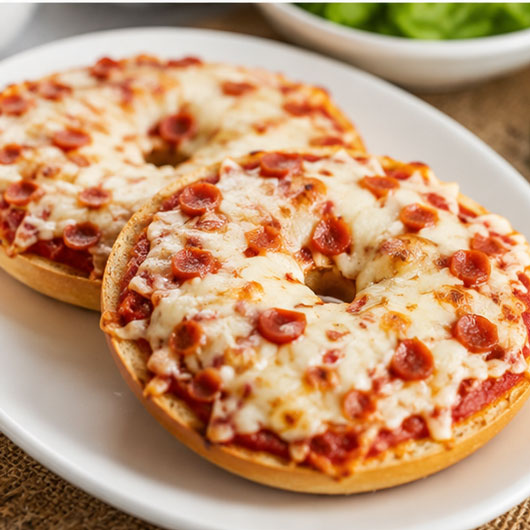
Ingredients
- 2 mini bagels, split
- 1/2 cup pizza sauce
- 1 cup shredded mozzarella cheese
- Favorite pizza toppings
Directions
- Spread pizza sauce over each bagel half.
- Add shredded cheese.
- Top with favorite toppings.
- Bake at 375F for 6-8 minutes until the cheese melts.
- Cool slightly before serving.
Kids Can Help
Children can spread the sauce, sprinkle cheese, choose toppings, and arrange the bagels on the baking tray.
Easy Cheese Quesadillas
Quesadillas are one of the quickest countertop oven meals kids can make. Children practice assembling ingredients, measuring cheese, and safely removing hot food while creating a crispy, cheesy lunch or snack. More quesadilla recipes.
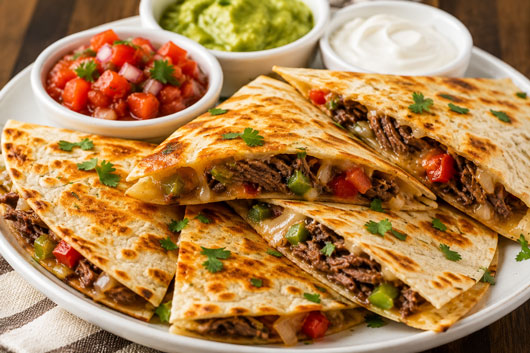
Ingredients
- 2 flour tortillas
- 1 cup shredded cheddar or Mexican blend cheese
- Optional: cooked chicken, black beans, diced peppers, or salsa
Directions
- Preheat the toaster oven to 375F.
- Place one tortilla on the baking pan.
- Sprinkle cheese evenly over the tortilla.
- Add optional fillings if desired.
- Top with the second tortilla.
- Bake for 6-8 minutes until the cheese melts.
- Carefully flip the quesadilla and bake another 2-3 minutes for extra crispness if desired.
- Slice into wedges and serve warm.
Serving Ideas
Serve with salsa, sour cream, guacamole, or fresh pico de gallo for a complete meal.
Easy Family Meals
Baked Macaroni & Cheese
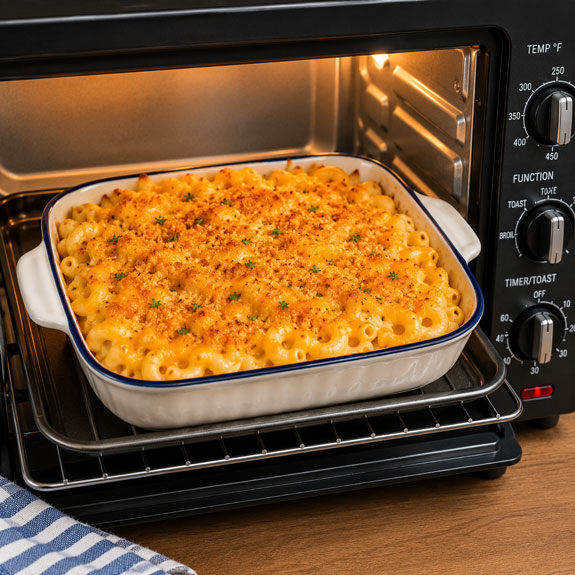
Turn leftover macaroni and cheese into a bubbly baked casserole with a crispy golden topping. This recipe teaches children how baking creates a crispy topping while keeping the inside creamy.
Ingredients
- 3 cups prepared macaroni and cheese
- 1/2 cup shredded cheddar cheese
- 2 tablespoons grated Parmesan cheese
- 1/4 cup seasoned bread crumbs (optional)
Directions
- Preheat the countertop toaster oven to 375F.
- Place the prepared macaroni and cheese into an oven-safe baking dish.
- Sprinkle with cheddar, Parmesan, and bread crumbs.
- Bake for 12-15 minutes until hot and lightly browned.
- Allow to cool for several minutes before serving.
Mix-In Ideas
Add cooked broccoli, diced ham, cooked chicken, peas, or crumbled bacon to make a complete meal.
Toaster Oven Cheeseburgers
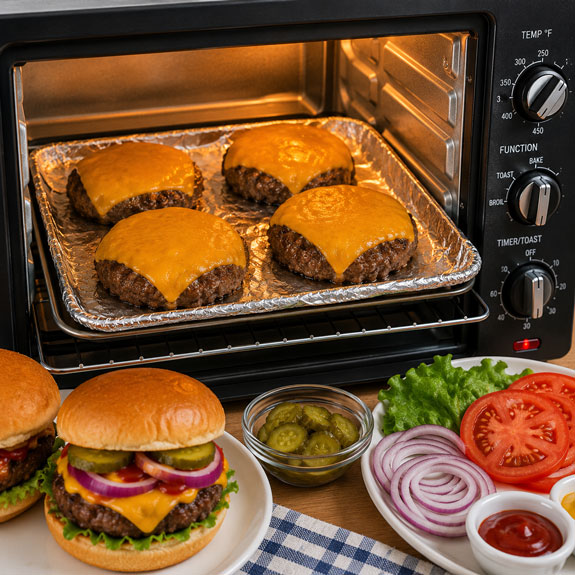
Cooking burgers in a countertop oven introduces children to safe meat preparation, food thermometers, and proper cooking temperatures while making a favorite family dinner. Try these hamburger recipes.
Ingredients
- 1 pound ground beef
- Salt and pepper
- 4 hamburger buns
- 4 slices cheddar cheese
- Lettuce, tomato, onion, pickles, ketchup, and mustard
Directions
- Preheat the toaster oven to 400F.
- Shape the ground beef into four patties.
- Season lightly with salt and pepper.
- Place patties on a foil-lined baking pan.
- Bake for 15-20 minutes or until the burgers reach an internal temperature of 160F.
- Top each burger with cheese during the last minute of cooking.
- Serve on buns with favorite toppings.
Food Safety Reminder
Ground beef should always be cooked to an internal temperature of 160F (71C). An adult should use a food thermometer to check doneness.
Simple Desserts
Easy Apple Crisp
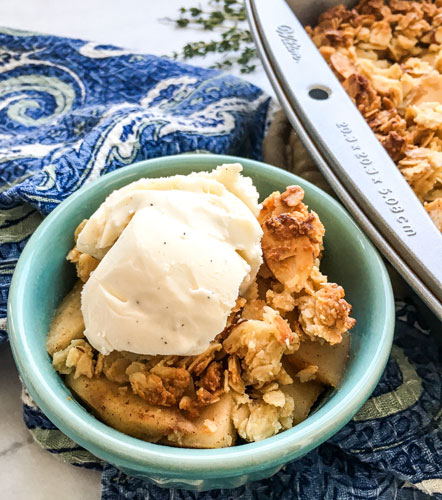
Apple crisp is a simple dessert that helps children practice peeling, measuring, mixing, and baking while filling the kitchen with wonderful cinnamon aromas.
Ingredients
- 3 apples, peeled and sliced
- 2 tablespoons sugar
- 1 teaspoon cinnamon
- 1/2 cup quick oats
- 1/4 cup flour
- 1/4 cup brown sugar
- 3 tablespoons butter, softened
Directions
- Preheat the toaster oven to 350F.
- Place apples into a small baking dish.
- Mix sugar and cinnamon and sprinkle over the apples.
- Combine oats, flour, brown sugar, and butter until crumbly.
- Sprinkle the topping evenly over the apples.
- Bake for 25-30 minutes until the apples are tender and the topping is golden brown.
Serving Suggestion
Serve warm with vanilla ice cream, whipped cream, or a drizzle of caramel sauce.
Try this peach crisp recipe or blueberry crisp.Cleaning & Caring for Your Toaster Oven
Learning to clean a toaster oven is an important part of becoming a responsible cook. Regular cleaning helps food taste better, prevents crumbs from burning, and keeps the appliance working safely.
Always turn the countertop toaster oven off, unplug it, and allow it to cool completely before cleaning. The rack, tray, door, and heating elements can stay hot for several minutes after cooking.
How to Clean a Toaster Oven
- Turn the toaster oven off and unplug it.
- Allow the appliance to cool completely.
- Remove the baking tray and oven rack.
- Slide out the crumb tray and empty crumbs into the trash.
- Wash the baking tray, rack, and crumb tray with warm, soapy water.
- Wipe the inside walls and glass door with a soft damp cloth.
- Dry all parts completely before putting them back.
Never Do These Things
- ? Never clean the toaster oven while it is hot.
- ? Never place the electrical appliance in water.
- ? Never spray cleaner directly onto heating elements.
- ? Never use plastic utensils inside a hot toaster oven.
- ? Never leave crumbs building up in the crumb tray.
Good Cleanup Habits
- ? Empty the crumb tray often.
- ? Wash pans after each recipe.
- ? Wipe up cheese, sauce, or spills after the oven cools.
- ? Put ingredients away while food cooks.
- ? Check that the toaster oven is turned off after use.
Toaster Oven Troubleshooting
Toaster ovens are easy to use, but every cook runs into small problems while learning. Use this chart to help children understand what went wrong and how to improve next time.
| Problem | Solution |
|---|---|
| Toast burns quickly. | Use a lower toast setting or check the food sooner next time. |
| Food cooks unevenly. | Place food in a single layer and turn the pan halfway through cooking. |
| Cheese browns too quickly. | Move the rack lower or reduce the temperature slightly. |
| Food is not fully cooked. | Add a few more minutes and check again. Thicker foods need longer cooking times. |
| Smoke comes from the toaster oven. | Turn it off, let it cool, and check for crumbs, melted cheese, or food drips. |
| Food sticks to the baking tray. | Use parchment paper made for baking, foil when appropriate, or lightly grease the tray. |
| Forgot to preheat. | Add a few extra minutes of cooking time and check food carefully. |
| Food is too dry. | Reduce the cooking time or cover the food loosely with foil if the recipe allows. |
Remember
Every toaster oven cooks a little differently. As children practice, they will learn how their toaster oven browns, bakes, and toasts their favorite foods.
Kitchen Skills Kids Learn with a Toaster Oven
Cooking with a toaster oven teaches much more than simply heating food. Every recipe helps children build confidence while practicing valuable kitchen and life skills they can use with larger ovens and other cooking appliances.
As children prepare breakfasts, lunches, snacks, and family meals, they learn to follow directions, manage time, use kitchen tools safely, and clean up after themselves. These experiences encourage independence and help young cooks become more comfortable preparing food for themselves and others.
Skills That Last a Lifetime
The skills learned while using a toaster oven transfer easily to conventional ovens, air fryers, and other kitchen appliances. As children become comfortable preparing simple recipes, they'll be ready to tackle more advanced cooking projects and family meals.
Ready for the Next Appliance?
Once children feel confident using a toaster oven, they can continue building their kitchen skills by learning to use a air fryer, blender, slow cooker, or microwave. Each appliance introduces new cooking techniques while reinforcing the same safety habits and kitchen skills.
Related Kitchen Skills & Toaster Oven Recipes
Keep building kitchen confidence with these beginner-friendly appliance lessons, cooking skills, and easy family recipes. Each page introduces new techniques while reinforcing safe cooking habits.

Learn air fryer safety, healthy cooking techniques, and simple recipes children can prepare with adult supervision.

Make smoothies, frozen drinks, sauces, and healthy snacks while learning blender safety and basic kitchen skills.

Prepare soups, family dinners, desserts, and sauces while practicing planning, measuring, and food safety.
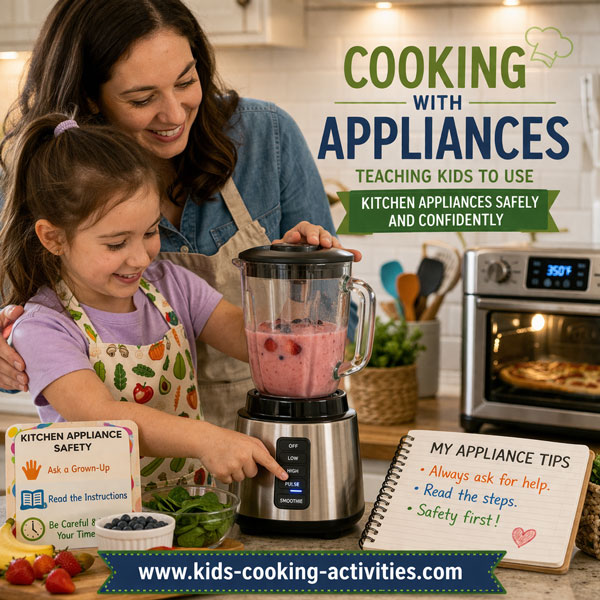
Compare kitchen appliances and choose the next lesson as children continue developing new cooking skills.

Learn baking, roasting, sautéing, steaming, boiling, grilling, and other methods every young chef should know.
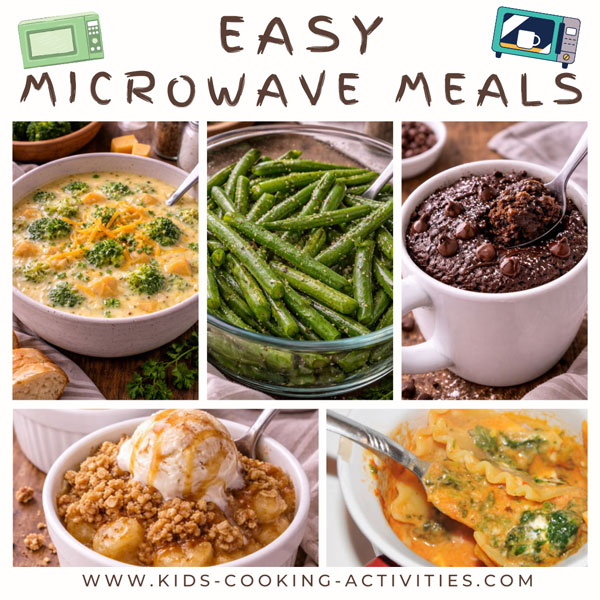
Cook simple breakfasts, lunches, dinners, and snacks while learning safe microwave cooking techniques.

Discover quick breakfasts, lunches, dinners, and snacks perfect for beginner cooks and busy families.
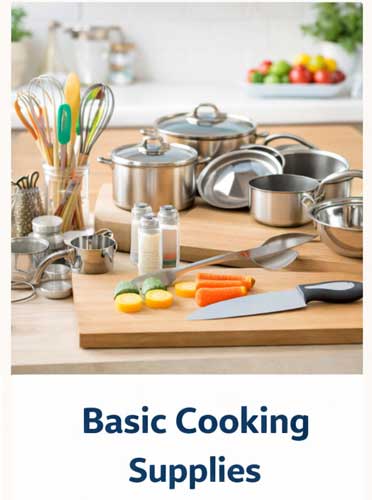
Build confidence with measuring, kitchen safety, food preparation, appliance lessons, and cooking techniques.

Frequently Asked Questions
At what age can children begin using a toaster oven?
Many children can begin helping with a toaster oven around ages 8-10 by assembling recipes, setting the timer, and placing food on the baking tray with close adult supervision. Older children can gradually take on more responsibility as they demonstrate safe cooking habits.
Is a toaster oven safer than a regular oven?
A toaster oven is often easier for beginner cooks because it heats quickly and is smaller than a conventional oven. However, the heating elements, baking tray, and door still become extremely hot, so children should always cook with adult supervision.
What are the easiest recipes for beginners?
Grilled cheese sandwiches, garlic toast, pizza bagels, quesadillas, French bread pizza, and cinnamon toast are excellent first recipes because they use simple ingredients and short cooking times.
Does a toaster oven need to be preheated?
Many baking recipes turn out better if the toaster oven is preheated for several minutes. Always follow the directions in your recipe for the best results.
Can kids bake cookies in a toaster oven?
Yes. Most toaster ovens can bake small batches of cookies, brownies, muffins, and other desserts. Watch carefully because foods often bake faster than they do in a conventional oven.
How do children safely clean a toaster oven?
Always unplug the appliance and let it cool completely before cleaning. Empty the crumb tray, wash removable parts with warm soapy water, and wipe the inside with a damp cloth. Never place the electrical appliance in water.
What kitchen skills do children learn with a toaster oven?
Children practice reading recipes, measuring ingredients, setting temperatures, managing cooking times, following safety rules, cleaning up, and preparing simple family meals.
What appliance should children learn after using a toaster oven?
Many young cooks are ready to learn an air fryer, blender, slow cooker, or microwave after mastering the toaster oven. Each appliance introduces new cooking techniques while reinforcing safe kitchen habits.
Cooking with Appliances Hub Air Fryer Blender Bread Machine Slow Cooker Instant Pot Microwave Toaster Oven Waffle Iron
Continue Building Kitchen Skills
Ready to learn another appliance or cooking technique? Explore more beginner-friendly lessons and recipes designed to help young cooks become confident, safe, and independent in the kitchen.
Kitchen Skills | Teaching Kids to Cook | Cooking with Appliances | Easy Kids Meals
Get Free Kids Recipe Cards + Cooking Printables
Join Kids Cooking Activities for fun recipes, cooking ideas, and printable resources for kids, families, and classrooms.
Follow Kids Cooking Activities too:





© Debbie Madson, Madson Web Publishing, LLC — All rights reserved.
The material on this site is for educational purposes only.