Cooking Around the World for Kids
Explore international recipes, world food traditions, geography and hands-on cultural learning through cooking.
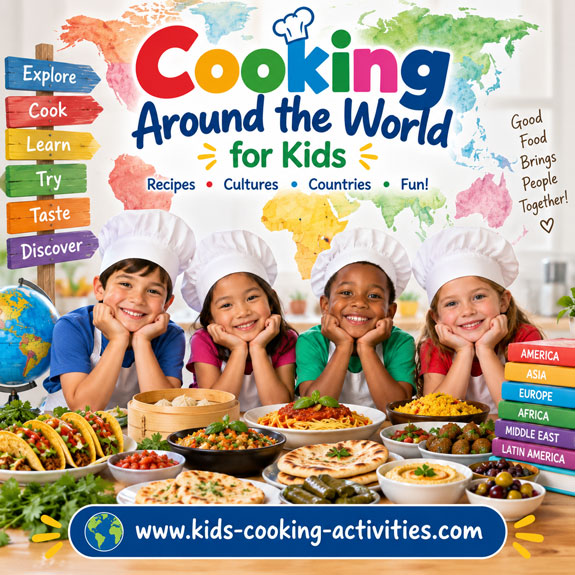
Take kids on a cooking trip around the world without leaving the kitchen. These country and regional cooking studies combine international recipes with geography, ingredients, languages, food traditions and hands-on activities.
Kids can discover how climate, farming, history and culture influence what people cook and eat. Along the way, they can practice real kitchen skills while comparing foods from different parts of the world.
Choose a country or region, find it on a map, explore its foods and ingredients, and prepare a recipe together. Then compare what you discovered with another place.
There is rarely one single way that everyone in a country cooks. Recipes change by region, family, religion, available ingredients and local traditions. Encourage kids to look for differences within countries as well as similarities between them.
What Kids Can Learn Through World Cooking
- Where countries and regions are located
- How geography and climate influence food
- Traditional and everyday ingredients
- How foods differ within the same country
- Words and phrases from different languages
- How ingredients travel between cultures
- How families prepare similar foods differently
- Measuring, mixing, chopping and other kitchen skills
Kids Cooking Activities Teaching Materials
Teaching kids to cook? Save time with ready-made lesson plans used by parents and teachers. Browse teaching materials →


This page may contain affiliate links. We may earn a small commission at no extra cost to you. Learn more.
Cooking Around the World Recipes & Lessons
Choose a country or region below. Each cooking study helps kids explore food along with geography, ingredients, traditions and hands-on kitchen activities.
United States
Explore American cooking as a cultural melting pot and discover how foods and traditions change across different regions of the country.
Asia
Explore an enormous and diverse region through ingredients, recipes and food traditions from different parts of Asia.
United Kingdom
Discover British cooking through traditional dishes, baking, regional foods and everyday ingredients.
Eastern Europe
Explore breads, soups, dumplings and other foods while comparing traditions across Eastern Europe.
France
Practice French cooking while learning about breads, sauces, regional ingredients and classic French food traditions.
Greece
Explore Greek food through Mediterranean ingredients, breads, salads, savory dishes and traditional sweets.
India
Discover how Indian food changes by region while exploring spices, breads, lentils, rice and flavorful dishes.
Ireland
Explore Irish foods and simple recipes connected with Irish cooking traditions and celebrations.
Italy
Explore Italian cooking through pasta, sauces, breads, herbs and regional food traditions.
Mexico
Discover Mexican cooking through corn, beans, chiles, tortillas, regional foods and colorful family recipes.
Middle East
Explore a diverse region through chickpeas, grains, yogurt, tahini, vegetables, herbs, breads and fragrant spices.
South Africa
Discover South African cooking through its diverse cultural influences, ingredients and food traditions.
Southern USA
Explore the American South through regional ingredients, comfort foods and cooking traditions shaped by many cultures.
Cooking Around the World Curriculum
Want to turn these country and regional cooking pages into a larger World Studies unit? Kids can explore maps, ingredients, languages, food traditions and recipes while building connections between cooking, geography and culture.
Choose a country or region above, locate it on a map, explore its foods and ingredients, and prepare a recipe together. Then add what kids discover to a Cooking Around the World notebook and compare it with the next place you study.
Create a Cooking Around the World Notebook
Give each country or region its own notebook page and add to it as kids explore the recipes and activities.
- Country or region name
- Continent
- Capital, when studying a country
- Flag
- Location on a world map
- Language or languages
- An ingredient to investigate
- A food or dish
- A recipe you prepared
- A cooking skill you practiced
- A drawing or photo of the finished dish
- Your favorite discovery
Ask kids why certain foods might be common in the place they are studying. Look at climate, coastlines, rivers, farmland, mountains and locally grown crops. Geography can help explain why particular ingredients became important.
Compare Foods & Ingredients Around the World
As kids complete more country and regional cooking studies, encourage them to look for connections. The same ingredients and cooking methods may appear in many parts of the world but be used in very different ways.
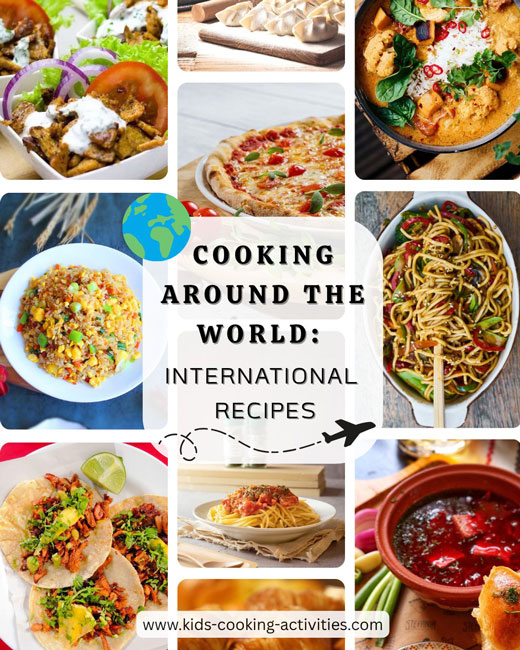
Choose one ingredient and find three different ways it is used around the world. Mark each place on a world map, add the dishes to your Cooking Around the World notebook, and compare how the ingredient changes from one recipe to another.
Ways to Use Cooking Around the World
These cooking studies can work for homeschool lessons, classrooms, co-ops, scout groups, cooking clubs or family theme nights.
Younger children can wash produce, measure, pour, stir and assemble. Older kids and teens can practice chopping, stovetop cooking, baking and more advanced recipe skills with appropriate adult supervision.
More World Cooking Activities
Keep exploring with more cooking activities, videos and printable resources that help kids discover foods and flavors from around the world.

Do you have an International Recipe or World Studies Fact?
Do you have an International recipe or know a lot about a country we could add to our world studies section? You can create your own page.
Reader's Submitted Recipes
Click below to see contributions from other visitors to this page...
Traditional Tanghulu Recipe: A Fruity, Sugary Snack for The Ages 
Cooking Around the World- China
Candied haw on skewers or bing tanghulu is a traditional winter snack in China. Learn how to make this tasty and fruity …
Ancient Mesopotamia Bread
Ancient Mesopotamia Bread This simple Ancient Mesopotamia Bread is a hands-on history cooking activity made with flour, water, and salt. Kids can …
Pork Sui Mai Dumplings Recipe Not rated yet
Pork Siu Mai (Dim Sum Dumplings) These homemade pork siu mai dumplings are a fun Asian-inspired cooking project for families. Kids can help mix the …
Jamaican Cornmeal Porridge Not rated yet
Jamaican Cornmeal Porridge Travel to Jamaica through cooking with this warm and comforting cornmeal porridge. This traditional breakfast is flavored …
Cooking Around the World FAQ
Cooking gives kids a hands-on way to explore geography, culture, ingredients and food traditions. It also builds practical kitchen skills and can encourage children to try unfamiliar foods.
They can be adapted for many ages. Younger children can wash ingredients, measure, pour, stir and assemble foods. Older kids and teens can practice chopping, baking and stovetop skills with appropriate adult supervision.
No. Many recipes use familiar grocery-store ingredients, while others introduce one or two foods or seasonings that may be new to your family. Start with an accessible recipe and add new ingredients as kids become more adventurous.
Yes. Combine a recipe with a map activity, country facts, an ingredient investigation, language activity or notebook page to create a hands-on geography and cultural study.
No. Food can vary greatly within the same country. A recipe is a starting point for exploring a place, not a complete picture of its food culture. Encourage kids to investigate regional and family differences.
Choose one country or region, find it on a map, learn a few facts, investigate an ingredient and prepare one recipe together. Add what you discover to a notebook, then choose another place and begin comparing the two.
More Cooking Ideas for Kids

Get Free Kids Recipe Cards + Cooking Printables
Join Kids Cooking Activities for fun recipes, cooking ideas, and printable resources for kids, families, and classrooms.
Follow Kids Cooking Activities too:





© Debbie Madson, Madson Web Publishing, LLC — All rights reserved.
The material on this site is for educational purposes only.