

Asparagus Facts for Kids
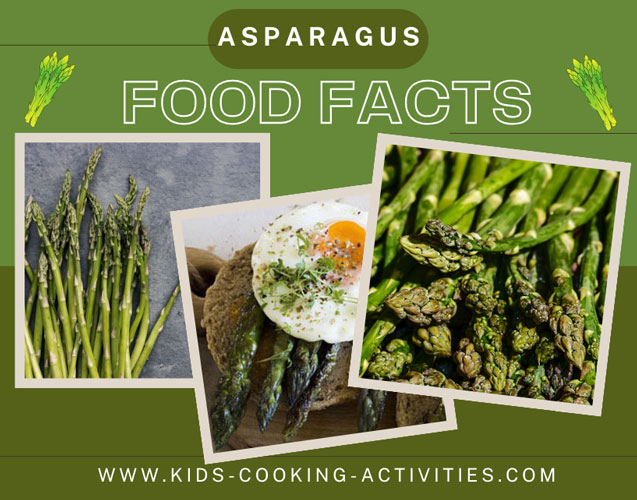
Learn fun asparagus facts, how asparagus grows, how to choose and store it, and an easy step-by-step way to cook asparagus. This page also includes a creamy asparagus risotto recipe.
On This Page
Kids Cooking Activities Teaching Materials
Teaching kids to cook? Save time with ready-made lesson plans used by parents and teachers. Browse teaching materials →


This page may contain affiliate links. We may earn a small commission at no extra cost to you. Learn more.
Fun Asparagus Facts
- Asparagus grows in long tall stalks.
- Fresh asparagus is often easiest to find in spring.
- It can keep producing year after year once planted.
- The tender top is eaten along with most of the stalk.
- Asparagus can be boiled, roasted, sautéed, or even eaten raw.
How Asparagus Grows, Buying Tips, and Storage
When Asparagus Is in Season
Fresh asparagus is usually in season during mid to late spring.
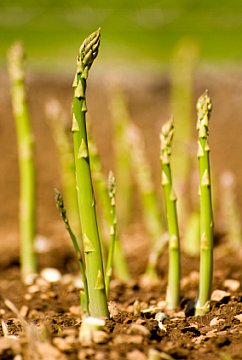
How Asparagus Grows
Asparagus grows in long tall stalks. In spring, it can sometimes grow wild, and established plants can keep producing for years.
What to Look for When Buying Asparagus
Choose asparagus that is thin and green to green-purplish in color. Look for spears that are crisp with tightly bunched heads.
Storage Tips
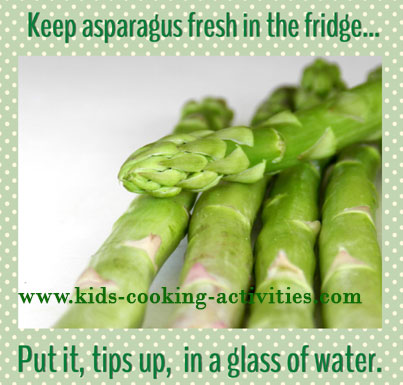
Use asparagus quickly. Store it in the refrigerator, and if you are not using it the same day, keep the stalks in a cup of water to help keep them fresh.
How to Cook Asparagus
How to Cook Asparagus
- Wash the asparagus well.
- Bend each stalk and snap off the tough end.
- Place the asparagus in a wide skillet or pot with water and a little salt.
- Boil for about 5 to 7 minutes.
- Check for tenderness by piercing the middle with a skewer.
- Remove the asparagus before it gets too soft.
Mini Activity
Snap the Ends Test
- Wash one or two asparagus stalks.
- Hold a stalk near the bottom and gently bend it.
- Watch where it naturally snaps.
- Compare the tough bottom piece to the tender top.
This is an easy way to teach kids about food prep and texture.
Asparagus Nutrition Facts
Asparagus contains fiber and several vitamins and minerals.
- Asparagus is high in folacin.
- It is a good source of potassium and fiber.
- It also provides vitamin B, calcium, and magnesium.
More Food Fact Resources
Recipe
Asparagus Risotto
This creamy asparagus risotto is a comforting way to serve asparagus and helps kids learn how rice softens and absorbs flavor while cooking.



Ingredients
- 1 tablespoon butter
- 1 onion, finely chopped
- 3 cloves garlic, crushed
- 1 1/2 cups short grain rice
- 3/4 pound asparagus, cut into 1-inch pieces
- 4 cups chicken broth
- 1/4 cup cream
- 1 cup grated Parmesan cheese
- 1/4 cup fresh basil, chopped
Instructions
- Melt the butter in a saucepan over medium heat.
- Add the chopped onion and crushed garlic. Cook until the onion becomes soft.
- Add the rice and stir until all the grains are coated and begin to look shiny.
- Pour in the chicken broth and bring the mixture to a gentle boil.
- Add the asparagus pieces, cover the pan, and reduce the heat to medium-low.
- Cook until the rice is tender and the asparagus is cooked.
- Stir in the cream, Parmesan cheese, and chopped basil until well combined.
- Serve warm.
More Asparagus Ideas
Asparagus with Butter and Nuts
Cook asparagus until tender, arrange it on a serving platter, drizzle with melted butter, and top with chopped almonds if desired.
Asparagus Cheese Appetizers
Cook asparagus until tender. Blend softened cream cheese, Parmesan cheese, and lemon juice. Spread the mixture on crackers and top each with a piece of asparagus.
Asparagus Toast

Toast bread, top with cooked asparagus, and add a fried egg for an easy meal idea.
Asparagus Cooking Video
Watch this asparagus cooking video for another easy way to prepare asparagus.
Asparagus Facts FAQ
When is asparagus in season?
Fresh asparagus is usually in season during mid to late spring, although it may be available year-round in some areas.
How do you prepare asparagus?
Wash the asparagus and bend each stalk until the tough end snaps off naturally. This removes the woody part and leaves the tender portion for cooking.
How long do you cook asparagus?
Asparagus usually cooks in about 5 to 7 minutes when boiled. It should be tender but still slightly firm. Avoid overcooking so it does not become too soft.
Can you eat asparagus raw?
Yes, asparagus can be eaten raw, especially when sliced thin. However, it is more commonly cooked to soften the texture and enhance the flavor.
What part of asparagus do you eat?
You eat the tender stalk and tip of the asparagus. The bottom end is usually tough and should be snapped off before cooking.
Keep Learning About Asparagus
After learning these asparagus facts, keep exploring vegetables through the Food Facts hub, practice hands-on cooking in kids cooking lessons, or try more seasonal produce ideas in seasonal cooking.




Share your food facts and recipes
Do you have a food facts or recipe to share?
Explore More Food Facts
Fruit Facts:
Apple
Apricot
Avocado
Banana
Berry
Cherry
Coconut
Cranberry
Dates
Figs
Grapefruit
Grapes
Kiwi
Lemon & Lime
Mango
Melon
Orange
Papaya
Peach
Pear
Pineapple
Plum
Tomato
Vegetable Facts:
Artichoke
Asparagus
Beet
Broccoli
Brussels Sprouts
Cabbage
Carrot
Cauliflower
Celery
Corn
Cucumber
Eggplant
Garlic
Green Beans
Kale
Lettuce & Salad Greens
Mushrooms
Okra
Onion
Parsnip
Peas
Peppers
Potato
Radish
Rhubarb
Spinach
Summer Squash & Zucchini
Sweet Potato
Turnip
Winter Squash & Pumpkin
Get Free Kids Recipe Cards + Cooking Printables
Join Kids Cooking Activities for fun recipes, cooking ideas, and printable resources for kids, families, and classrooms.
Follow Kids Cooking Activities too:





© Debbie Madson, Madson Web Publishing, LLC — All rights reserved.
The material on this site is for educational purposes only.