

- Home ›
- Food Facts ›
- Mango
Mango Facts
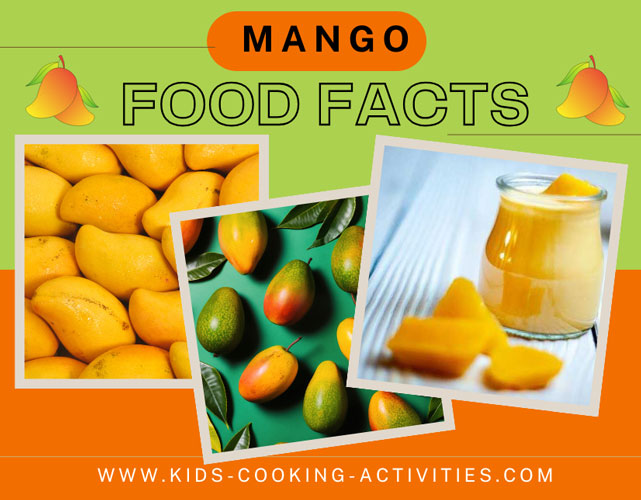
Learn fun mango facts and general information about mangoes. This page includes how mangoes grow, what to look for when buying them, how to store them, how to use them in recipes, and easy mango recipe ideas.
Kids Cooking Activities Teaching Materials
Teaching kids to cook? Save time with ready-made lesson plans used by parents and teachers. Browse teaching materials →


This page may contain affiliate links. We may earn a small commission at no extra cost to you. Learn more.
On This Page
Fun Mango Facts
- June through August is peak mango season.
- Mangoes grow on tall evergreen trees in tropical areas.
- Mangoes can be used in smoothies, fruit salads, chutneys, and salsas.
- Mangoes can also be canned or frozen.
- Ripe mangoes are soft enough to cut easily but should not feel mushy.
How Mangoes Grow, Buying Tips, and Storage
When Mangoes Are Available
June is peak season through August.
How Does a Mango Grow?
Mangoes grow on tall evergreen trees in tropical areas.
What to Look for When Buying a Mango
Choose mangoes that are plump without blemishes. Avoid soft or shriveled ones. They should yield gently when pressed, or you can buy them and ripen them at home.
Mango Storage Tips
If ripe, a mango can be stored in the refrigerator. To ripen, leave it at room temperature.
How to Cook with Mangoes
How to Use Mangoes
- Peel and cut mango away from the large pit.
- Use mango in chutneys, salsas, fruit salads, and smoothies.
- Freeze extra mango pieces for later smoothie recipes.
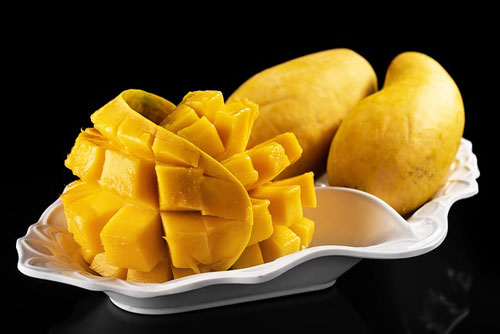
Mango Texture and Ripeness
Firm mangoes are better if you want to let them ripen at home.
Ripe mangoes should give slightly when pressed and will be sweeter and juicier.
Mangoes that are too soft or shriveled are usually past their best stage.
Food Science: Ripening Mangoes
Why Does Mango Get Softer?
As mango ripens, the fruit becomes softer and sweeter. That is because the natural starches inside begin changing into sugars.
This is why a ripe mango tastes sweeter and feels softer than an unripe one.
Mini Activity
Mango Ripeness Test
- Look at a mango and describe its color and shape.
- Gently press the outside.
- Talk about whether it feels firm or slightly soft.
- Guess whether it is ready to eat now or needs more time to ripen.
Mango Nutrition Facts
Mango is high in vitamin B6, fiber, vitamin C, and vitamin A. It also aids in digestion and provides potassium.
- Mango is high in vitamin B6.
- It contains fiber.
- It contains vitamin C and vitamin A.
- Mango also provides potassium.
More Food Fact Resources
Mango Recipes
Mango-Peach Smoothie
This easy fruit smoothie combines mangoes and peaches with milk and orange juice.
By Elizabeth (Virginia)
- Category: Drink
- Prep: 10 minutes
- Cook: No cooking
- Yield: 4 servings



Ingredients
- 2 mangoes, peeled and diced
- 2 peaches, sliced
- 1 cup vanilla soy milk, almond milk or milk of choice
- 1 cup orange juice
Directions
- Blend everything together until smooth.
- Pour and enjoy.
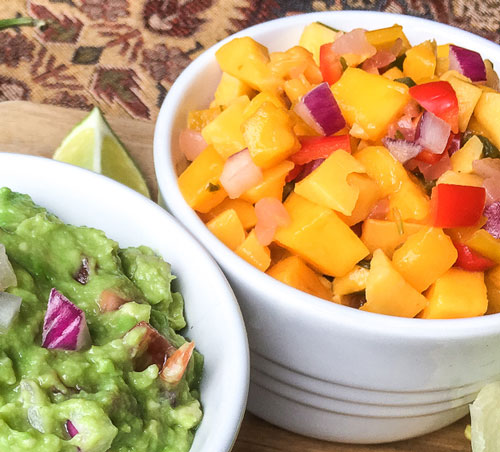
Mango Salsa
This fresh mango salsa combines sweet mango with onion, cilantro, pepper, jalapeno, and citrus juice.
- Category: Salsa
- Prep: 15 minutes
- Cook: No cooking
- Yield: 6 servings
Ingredients
- 3 ripe mangoes, diced
- 1/2 red onion, diced
- 3 tablespoons cilantro, chopped finely
- 1 red bell pepper, chopped small
- 1/2 medium jalapeno, minced small
- Juice of 1 lemon or lime, or about 2 tablespoons
Directions
- Add diced and chopped ingredients together in a serving bowl.
- Pour the juice of lemon or lime over the top.
- Serve with chicken, fish, or pork chops.
More Mango Ideas


Mango Meatloaf
See how mango can be used in a savory recipe too.

Mango Cracker Snack
Try a fun mango snack idea from the preschool snacks page.

Add Mango to a Parfait
Use mango in a yogurt parfait for a fresh and easy snack idea.
Kids Cooking Videos: Mango Salsa
Mango Facts FAQ
When are mangoes in season?
June through August is peak mango season.
How do mangoes grow?
Mangoes grow on tall evergreen trees in tropical areas.
What should you look for when buying a mango?
Choose mangoes that are plump and free from blemishes. Avoid ones that are soft or shriveled.
How should mangoes be stored?
Store ripe mangoes in the refrigerator. Leave them at room temperature to ripen.
What nutrients are in mangoes?
Mangoes are high in vitamin B6, fiber, vitamin C, vitamin A, and potassium.
Keep Learning About Mangoes


Share your food facts and recipes
Do you have a food facts or recipe to share?
Explore More Food Facts
Fruit Facts:
Apple
Apricot
Avocado
Banana
Berry
Cherry
Coconut
Cranberry
Dates
Figs
Grapefruit
Grapes
Kiwi
Lemon & Lime
Mango
Melon
Orange
Papaya
Peach
Pear
Pineapple
Plum
Tomato
Vegetable Facts:
Artichoke
Asparagus
Beet
Broccoli
Brussels Sprouts
Cabbage
Carrot
Cauliflower
Celery
Corn
Cucumber
Eggplant
Garlic
Green Beans
Kale
Lettuce & Salad Greens
Mushrooms
Okra
Onion
Parsnip
Peas
Peppers
Potato
Radish
Rhubarb
Spinach
Summer Squash & Zucchini
Sweet Potato
Turnip
Winter Squash & Pumpkin
Get Free Kids Recipe Cards + Cooking Printables
Join Kids Cooking Activities for fun recipes, cooking ideas, and printable resources for kids, families, and classrooms.
Follow Kids Cooking Activities too:





© Debbie Madson, Madson Web Publishing, LLC — All rights reserved.
The material on this site is for educational purposes only.