
- Home ›
- Food Facts ›
- Bean Facts
Bean Facts for Kids
Learn fun bean facts, where beans come from, how to cook them, and easy ways kids can use beans in cooking, nutrition learning, and simple science activities.
Start Here: Learn About Beans
- New to beans? Start with Fun Bean Facts and discover where beans come from.
- Want to cook beans? Visit How to Cook Dry Beans for soaking, cooking, and storage tips.
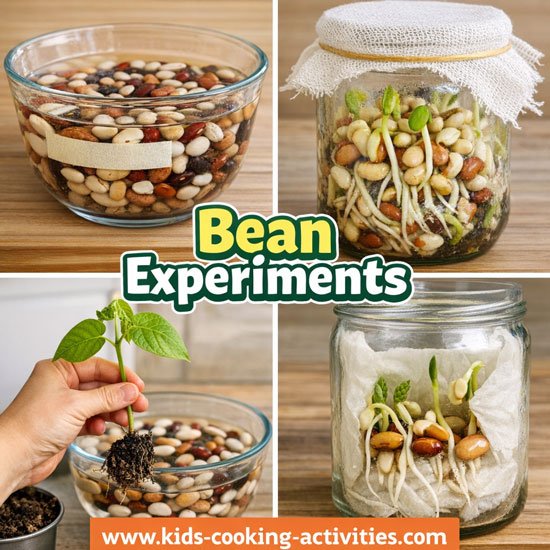
- Love science? Try our Bean Experiments.
- Ready to eat? Make the Easy Three Bean Salad.
Kids Cooking Activities Teaching Materials
Teaching kids to cook? Save time with ready-made lesson plans used by parents and teachers. Browse teaching materials →


This page may contain affiliate links. We may earn a small commission at no extra cost to you. Learn more.
Fun Bean Facts
- Beans come from plants.
- Many beans are part of a larger food group called legumes.
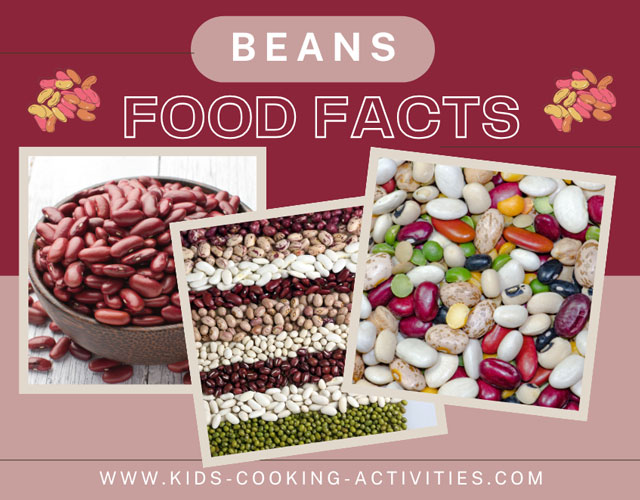
- Beans come in many shapes, sizes, and colors.
- Canned beans are ready to use, while dried beans need more preparation.
- Beans are used in soups, dips, salads, rice dishes, and more.
Types of Beans
| Bean | Color | Best Uses |
|---|---|---|
| Black Beans | Black | Tacos, burritos, soups, chili, and rice bowls |
| Pinto Beans | Tan with brown speckles | Refried beans, burritos, chili, and side dishes |
| Kidney Beans | Dark red | Chili, soups, pasta dishes, and salads |
| Chickpeas (Garbanzo Beans) | Beige | Hummus, salads, roasted snacks, and grain bowls |
| Cannellini Beans | Creamy white | Italian soups, pasta, casseroles, and creamy bean dips |
| Lentils | Brown, green, red, or black | Soups, curries, casseroles, and side dishes |
Where Beans Come From
Beans come from plants and are harvested, dried, or canned for use in cooking.
Want to Learn to Cook Dry Beans?
This page introduces bean cooking, but our complete How to Cook Dry Beans lesson teaches:
- Sorting and rinsing beans
- Overnight and quick-soak methods
- Stovetop, slow cooker, and pressure cooker directions
- Cooking time charts
- Seasoning ideas
- Storage and freezing tips
- Recipes for black beans, pinto beans, chickpeas, and lentils
Cooking Uses for Beans
Beans can be used in snacks, side dishes, soups, salads, grain bowls, and main meals. Different varieties work better in different recipes.
Great for Teaching Kitchen Skills
Beans are useful for practicing sorting, soaking, simmering, measuring, mashing, mixing, and comparing different plant foods.
Bean Nutrition Facts
Beans are a nutrient-rich food that can support many kinds of meals.
Why Are Beans Healthy?
- Protein: Helps build and repair muscles, skin, and other body tissues.
- Fiber: Supports healthy digestion and helps you feel full longer.
- Iron: Helps carry oxygen throughout the body and supports healthy blood.
- Folate: A B vitamin that helps your body make new cells and supports healthy growth.
- Low in Fat: Most beans are naturally low in fat while providing lots of nutrition.
Beans are one of the few foods that provide both plant protein and fiber, making them an excellent choice for healthy meals.
More Food Fact Resources
Mini Bean Activity
Compare Different Beans
- Gather a few kinds of dry beans, such as black beans, kidney beans, and lima beans.
- Compare their size, color, and shape.
- Sort them into groups.
- Talk about which beans you have cooked with before.
- Then explore how beans change after soaking or cooking.
This is an easy way to connect food facts with science and observation.
Continue the investigation by trying our full Bean Experiments page.
Bean Recipe
Easy Three Bean Salad
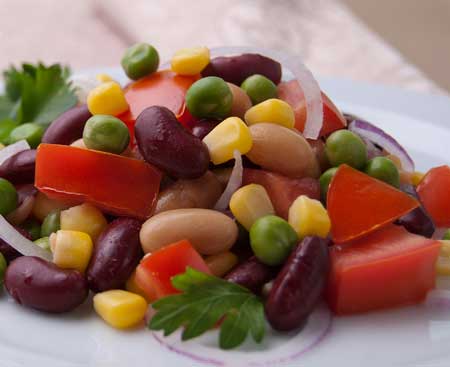
Three Bean Salad is an easy no-cook recipe that lets kids compare different bean varieties while practicing measuring, mixing, and following a simple recipe. It's a colorful side dish that's perfect for picnics, potlucks, and family dinners.
Prep Time: 15 minutes
Chill Time: 2 hours
Total Time: 2 hours 15 minutes
Servings: 6
Ingredients
- 1 (15-ounce) can cut green beans, drained
- 1 (15-ounce) can wax beans, drained
- 1 (15-ounce) can dark red kidney beans, drained and rinsed
- 1/4 cup vegetable oil
- 1/4 cup apple cider vinegar
- 1/2 cup sugar
- Pinch of salt
- Pinch of black pepper
Directions
- Drain the green beans, wax beans, and kidney beans.
- Place all three beans into a large serving bowl.
- In a measuring cup or small bowl, whisk together the vegetable oil, apple cider vinegar, sugar, salt, and pepper until the sugar begins to dissolve.
- Pour the dressing over the beans and gently stir until everything is coated.
- Cover and refrigerate for at least 2 hours before serving so the flavors have time to blend.
- Stir again just before serving.
Kid Chef Tip
Try tasting each type of bean before mixing the salad. Compare their color, size, texture, and flavor to discover your favorite. This is a fun way to connect cooking with your Bean Facts lesson!
Try These Variations
- Add chopped celery or sweet onion for extra crunch.
- Replace the kidney beans with black beans or chickpeas.
- Use cooked homemade beans instead of canned beans.
- Sprinkle with fresh parsley before serving.
More Bean Recipes and Activities
Continue exploring beans with cooking lessons, recipe collections, and science activities.
Watch Beans in Action
Kids Cooking Video: How to Cook with Dry Beans
Red Beans and Rice
Bean Facts FAQ
Where do beans come from?
Beans grow inside pods on flowering plants. Some beans are eaten fresh, while others are left on the plant to dry before being harvested, packaged, canned, or cooked.
Why should kids eat beans?
Beans provide plant protein, fiber, iron, folate, vitamins, and minerals. They are filling, naturally low in fat, and easy to add to soups, salads, dips, tacos, rice dishes, and other family meals.
Do dried beans need to be soaked before cooking?
Many dried beans benefit from soaking because it can help them cook more evenly and reduce cooking time. Lentils and split peas usually do not need to be soaked.
How long do dried beans take to cook?
Cooking time depends on the bean variety and cooking method. Lentils may cook in about 15 to 35 minutes, while many soaked dried beans take about 60 to 90 minutes on the stovetop. Pressure cookers can prepare many varieties more quickly.
What are some common types of beans?
Common varieties include black beans, pinto beans, kidney beans, cannellini beans, navy beans, Great Northern beans, lima beans, chickpeas, and black-eyed peas. Lentils, split peas, mung beans, and soybeans are also part of the larger legume family.
Are beans vegetables or protein foods?
Beans are legumes and can fit into both vegetable and protein food groups. They provide plant protein as well as fiber, vitamins, and minerals commonly found in vegetables.
What is the difference between canned beans and dried beans?
Canned beans are already cooked and ready to use after draining and rinsing. Dried beans need to be sorted, rinsed, soaked when recommended, and cooked until tender. Dried beans often cost less and can be seasoned while they cook.
Can kids help prepare and cook beans?
Yes. Kids can sort and rinse dried beans, compare different varieties, measure ingredients, mix salads, mash cooked beans, and help make dips. An adult should supervise stovetop cooking, hot liquids, slow cookers, and pressure cookers.
Related Bean Facts, Recipes and Cooking Lessons

How to Cook Dry Beans
Learn how to sort, soak, season, cook, and freeze dry beans with easy step-by-step lessons.
Bean Experiments
Discover how beans sprout, absorb water, and grow through fun science activities.

Bean Soup Recipes
Practice cooking with beans in hearty soups, stews, and easy family meals.

Chili Recipes
Use kidney, pinto, or black beans to make delicious homemade chili recipes.

Black Bean Wraps
Use cooked black beans to make quick, healthy wraps that are perfect for lunches and easy family dinners.

Black Bean & Corn Salsa
Make this colorful salsa with black beans, corn, tomatoes, olives, and avocado.

How to Cook Vegetables
Learn simple ways to steam, roast, sauté, boil, grill, and air fry vegetables.
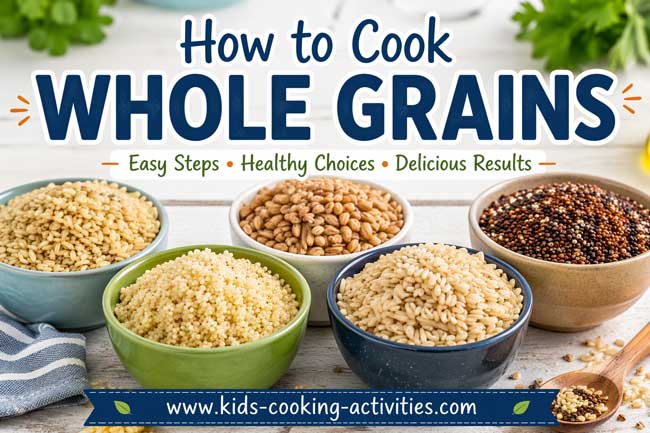
How to Cook Whole Grains
Cook rice, oats, quinoa, barley, and other grains to pair with your favorite beans.

Cooking with Herbs & Spices
Discover herbs, spices, and seasoning blends that add flavor to bean dishes and soups.

Food Facts Hub
Explore fun facts, nutrition information, and cooking ideas for fruits, vegetables, grains, beans, and more.
Share your food facts and recipes
Do you have a food facts or recipe to share?
Continue Exploring Food Facts
Learn where foods come from, compare ingredients, and connect food facts with cooking, nutrition, gardening, and science activities.
Explore More Food Facts
Fruit Facts:
Apple
Apricot
Avocado
Banana
Berry
Cherry
Coconut
Cranberry
Dates
Figs
Grapefruit
Grapes
Kiwi
Lemon & Lime
Mango
Melon
Orange
Papaya
Peach
Pear
Pineapple
Plum
Tomato
Vegetable Facts:
Artichoke
Asparagus
Beet
Broccoli
Brussels Sprouts
Cabbage
Carrot
Cauliflower
Celery
Corn
Cucumber
Eggplant
Garlic
Green Beans
Kale
Lettuce & Salad Greens
Mushrooms
Okra
Onion
Parsnip
Peas
Peppers
Potato
Radish
Rhubarb
Spinach
Summer Squash & Zucchini
Sweet Potato
Turnip
Winter Squash & Pumpkin
Get Free Kids Recipe Cards + Cooking Printables
Join Kids Cooking Activities for fun recipes, cooking ideas, and printable resources for kids, families, and classrooms.
Follow Kids Cooking Activities too:





© Debbie Madson, Madson Web Publishing, LLC — All rights reserved.
The material on this site is for educational purposes only.