
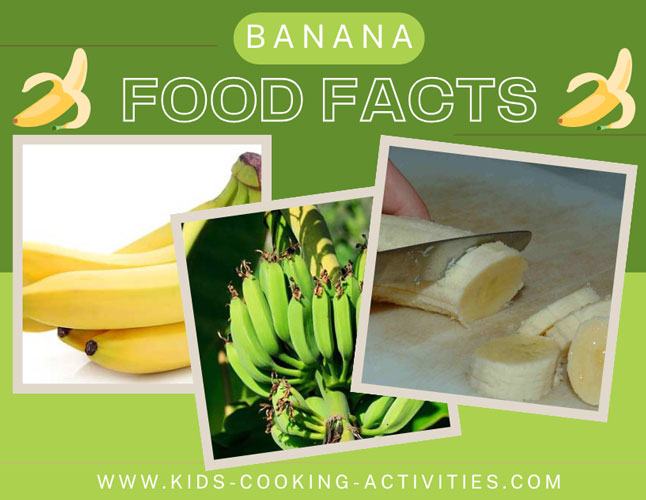
Banana Facts for Kids
Learn fun banana facts, how bananas grow, how to store them, and easy ways kids can use bananas in cooking activities and simple recipes.
On This Page
Kids Cooking Activities Teaching Materials
Teaching kids to cook? Save time with ready-made lesson plans used by parents and teachers. Browse teaching materials →


This page may contain affiliate links. We may earn a small commission at no extra cost to you. Learn more.
Fun Banana Facts
- Bananas are available year-round.
- Bananas grow on a giant plant that looks like a tree, but it is not actually a tree.
- Rows of bananas are called hands, and each banana is sometimes called a finger.
- Bananas are picked green and shipped around the world.
- Very ripe bananas are often best for baking.
How Bananas Grow, Buying Tips, and Storage
How Bananas Grow
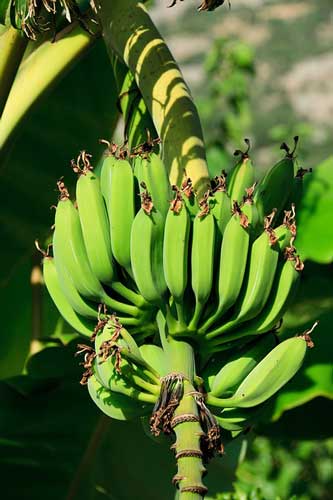
Bananas grow on a giant plant that looks like a tree but is not a true tree. The plant flowers, and as each leaf of the bud opens, it reveals rows of flowers. Those flowers turn into individual bananas.
Each row can have 15 or more bananas and makes up a “hand.” One stem may grow 7 to 10 hands of bananas. Bananas are usually picked while green and then shipped around the world.
What to Look for When Buying Bananas
Choose bright yellow bananas without bruises if you want them ready to eat soon. Some people like greener bananas and some prefer them more spotted and soft. Darker or browner bananas are often best for banana bread.
Banana Storage Tips
Store bananas on the counter.
How to Use Bananas in Cooking
Bananas are easy for kids to use because they can be eaten plain or added to lots of simple recipes.
- Eat bananas as they are for a quick snack.
- Use ripe bananas in breads and muffins.
- Blend bananas into smoothies.
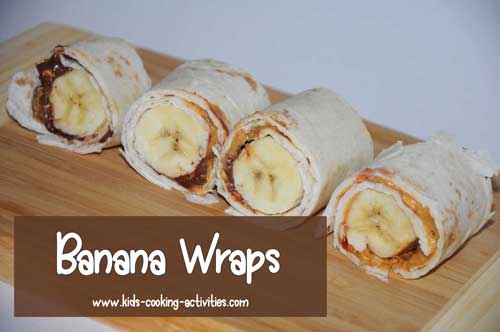
- Slice bananas for wraps and sandwiches.
- Freeze overripe bananas for later baking.
- Grill or bake bananas for warm desserts and snacks.
Mini Banana Activity
Banana Ripeness Test
- Look at a banana that is yellow and one that has brown spots.
- Compare the color of the peel.
- Touch the fruit gently and notice which one feels softer.
- Talk about which banana would be better for eating fresh and which would be better for banana bread.
- If possible, taste both and compare sweetness.
This is a simple way to connect food facts with cooking choices.
Banana Nutrition Facts
Bananas are known for several helpful nutrients and are easy for kids to enjoy in many forms.
- Bananas are a great source of potassium.
- They are high in vitamin C.
- They contain fiber.
- Bananas are often used as an easy fruit for digestion-friendly snacks.
More Food Fact Resources
Banana Bread Recipe
Banana Bread
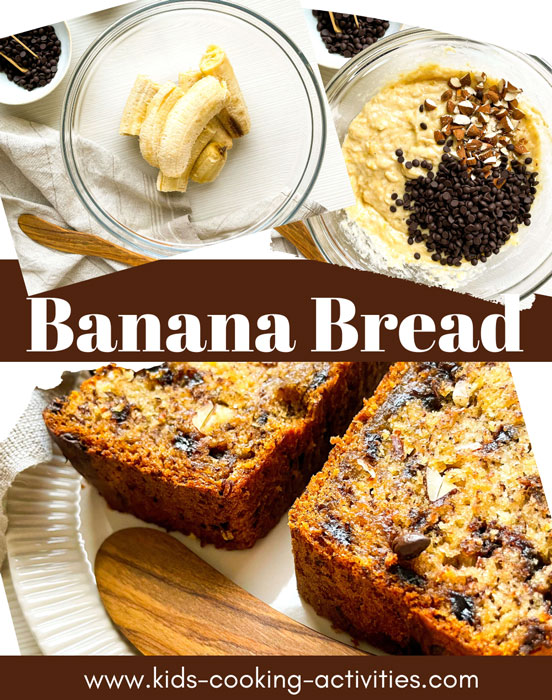
This classic banana bread is a great way to use ripe bananas and gives kids practice with mashing, measuring, and mixing.
Ingredients
- 1 1/2 cups sugar
- 3/4 cup shortening
- 4 eggs
- 4 mashed bananas
- 1/2 teaspoon baking soda
- 3 1/2 cups flour
- 1 teaspoon salt
- 1 teaspoon vanilla
- 1 cup nuts, optional
- 1 cup chocolate chips, optional
Instructions
- Preheat the oven to 350°F and grease 2 loaf pans.
- Mash the bananas and stir in the baking soda.
- In a separate bowl, cream together the sugar and shortening.
- Add the eggs one at a time and mix well.
- Add the salt and vanilla.
- Stir in the flour.
- Add the banana mixture and stir until combined.
- Fold in nuts or chocolate chips if using.
- Pour the batter into the prepared loaf pans.
- Bake for 40 to 45 minutes, or until a toothpick inserted in the center comes out clean.
Banana Videos
Banana Bread Video
Banana Smoothie Video
Bananas are one of the easiest fruits to blend into smoothies because they add natural sweetness and a creamy texture.
Banana Facts FAQ
Are bananas available all year?
Yes. Bananas are available year-round.
How do bananas grow?
Bananas grow on a giant plant that looks like a tree, but it is not actually a tree. The plant flowers and produces rows of bananas called hands.
How should bananas be stored?
Bananas are best stored on the counter.
What can kids make with bananas?
Kids can make banana bread, smoothies, banana wraps, banana chips, and simple snacks like banana hotdogs.
What bananas are best for banana bread?
Darker and browner bananas are often best for banana bread because they are softer and sweeter.
More Banana Ideas
After learning these banana facts, keep exploring fruit through the Food Facts hub, try more kitchen practice in kids cooking lessons, or make more fruit-based snacks and recipes with ripe bananas.



Share Your Recipes
Kids and families can keep experimenting with bananas in breads, smoothies, wraps, and other simple recipes.
Share your food facts and recipes
Do you have a food facts or recipe to share?
Explore More Food Facts
Fruit Facts:
Apple
Apricot
Avocado
Banana
Berry
Cherry
Coconut
Cranberry
Dates
Figs
Grapefruit
Grapes
Kiwi
Lemon & Lime
Mango
Melon
Orange
Papaya
Peach
Pear
Pineapple
Plum
Tomato
Vegetable Facts:
Artichoke
Asparagus
Beet
Broccoli
Brussels Sprouts
Cabbage
Carrot
Cauliflower
Celery
Corn
Cucumber
Eggplant
Garlic
Green Beans
Kale
Lettuce & Salad Greens
Mushrooms
Okra
Onion
Parsnip
Peas
Peppers
Potato
Radish
Rhubarb
Spinach
Summer Squash & Zucchini
Sweet Potato
Turnip
Winter Squash & Pumpkin
Get Free Kids Recipe Cards + Cooking Printables
Join Kids Cooking Activities for fun recipes, cooking ideas, and printable resources for kids, families, and classrooms.
Follow Kids Cooking Activities too:





© Debbie Madson, Madson Web Publishing, LLC — All rights reserved.
The material on this site is for educational purposes only.